
 AUS
AUS
 NZ
NZ
 UK
UK
 CA
CA
 USA
USA
 IND
IND







Highlights
- To help Aussies meet household expenses, the Fair Work Commission decided to increase the minimum wage by 5.2%.
- Predictions and calculations are such that increase in minimum wage without significant increase in productivity and output will induce further inflation and loss in employment.
- Recent rise mentioned by the Fair Work Commission also exceeds Labor’s recommended minimum wage increase.
Currently, Australia is under high inflationary pressures. The Reserve Bank of Australia (RBA) had to increase cash rate to combat inflation. Aussies have been surviving with lesser real disposable income as the cost of living across the country is mounting, along with rising interest rates.
The Australian Labor Party won the federal elections in May 2022, following which they sought to face one of the biggest challenges the economy is facing: inflation. Australia currently has a 50-year record low unemployment rate. However, according to the Labor party, the low unemployment rate doesn’t suffice as the pay rate is low.
GOOD SECTION: Tips to fight inflation and slash your costs
Thus, to help Aussies meet household expenses, the Fair Work Commission decided to increase minimum wage by 5.2%. Now, many economists wonder if raising the interest rate is the optimum way to help Aussies or is it only a short-term relief, which may lead to a further economic crisis in the long run.
Will minimum wage hike fuel stagflation?
The predictions and calculations are such that the increase in the minimum wage without any significant increase in productivity and output will induce further inflation and loss in employment. The Fair Work Commission's decision to increase the minimum wage by 5.2% may not affect the rich industries such as the energy industry. However, it might raise the salary expectations across sectors.
The primary criteria here is that if wages are increased without an increase in productivity, extra pressure will be put on the business side- fueling inflation. So, if wages are increased when productivity increases, this is a win-win situation for all. However, that’s not the present scenario.
The recent rise mentioned by the Fair Work Commission also exceeds Labor’s recommended minimum wage increase. Additionally, the fear is that this wage increase is not coming from a productivity increase. So, in the future, the workers’ union may take advantage of such pay increases, ask for higher wage rates, and threaten employers with strikes.

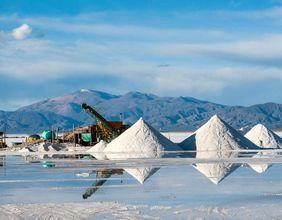
Source: © Skypixel | Megapixl.com
Now, experts wonder if without an increase in productivity, if wages are increased, will there be higher inflation and a fall in employment? The interest rate in the country is also on the rise; thus, employers are being crushed under pressure from both sides.
All in all, raising the minimum wage may be a relief in the short run. However, in this scenario, with limited productivity growth and rising cash rate, it may get impossible to combat inflation and generate more employment in the long run.
