
 AUS
AUS
 NZ
NZ
 UK
UK
 CA
CA
 USA
USA
 IND
IND






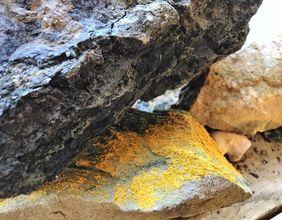

White Cliff Minerals Limited (ASX:WCN) has revealed outstanding outcomes from its inaugural diamond drill hole at Danvers 1 within the Rae Copper Project, reporting 50.9 metres grading 2.81% copper, including a 4.3-metre section with 10.93% copper. These findings validate the company’s geological model and confirm extensive near-surface copper mineralisation previously identified by reverse circulation drilling, significantly boosting confidence in the deposit’s scale and continuity.
Key Highlights
- White Cliff Minerals Limited (ASX:WCN) announced first diamond drill assay results from Danvers 1 on 28 July 2026.
- Drill hole DAN26026 intersected 50.9m at 2.81% copper and 7.66g/t silver from 39.7m depth, including 4.3m at 10.93% copper and 15.6g/t silver.
- Mineralisation begins at a shallow 39.7m downhole depth, confirming the near-surface nature of the Danvers 1 system.
- 21 additional diamond assay results from step-out holes are pending, with progressive releases expected in the coming weeks.
- Geological interpretation is advancing systematically; Phase 1 drilling program is nearing completion with focus shifting to expansion drilling.
Diamond Core Results Validate Danvers Copper Deposit Geological Model
White Cliff Minerals’ first diamond drill hole at Danvers 1 has confirmed the company’s geological interpretation and the continuity of broad, high-grade copper mineralisation. Hole DAN26026, drilled over 50 metres southwest of previous hole DAN25001, fills a crucial gap within the Danvers 1 system core. This drilling provided the company’s first orientated diamond core from the deposit, significantly enhancing geological understanding and supporting targeted down-plunge follow-up drilling.
Assays reveal dominant bornite and chalcocite mineralisation within the main chlorite-altered breccia hosting copper mineralisation. The geological team interprets this as confirmation of high-grade copper throughout the principal breccia structure. The orientated core data establishes an initial structural framework for Danvers 1, enabling the company to move beyond simple mineralisation identification toward understanding spatial controls across the broader fault zone.
Near-Surface High-Grade Copper Intervals Define Danvers 1 Mineral System
The standout interval from hole DAN26026 is 4.3 metres at 10.93% copper and 15.6 grams per tonne silver starting at 45.0 metres depth, marking the latest intersection exceeding 10% copper grade at Danvers. Additional high-grade intervals within the 50.9-metre mineralised zone include 6.8 metres at 3.93% copper and 11.6g/t silver from 55.5 metres, and 4.75 metres at 7.12% copper and 28.6g/t silver from 64.25 metres. The mineralisation commencing at 39.7 metres confirms Danvers 1’s shallow nature, potentially benefiting future development economics if advanced toward resource definition or production.
Copper sulphides occur in multiple forms including disseminations, sulphide veinlets, breccia cement, and locally quartz-carbonate veining. Copper grades extend beyond the principal breccia into adjacent basalt on both sides, suggesting a broader mineralised system than initially understood. This lateral extension offers valuable exploration targets for future drilling to expand the known mineralised footprint.
Danvers Located Within Rae Copper Project in Premier Mining Jurisdiction
Danvers 1 is part of White Cliff Minerals’ Rae Copper Project, focused on a system hosted within a chaotic breccia with strong chlorite alteration. The deposit lies within the Teshierpi Fault Zone, with geological and structural interpretations progressively pinpointing the highest-grade mineralisation within this fault zone. The 2025 reverse circulation drilling confirmed Danvers hosts exceptionally broad, high-grade copper mineralisation from surface, validating the initial exploration concept.
Operating in the Rae region, one of the world’s top mining jurisdictions, White Cliff Minerals’ broader Rae Copper Project also includes the Hulk sediment-hosted copper deposit, where drilling has confirmed sedimentary-hosted copper along a regional redox boundary and unconformity. This multi-deposit approach targets a large-scale copper opportunity across the regional landholding, with current emphasis on advancing Danvers 1 through systematic drilling and geological interpretation.
Phase 1 Drilling Nears Completion; Expansion Drilling Next
The Phase 1 drilling program, designed to test over 10 kilometres of prospective strike, is nearing completion. With geological controls becoming clearer, the company is shifting focus to systematic step-out drilling to follow high-grade zones, expand the mineralised footprint, and define Danvers’ ultimate scale. This transition from discovery to expansion drilling marks a key stage in project development. No specific timelines or resource targets have been provided.
Twenty-one diamond assays remain pending from ongoing drilling, including step-out holes testing high-grade mineralisation from holes DAN26012 and DAN26015. Additional core is being sent weekly to laboratories, indicating a progressive release of results. The ongoing acquisition of diamond core data aims to enhance geological understanding and confidence in Danvers’ size and continuity.
Oriented Diamond Core Advances Geological and Structural Understanding
Orientated diamond core from hole DAN26026 has delivered detailed structural data for Danvers for the first time. This framework enables progression from identifying mineralisation to understanding spatial controls within the fault zone. Managing Director Troy Whittaker highlighted the exceptional breadth of near-surface, high-grade copper, with over 50 metres at 2.81% copper including a 4.3-metre interval at 10.93% copper.
Executive Director of Technical Affairs Eric Sondergaard emphasized that the primary goal of the first diamond hole was to obtain geological and structural data to refine the model and target mineralisation extensions. Hole DAN26026 achieved this, materially enhancing targeting, continuity evaluation, and confidence in the Danvers model. The results confirm that high-grade copper mineralisation from reverse circulation drilling forms part of a continuous system interpretable with greater confidence.
Bornite and Chalcocite Mineralogy Supports High-Grade Copper Continuity
Bornite and chalcocite dominate copper sulphides at Danvers 1, with lesser chalcopyrite also present. These secondary enrichment minerals, typical of oxidised primary copper sulphides, form intervals such as the 4.3 metres at 10.93% copper in hole DAN26026. Their consistent presence across multiple holes supports continuous mineralisation within the chlorite-altered breccia.
Copper sulphides occur as disseminations, sulphide veinlets, breccia cement, and quartz-carbonate vein associations, indicating multiple mineralising fluid phases contributed to copper enrichment. Copper grades extending beyond the breccia into basalt host rock suggest mineralisation is distributed across a broad volume, supporting interpretation of a large-scale system.
21 Pending Diamond Assays to Further Define Danvers System
White Cliff Minerals reports 21 additional diamond assay results pending from ongoing Danvers drilling, including step-out holes testing high-grade zones from holes DAN26012 and DAN26015. Weekly core submissions to the laboratory imply a staggered release of results over coming weeks and months, allowing continuous refinement of geological interpretation and drilling strategy.
This systematic data acquisition combined with the emerging geological and structural framework aims to build detailed understanding of Danvers’ geometry, grade distribution, and continuity. No timelines for assay completion or next drilling phases have been disclosed. Investors may anticipate announcements of individual diamond hole results and updates on geological targeting as data accumulates.
Danvers Exploration Progresses from Discovery to Systematic Expansion
White Cliff Minerals’ Danvers exploration is advancing through phases: initial discovery identified broad, high-grade copper via reverse circulation drilling over more than 10 kilometres of strike; current phase focuses on geological and structural data from diamond core to refine models and target extensions. Future efforts will concentrate on follow-up drilling to expand the mineralised footprint and define deposit scale.
This methodical progression reflects a shift from discovery to deposit definition and expansion. Each diamond hole adds to the geological picture, increasing confidence in the model. No guidance on resource estimation drilling or feasibility studies timelines has been provided, nor has a mineral resource estimate been released.
Potential Scale and Economic Implications of Danvers Copper Deposit
The shallow high-grade mineralisation starting at 39.7 metres depth may enhance future mining economics if advanced to production. The broad 50.9-metre mineralised zone in hole DAN26026, combined with multiple high-grade intervals, indicates significant scale potential. The company aims to define Danvers’ ultimate size through systematic drilling, though no timeline or target resource size has been specified.
Focus is shifting to systematic step-out drilling to follow high-grade zones and expand the footprint, reflecting belief in a larger system than currently defined. Improved geological controls will enable more effective targeting of extensions. However, specific drilling targets, hole depths, or timelines for expansion drilling completion have not been disclosed.
