
 AUS
AUS
 NZ
NZ
 UK
UK
 CA
CA
 USA
USA
 IND
IND


_07_03_2026_03_50_21_133108.jpg)



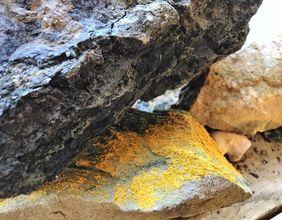

Hawk Resources Limited (ASX:HWK) has resumed drilling activities along the Cactus Corridor zone within its Cactus copper-gold project located in Utah, USA. The company’s planned 10-hole, 1,000-metre drilling campaign aims to define near-surface copper and gold mineralisation over roughly 500 metres of the structural corridor connecting the historic Comet and Cactus mines. Recent drilling by Hawk revealed broader mineralised zones than previously understood, including an 80-metre intersection grading 0.48% copper from surface and significant gold grades reaching 1.5 grams per tonne at the Comet area.
Key Points
- Hawk Resources Limited (ASX:HWK) specialises in copper-gold exploration projects in Utah, USA
- The company has recommenced a 10-hole, 1,000-metre drilling program along the Cactus Corridor at its Cactus project
- Drill holes are planned at 50-metre intervals spanning approximately 500 metres between the historic Comet and Cactus mines
- Recent drilling (April-May 2026) at the northwest end of the Cactus mine intersected 80.0 metres at 0.48% copper from surface, including 19.6 metres at 1.25% copper
- The mineralised zone’s true thickness is now interpreted at 35–50 metres at the northwest end of the Comet-Cactus segment, significantly wider than earlier estimates
- Historic shallow drilling at Comet returned up to 26 metres at 1.5 grams per tonne gold, highlighting the zone’s gold potential
- Investors should watch for drilling results to assess mineralisation continuity and identify targets for deeper drilling
Cactus Project Location and Historical Mining Background
Hawk Resources’ Cactus copper-gold project is situated in Utah, USA, within a historically productive mining district. The Cactus mine operated from 1905 to 1920, extracting 1.3 million tonnes of ore grading 2.0% copper, 0.3 grams per tonne gold, and 7 grams per tonne silver from a single breccia body. This mine stands as the district’s primary historical producer, confirming the economic viability of copper and gold mineralisation in the area. Additional breccias such as Comet and New Years were mined historically, though production records are unavailable for these and smaller neighbouring mines including Belmont, Coburn, and Purity.
The Cactus Corridor is a northwest-trending structural zone extending 1,000 metres from the historic Comet deposit through the Cactus mine to the New Years prospect. The corridor remains open to both northwest and southeast, indicating potential for further mineral discoveries along the trend. This geological setting positions Hawk to explore a proven mineralised district with multiple historical finds, leveraging established production history and known mineralisation patterns to guide renewed drilling efforts.
Details of the Planned 10-Hole Drilling Program Between Comet and Cactus Mines
The current drilling initiative comprises 10 holes totaling 1,000 metres, spaced 50 metres apart, covering about 500 metres of the Cactus Corridor between the historic Comet and Cactus mines. This marks the first systematic near-surface mineralisation drilling in this segment since the 1960s at Cactus and 2004 at Comet. The 50-metre spacing aims to provide sufficient geological coverage to evaluate mineralisation continuity in this historically underexplored corridor section. Managing Director Scott Caithness emphasised that the program targets the corridor segment between the two historic mines, an area with limited modern exploration.
The program design incorporates insights from Hawk’s earlier drilling. Historic shallow holes from the 1960s at Cactus intersected copper grades exceeding 1% over intervals longer than 20 metres, while Comet’s drilling revealed gold-rich zones, including a 26-metre intersection grading 1.5 grams per tonne gold from surface. The new drilling seeks to deliver enhanced geological detail on the extent and quality of near-surface mineralisation, addressing gaps left by earlier limited-scope campaigns.
Recent Drilling Outcomes at Northwest End of Cactus Mine
Hawk’s April-May 2026 drilling at the Cactus project yielded promising results prompting the expanded program. Three holes (DD26CT003-005) at the northwest end of the Cactus mine intersected 70–80-metre copper mineralised zones grading 0.4–0.5%, accompanied by molybdenum and silver. Hole DD26CT003 returned 80.0 metres at 0.48% copper from surface, including a 19.6-metre interval at 1.25% copper starting 44 metres below surface, plus 36.1 metres at 0.03% molybdenum from 26 metres depth. This highlights higher-grade zones within a broader mineralised envelope, consistent with historic data.
Hole DD26CT004 intersected 72.90 metres at 0.36% copper and 2.0 ppm silver from 17 metres depth, including 33.6 metres at 0.49% copper and 1.9 ppm silver from 58 metres, and 10.4 metres grading 0.97% copper, 3.0 ppm silver, and 0.059% molybdenum from 78 metres. Hole DD26CT005 intersected 71.72 metres at 0.45% copper, 0.06 g/t gold, and 3.0 ppm silver from 14 metres, with a higher-grade 4.26-metre interval at 2.19% copper, 0.13 g/t gold, and 14 ppm silver from 44 metres depth. Collectively, these results suggest a wider and more prospective mineralised zone than previously understood.
Revised Interpretation of Mineralised Zone Thickness
Based on recent drilling, Hawk now interprets the true thickness of the Cactus Corridor mineralised zone at the northwest end of Cactus to be between 35 and 50 metres, a substantial increase from earlier estimates. The mineralisation begins at shallow depths—0, 14, and 17 metres below surface—confirming near-surface continuity. This shallow mineralisation has meaningful implications for future extraction economics if developed.
This broader mineralised zone interpretation is supported by drilling data and represents a significant shift in geological understanding. While historic drilling targeted breccia bodies at depths over 100 metres, Hawk’s near-surface focused drilling reveals an extensive, shallowly dipping mineralised system covering a larger area. Managing Director Scott Caithness noted, "The 35–50m wide mineralised zone is significantly wider than previous interpretations at that location and has an overall grade of 0.4–0.5% Cu with associated molybdenum and silver."
Historical Copper and Gold Intersections in Comet-Cactus Area
Historical drilling in the Comet-Cactus zone has revealed multiple copper and gold intersections providing context for current exploration. Copper-rich intercepts at Cactus include 10.7 metres at 3.6% copper within 38.1 metres at 1.42% copper from surface (Hole R-14), 12.2 metres at 2.8% copper within 25.9 metres at 1.62% copper from 42.7 metres (Hole R-13B), and 12.2 metres at 2.64% copper from 22.8 metres (Hole R-13B). Additional copper intercepts include 16.7 metres at 2.3% copper within 22.9 metres at 1.84% copper from 39.6 metres (Hole R-12). These holes primarily tested copper without comprehensive multi-element assays but demonstrate shallow high-grade copper zones.
Gold-rich intersections, mainly at Comet, include 25.9 metres at 1.53 g/t gold from surface (Hole PCT04-1A), 15.2 metres at 1.15 g/t gold from 1.5 metres (Hole PCT01-1), and 24.4 metres at 1.0 g/t gold from surface (Hole CT-2). These thick gold intercepts exceeding 15 metres at grades above 1.0 g/t gold highlight the gold potential. The spatial distribution—with copper-rich zones at Cactus and gold-rich zones at Comet—guides current drilling targeting along the corridor.
New Years Prospect Drilling and Corridor Mineralisation Continuity
Hawk also drilled at the New Years prospect, the Cactus Corridor’s northwest terminus. In September 2024, two verification holes intersected oxide mineralisation from surface. Hole NY2024DDH2 returned 30 metres at 0.78% copper from 10 metres depth, including 8.0 metres at 1.31% copper. Hole NY2024DDH3 intersected 26 metres at 1.31% copper from surface, with an 8.0-metre interval at 2.8% copper. These results confirm mineralisation continuity across the full 1,000-metre Cactus Corridor from Comet through Cactus to New Years.
The oxide mineralisation at New Years indicates weathering has altered primary mineralisation, creating oxide-style deposits with potentially different processing characteristics than primary sulphides. The presence of oxide mineralisation from surface at New Years and at the northwest end of Cactus suggests oxidised mineralisation may extend across much of the corridor, potentially benefiting future processing and extraction methods.
Limitations of Historical Drilling and Importance of Modern Analysis
Historical drilling in the Cactus Corridor has notable limitations that Hawk’s current program addresses. The 1960s drilling at Cactus comprised 31 vertical holes assayed only for copper, offering limited geological context. At Comet, seven holes drilled in 2004 included multi-element analysis but remained limited in scope. These earlier campaigns did not adequately define oxidation depth, true mineralised zone thickness, or assay metals beyond copper. The copper-focused historic holes likely underestimated gold, silver, and molybdenum potential.
Hawk’s current drilling employs comprehensive multi-element assays capturing copper, gold, silver, and molybdenum across entire drill sections. This modern approach uncovers geological details absent in historic data, such as molybdenum mineralisation evidenced by 0.03% molybdenum intersections in recent holes. By combining advanced drilling with thorough assaying and geological logging, Hawk is significantly enhancing understanding of the Cactus Corridor’s mineralisation.
Strategic Goals of Current Drilling and Future Exploration Plans
The 10-hole drilling program aims not only to define mineral resources but also to clarify the continuity of near-surface copper mineralisation and identify zones suitable for deeper drilling. This stepwise approach allows Hawk to evaluate mineralisation variability along the corridor and detect structural or geological features indicating higher-grade targets for future deeper drilling.
Emphasizing near-surface mineralisation aligns with modern exploration strategies prioritizing economic and technical feasibility before advancing to deeper drilling. Managing Director Scott Caithness stated, "It is expected that this round of drilling will provide a clearer indication of the continuity of near surface copper mineralisation and highlight zones for deeper holes." The July 2026 drilling commencement reflects Hawk’s capital commitment and expectation of results in the coming months.
Exploration Progression and Knowledge Advancement
Hawk’s exploration at Cactus follows a staged approach refining mineralisation understanding. After verification drilling at New Years in September 2024, three holes (DD26CT003-005) were drilled at the northwest end of Cactus in April-May 2026, marking the first modern evaluation since the 1960s. Encouraged by these results, Hawk expanded to the current 10-hole program extending testing toward Comet.
This disciplined progression uses results from each phase to inform subsequent steps. Targeting the 500-metre gap between Comet and Cactus leverages historical mineralisation evidence while addressing a modern exploration gap. Hawk is building a comprehensive dataset to support interpretation of mineralisation continuity across the entire 1,000-metre Cactus Corridor, laying groundwork for resource estimation and technical-economic evaluation if results prove attractive.
