
 AUS
AUS
 NZ
NZ
 UK
UK
 CA
CA
 USA
USA
 IND
IND






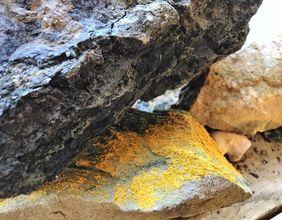

Global Lithium Resources Limited (ASX:GL1) has announced a pivotal acquisition of the Nova Operation, situated roughly 170km south of its primary Manna lithium project in Western Australia. The company is expediting the development of Australia's next lithium mine by integrating the Nova processing facility with the Manna mineral resource, bolstered by strong definitive feasibility study results published in December 2025. This integration strategy is designed to significantly lower capital expenditure and accelerate the production of spodumene concentrate using existing infrastructure.
Key Highlights
- Global Lithium Resources Limited (ASX:GL1) is acquiring full ownership of the Nova Operation to enhance its Manna lithium project development plan.
- The Manna project contains a 51.6 million tonne mineral resource at 1.0% Li2O (64% Indicated) and a 19.4 million tonne reserve at 0.91% Li2O.
- The definitive feasibility study released in December 2025 indicates a post-tax NPV of $472 million, a 25.7% IRR, a 3.5-year payback period, and a 14.3-year mine life, based on US$1,400 per tonne spodumene concentrate pricing.
- The Manna Mining Lease was granted in August 2025, with remaining permits and approvals anticipated within the current quarter.
- An ongoing Manna-Nova Integration Study aims to quantify expected capital expenditure savings and direct shipping ore production cashflows.
Strategic Manna-Nova Integration to Enhance Capital Efficiency at Global Lithium Resources
Global Lithium Resources Limited manages the Manna lithium project, a significant asset located approximately 100 kilometres east of Kalgoorlie, Western Australia's established mining center. The project benefits from existing infrastructure, including road and rail access, data networks, and utilities, which collectively reduce development risks. Manna’s resource base holds 51.6 million tonnes at 1.0% lithium oxide (Li2O), with 64% classified as Indicated, alongside a reserve of 19.4 million tonnes at 0.91% Li2O, ranking it among Australia’s larger undeveloped spodumene deposits.
The acquisition of the Nova Operation marks a strategic milestone, enabling the company to leverage an existing processing plant located about 170 kilometres south of Manna. This facility, along with its supporting infrastructure, can process spodumene ore, allowing GL1 to integrate Manna’s mineral resource with Nova’s processing capabilities. This synergy is expected to compress development timelines and reduce capital expenditure compared to developing either asset independently. A dedicated Manna-Nova Integration Study is underway to assess capital savings and model cashflows from direct shipping ore (DSO) production during ramp-up.
Definitive Feasibility Study Validates Manna Project Economics with 25.7% IRR
In December 2025, Global Lithium Resources released definitive feasibility study outcomes for Manna, confirming strong project economics. The study assumed a spodumene concentrate (SC6.0) price of US$1,400 per tonne CIF and an AUD:USD exchange rate of 0.67. Results showed a post-tax net present value (NPV) of $472 million, an internal rate of return (IRR) of 25.7%, a capital payback period of 3.5 years, and a mine life of 14.3 years. These figures establish a solid economic foundation with potential upside from favorable commodity prices or operational improvements during engineering and construction phases.
This definitive feasibility study represents a significant de-risking event for Manna’s development. The company anticipates that integrating Nova’s processing infrastructure will further enhance these economics by lowering capital costs and enabling early-stage DSO cashflows prior to full plant commissioning. All material assumptions and technical parameters supporting the resource, reserve estimates, and economic modeling remain unchanged, as confirmed in the company’s compliance statements.
Manna Mining Lease Granted in August 2025, Advancing Permitting Progress
The granting of the Manna Mining Lease in August 2025 is a crucial regulatory milestone for Global Lithium Resources, confirming government endorsement of the project’s mining parameters and environmental management plans. This approval significantly reduces project risk and validates the company’s development strategy. It is among the most critical regulatory approvals for greenfield mining projects in Western Australia, reflecting acceptance by key stakeholders including the Department of Mines, Industry Regulation and Safety.
The company expects to secure remaining permits and approvals, such as water licenses and environmental permits, within the current quarter. This progress indicates a streamlined approval process, positioning the project to advance detailed engineering and procurement activities. The permitting milestones enhance investor confidence in the project’s regulatory compliance and development schedule.
Nova Operation Acquisition Provides Established Processing Infrastructure to Expedite Production
By acquiring 100% of the Nova Operation, Global Lithium Resources gains immediate access to an operational processing plant and infrastructure capable of servicing the Manna ore body. This allows the company to avoid constructing a new processing facility near Manna, achieving significant capital savings and reducing construction timelines. The Nova facility’s location, approximately 170 kilometres south of Manna, aligns with typical ore haulage distances within the Australian mining sector.
The integration of Manna ore into the Nova processing plant underpins GL1’s strategy to substantially cut capital expenditure compared to standalone development. The ongoing Manna-Nova Integration Study is systematically evaluating ore logistics, processing parameters, throughput capacity, and DSO opportunities during production ramp-up. These insights will be vital for securing project financing and bolstering investor confidence in the integrated development approach.
Experienced Leadership Driving Lithium Project Development and Financing
Global Lithium Resources’ board and management team bring extensive experience in mining project financing and execution. Their proven track record in advancing mining ventures through development and capital raising phases provides critical expertise for managing execution risks associated with the capital-intensive lithium processing and spodumene concentrate production.
The company highlights strong offtake agreements and shareholder support as key advantages in its development pathway. These relationships offer revenue certainty and facilitate project financing negotiations with lenders. While specific counterparties and commercial terms remain undisclosed, these partnerships reduce commercialization risks and improve prospects for timely financing and project delivery.
Strategic Location Near Kalgoorlie Enhances Infrastructure and Logistics
Located 100 kilometres east of Kalgoorlie, the Manna project benefits from proximity to well-established regional infrastructure, including road and rail networks, data connectivity, and utilities. This reduces the need for significant capital investment in remote infrastructure and offers flexible transport options for ore and concentrate to domestic and international markets.
Kalgoorlie is a mature mining region with established supply chains, skilled labor availability, and regulatory familiarity, which collectively lower execution risks and potentially accelerate permitting and construction timelines. The logistics advantages also support GL1’s plan to transport Manna ore to the Nova processing facility within an existing transport corridor, enabling a capital-efficient development compared to earlier-stage lithium projects in less developed locations.
Direct Shipping Ore Strategy Enables Early Revenue Generation During Ramp-Up
Global Lithium Resources’ integrated development plan includes generating cashflows from direct shipping ore (DSO) production during the Manna-Nova integration and ramp-up phases. This approach allows early revenue generation and operational cost coverage before the Nova plant achieves full throughput on integrated ore feed. DSO production, which involves higher-grade ore requiring minimal beneficiation, has been successfully implemented in other Australian lithium projects.
The ongoing integration study is modeling cashflows from DSO production to quantify its contribution. This strategy may reduce capital requirements by enabling early ore sales, thereby improving project IRR and shortening payback periods by front-loading revenue relative to a phased production approach. This tactical sequencing reflects management’s expertise in optimizing the pathway to full production and cash flow generation.
Lithium Market Dynamics and Price Sensitivity Affect Manna Project Economics
The Manna definitive feasibility study used a spodumene concentrate (SC6.0) price of US$1,400 per tonne CIF and an AUD:USD exchange rate of 0.67, which are critical assumptions impacting project economics. The lithium market has experienced considerable price volatility due to factors such as electric vehicle adoption, battery manufacturing capacity growth, and supply-demand balances for spodumene concentrate and lithium hydroxide monohydrate.
Investors should recognize that these commodity price assumptions are forward-looking and subject to market fluctuations beyond the company’s control. While all material assumptions remain applicable, investors are encouraged to independently evaluate the reasonableness of these price and exchange rate assumptions against current market conditions and analyst forecasts. Although sensitivity analyses are typically part of definitive feasibility studies, the company has not disclosed such analyses in its presentation materials.
Project Financing and Capital Expenditure Outlook for Integrated Development
Global Lithium Resources has not provided specific capital expenditure estimates for the integrated Manna-Nova development nor detailed its capital raising strategy. The ongoing Manna-Nova Integration Study aims to refine capex projections by quantifying savings relative to standalone Manna development. The definitive feasibility study for Manna included capital cost estimates, but these figures were not disclosed in the reviewed investor materials.
The Nova Operation acquisition and integration represent significant capital deployment likely requiring substantial project financing. The company’s mention of supportive shareholders and offtake agreements indicates potential financing avenues through equity, project debt, and offtake-backed structures. However, the absence of detailed capex and financing guidance leaves investors with limited visibility on near-term capital needs and potential dilution risks. The timing and structure of financing will be crucial to meeting development milestones and achieving first spodumene concentrate production.
Regulatory and Operational Risks Impacting Manna-Nova Integration and Execution
Despite the Manna Mining Lease grant reducing regulatory risk, material regulatory and operational challenges remain. The anticipated receipt of remaining permits this quarter is a forward-looking statement subject to government timelines and stakeholder feedback. Water licensing complexities and Indigenous consultations in Western Australia may extend approval processes. Environmental permits could face delays if additional studies or consultations are required.
Operationally, integrating the Nova Operation with Manna ore feed introduces complexities in logistics, processing, and commissioning. Successful integration depends on engineering confirming Nova’s plant can process Manna ore efficiently without significant capital upgrades. Should the integration study identify substantial processing modifications, anticipated capex savings may not be realized. Construction and commissioning risks inherent in mining projects could lead to cost overruns or delays, affecting the economic outcomes projected in the definitive feasibility study.
