
 AUS
AUS
 NZ
NZ
 UK
UK
 CA
CA
 USA
USA
 IND
IND






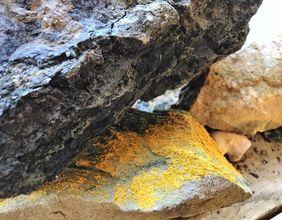

Dalaroo Metals Limited (ASX:DAL) has successfully completed independent Ground Penetrating Radar (GPR) and Single Beam Echo Sounder (SBES) surveys at its wholly owned Blue Lagoon Rare Earth Project in southern Greenland. These surveys have confirmed extensive sediment layers reaching depths of up to approximately 50 metres and uncovered multiple new source-to-sink valleys, greatly enhancing the company’s understanding of the sedimentary basin and expanding exploration potential across the wider Blue Lagoon region.
Key Highlights
- Dalaroo Metals Limited (ASX:DAL) finalized GPR and SBES surveys at its 100%-owned Blue Lagoon Rare Earth Project in Greenland.
- Completed 21 GPR survey lines across five priority shoreline target zones, revealing sediment depths up to around 50 metres.
- Conducted 10 bathymetric survey lines across Blue Lagoon, producing the first detailed lagoon floor model and a 3D understanding of the sedimentary basin.
- Discovered multiple sediment-filled valleys acting as additional source-to-sink pathways, broadening exploration opportunities and guiding upcoming auger drilling, bulk sampling, and resource assessments.
Comprehensive Geophysical Survey Execution at Blue Lagoon
Dalaroo Metals completed an independent geophysical survey program involving Ground Penetrating Radar and Single Beam Echo Sounder investigations across its 100%-owned Blue Lagoon Rare Earth Project in southern Greenland. The company reported that 21 GPR survey lines were conducted across five key shoreline target areas, delivering an extensive subsurface evaluation of the rare earth mineral system. Additionally, 10 bathymetric survey lines were performed across Blue Lagoon, generating the first detailed topographic model of the lagoon floor and providing previously unavailable bathymetric data.
This geophysical program marks a significant advancement in defining the size, shape, and continuity of the Blue Lagoon sedimentary basin. The surveys have yielded the first integrated three-dimensional insight into the rare earth-bearing system, combining subsurface sediment structures with lake-floor bathymetry. These datasets are expected to be pivotal in directing future exploration efforts, including auger drilling, bulk sampling, and comprehensive resource evaluation across the Blue Lagoon district during the 2027 field season and subsequent years.
Confirmation of Extensive Sediment Deposits at Sites A, B, and C
Interpretation of the GPR survey confirmed substantial unconsolidated sediment deposits surrounding Blue Lagoon, significantly enhancing Dalaroo’s knowledge of the project’s sedimentary framework. The survey targeted five priority areas where prior surface sampling had identified widespread rare earth element (REE), zirconium, and hafnium mineralisation. Findings show the thickest sediment layers at Sites A, B, and C, with sediment thickness commonly ranging from 30 to 50 metres, and several locations exceeding the GPR’s effective penetration depth, suggesting even deeper sediment accumulations.
Site A emerged as one of the most significant sediment accumulations, with bedrock depths ranging between approximately 2 and 50 metres below surface and multiple zones nearing the GPR penetration limit, indicating sediment thickness may locally surpass 50 metres. Site B shares similar geological traits with Site A, featuring extensive sediment packages between roughly 2 and 50 metres, with some deeper zones beyond the GPR data limits. The continuity of sediments here indicates a favorable environment for heavy mineral-rich sediment accumulation. Site C displayed progressively thickening sediments toward the shoreline and adjacent peninsula, with bedrock depths between approximately 2 and 50 metres, marking it as another promising area for further exploration.
Secondary Targets Identified at Sites D and E
The GPR survey also highlighted two additional priority targets with distinct sedimentary characteristics. Site D exhibited moderate sediment accumulation, with bedrock generally between 1 and 30 metres below surface, representing a secondary target with potential localized heavy mineral concentrations. Site E was characterized by relatively thin sediment cover, with maximum sediment thickness around 10 metres, providing a valuable comparative dataset against the thicker sediment systems found elsewhere around Blue Lagoon.
These varied sedimentary profiles across the five target sites illustrate the heterogeneous nature of the Blue Lagoon basin and offer Dalaroo multiple exploration prospects at diverse depths and lateral positions. The company indicated that integrating these findings with geological mapping, surface geochemistry, sediment sampling, and forthcoming assay results will refine high-priority drill targets and bolster Dalaroo’s source-to-sink exploration model for rare earth mineralisation across the broader Blue Lagoon district.
Expansion of Source-to-Sink Model Through Sediment-Filled Valleys
A major outcome of the geophysical survey was the identification of numerous sediment-filled valleys extending beyond the current exploration zones around Blue Lagoon. These valleys act as additional source-to-sink transport pathways capable of moving, concentrating, and preserving REE-bearing heavy minerals derived from surrounding alkaline granites. The company noted that the GPR data reveals the Blue Lagoon sedimentary system is significantly larger than previously recognized, extending well beyond areas currently under exploration.
These newly discovered valleys present multiple high-priority exploration opportunities and will be integral to Dalaroo’s expanded exploration strategy during the 2027 field season. The company believes these valleys could host further heavy mineral accumulations similar to those already identified within the main Blue Lagoon basin, substantially increasing the project’s district-scale growth potential. This discovery marks a material advancement in understanding the Blue Lagoon system’s capacity to host significant rare earth mineral deposits.
Rare Earth and Heavy Mineralisation Model at Blue Lagoon
Dalaroo Metals’ Blue Lagoon Rare Earth Project is founded on a sediment-hosted rare earth exploration model focused on the transport and concentration of rare earth-bearing minerals within a sedimentary basin. The company’s approach targets source-to-sink systems where REE-bearing minerals, zirconium, and hafnium phases originate from surrounding alkaline intrusive rocks and accumulate within favorable sedimentary depocenters. Previous surface sampling at the five priority targets identified widespread REE, zirconium, and hafnium mineralisation, justifying the geophysical survey program.
GPR survey interpretations reveal that Blue Lagoon contains extensive sedimentary depocenters capable of preserving large volumes of transported heavy mineral-rich sediments. The sediment package geometry and distribution align with long-lived depositional environments conducive to concentrating resistant heavy minerals, including REE-bearing minerals, zircon, and hafnium phases. This sedimentary structure, combined with the identification of multiple sediment-filled transport pathways and substantial sediment thickness, supports Dalaroo’s view that the Blue Lagoon basin represents a significant rare earth mineralisation system with considerable exploration upside.
3D Basin Model Guides Future Drilling Plans
The geophysical survey has delivered Dalaroo Metals its first integrated three-dimensional model of the Blue Lagoon sedimentary basin by combining onshore GPR data with lagoon floor bathymetry. This 3D model is expected to play a crucial role in guiding future exploration, particularly in refining drill target locations and optimizing auger drilling and bulk sampling programs. The company stated these results will advance resource evaluation efforts across the project.
While no specific drilling targets or timelines were disclosed in this update, the company confirmed that newly identified sediment-filled valleys and the detailed sediment thickness data from Sites A, B, and C will be prioritized for follow-up exploration in the 2027 field season. Integrating these geophysical datasets with geological mapping, surface geochemistry, and sediment sampling results will refine high-priority drill targets and strengthen the scientific basis for the next exploration phase.
Dalaroo Metals’ Strategic Role in Greenland’s Rare Earth Sector
Dalaroo Metals Limited holds full ownership of the Blue Lagoon Rare Earth Project in southern Greenland, positioning itself as an independent rare earth explorer in the Arctic. The company’s exploration strategy is based on a sediment-hosted rare earth mineralisation model, distinct from traditional hard-rock rare earth deposit exploration, focusing on heavy mineral accumulation within sedimentary basins. This approach targets large-tonnage, lower-grade rare earth deposits potentially suitable for bulk mining and processing.
The completion of the geophysical survey and the expansion of the known exploration footprint at Blue Lagoon mark significant milestones in Dalaroo’s project development. The discovery of extensive sediment packages and multiple new sediment-filled valleys greatly enhances the prospectivity of the broader Blue Lagoon district, providing numerous high-priority targets for future exploration. Dalaroo’s focus on advancing Blue Lagoon aligns with the global demand for rare earth elements critical to clean energy, renewable technologies, and industrial applications, positioning the company strategically within this vital commodities market.
Regulatory and JORC Code Compliance
The company update dated 28 July 2026 amends the original announcement titled "Blue Lagoon GPR Results Reveal 50m of Sediments" released on 23 July 2026. The amendment includes JORC Code Table 1, Sections 1 and 2, detailing the reporting of the Ground Penetrating Radar and Single Beam Echo Sounder survey results. Dalaroo confirmed no changes to survey results, interpretations, conclusions, or other material information from the original release; the update solely addresses compliance documentation.
Including JORC Code Table 1 compliance information underscores Dalaroo Metals’ commitment to adhering to Australian Securities Exchange reporting standards and best practices in mineral exploration reporting. Sections 1 and 2 cover survey methodology, sampling, measurement, and assaying procedures, providing investors and market participants with detailed technical documentation supporting the geophysical survey results and the company’s interpretation of Blue Lagoon’s subsurface sedimentary architecture. The amendment was authorized for ASX release by CEO John Morgan.
Next Steps and Exploration Outlook for Blue Lagoon
Dalaroo Metals indicated that the geophysical survey findings will guide upcoming activities at Blue Lagoon, with a focus on the 2027 field season. The newly identified sediment-filled valleys and expanded exploration footprint will be central to Dalaroo’s enhanced exploration strategy. The company believes these valleys could host additional heavy mineral accumulations akin to those already found within the main basin, significantly boosting the project’s district-scale expansion potential.
No specific dates, budgets, or detailed timelines for future exploration were provided in this update. However, Dalaroo plans to pursue follow-up exploration across the new targets, using geophysical data to inform the design and placement of auger drilling, bulk sampling, and resource evaluation programs. Investors will likely await further updates on field program initiation, assay result interpretation, and any material mineral resource estimates or project development strategy revisions.
