
 AUS
AUS
 NZ
NZ
 UK
UK
 CA
CA
 USA
USA
 IND
IND






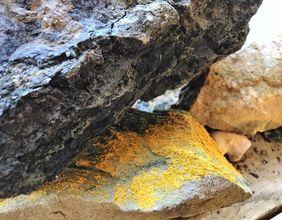

Catalina Resources Limited (ASX:CTN) is set to launch an extensive reverse circulation (RC) drilling campaign at its Breakaway Dam Copper Project, targeting approximately 2,400 metres starting late July 2026. This program focuses on high-priority Downhole Electromagnetic (DHEM) conductor plates and potential extensions of known copper mineralisation, building on the successful March 2026 exploration results. The drilling marks a crucial step in assessing the copper-rich volcanogenic massive sulphide (VMS) system’s grade and volume to advance towards an inferred JORC Mineral Resource.
Key Highlights
- Catalina Resources Limited (ASX:CTN) plans a 2,400-metre RC drilling program at Breakaway Dam starting late July 2026.
- Drilling will target priority DHEM conductor plates and extensions to previously identified copper mineralisation.
- Historic drilling revealed copper intersections such as 6.0 metres at 1.19% Cu, 8.7 metres at 0.48% Cu, and 1.9 metres at 2.17% Cu.
- The interpreted mineralised strike length expanded by about 70%, from 700 metres to 1.2 kilometres, with historical data suggesting extensions up to 1.8 kilometres.
- Investors should watch for drilling outcomes and progress toward resource definition as key upcoming developments.
Catalina Resources Advances Copper Exploration to Diversify Portfolio
Catalina Resources Limited is strategically expanding its mineral exploration portfolio to enhance shareholder value by diversifying beyond gold. Executive Director Ross Cotton highlighted, "Breakaway Dam is quickly becoming a core asset, broadening our exposure beyond gold and offering shareholders a compelling copper opportunity that complements our portfolio." This approach aims to balance the company’s exploration efforts by developing copper assets alongside existing gold interests, creating diversified commodity exposure.
The Breakaway Dam Copper Project is central to this diversification, focusing on a copper-rich VMS system with unique geological and economic potential. Catalina’s ongoing exploration programs systematically improve understanding of the mineralised system’s scale and continuity, with each phase refining geological models and identifying new high-priority drill targets, reflecting a disciplined project advancement strategy.
March 2026 Campaign Expands Breakaway Dam Mineralised Strike by 70%
The maiden drilling campaign in March 2026 significantly enhanced knowledge of the Breakaway Dam copper system by expanding the mineralised strike from approximately 700 metres to 1.2 kilometres—a 70% increase. The campaign confirmed additional copper mineralisation at various depths, including 1.9 metres (estimated true width) at 2.17% copper from 198 metres, 2.9 metres at 0.57% copper from 204 metres, and 3.8 metres at 0.31% copper from 124 metres.
Additionally, Downhole Electromagnetic (DHEM) surveys conducted during the campaign detected strong conductor responses in nearly all drill holes. Modelling of this data identified several large, coherent conductor plates, which are now high-priority targets for upcoming drilling. Combined with historical drilling data—such as 6.0 metres at 1.19% copper (including 1 metre at 3.86% copper), 8.7 metres at 0.48% copper, and other significant intersections—these results reinforce the presence of copper-bearing sulphide mineralisation throughout the project area.
Geological Evidence Supports Copper-Rich VMS System Classification
The Breakaway Dam Copper Project is interpreted as hosting a volcanogenic massive sulphide (VMS) system, supported by consistent host stratigraphy, confirmed copper sulphide mineralisation from recent and historical drilling, and strong spatial correlation between sulphide zones and DHEM conductors. This robust geological framework underpins confidence in the VMS classification and the potential for economic copper grades.
VMS deposits are known for significant base metal resources including copper, lead, and zinc. The copper-rich nature of Breakaway Dam aligns with typical VMS characteristics. Notably, the mineralised footprint has expanded with each exploration phase, and geological models have been progressively refined, indicating the system may extend beyond current boundaries and host larger tonnages than initially estimated.
July 2026 Drilling Program Targets Key Conductor Plates and Extensions
The upcoming July 2026 program involves approximately 2,400 metres of RC drilling aimed at testing the highest-priority DHEM conductor plates identified in March, alongside evaluating interpreted extensions of the mineralised system. Two critical drillholes, BDCRC26018 and BDCRC26019, are planned to intersect the largest modelled conductor plates, believed to represent a preserved coherent lens of the VMS system. Data from these holes will refine understanding of conductor geometry and sulphide distribution in the system’s central area.
Additional drillholes will focus on intersecting ore-grade zones, assessing continuity between mineralised areas, testing other priority DHEM targets, identifying further sulphide lenses, improving geological and structural models, and determining readiness for resource-focused drilling. This program is designed to assess whether the mineralisation has sufficient grade and volume to advance toward an inferred JORC Mineral Resource, transitioning from early exploration to resource definition.
Mobilisation and Operational Timeline for Late July 2026
Mobilisation of Nexgen Drilling Pty Ltd, alongside Catalina’s contracted geological team and field support assets, is scheduled for 31 July 2026, enabling drilling to commence as planned at month-end. This schedule reflects coordinated efforts among exploration staff, drilling contractors, and logistics to ensure seamless operations.
Nexgen Drilling Pty Ltd’s selection as the drilling contractor ensures experienced execution of the program’s technical requirements. Catalina’s geological team will provide onsite oversight and real-time interpretation, combining contractor expertise with in-house knowledge to optimise drilling efficiency and rapid decision-making based on geological findings.
Historical Copper Intersections Confirm Mineralisation Continuity
Previous drilling at Breakaway Dam has yielded significant copper intersections, demonstrating mineralisation continuity across the project. Highlights include 6.0 metres at 1.19% copper from 185 metres depth (including 1 metre at 3.86% copper) from hole BDRC10, one of the highest-grade intervals recorded. Other notable results include 8.7 metres (estimated true width) at 0.48% copper from 181 metres (including 0.95 metre at 1.18% copper and 1.7 metres at 1.05% copper) from hole BDCDD2501, and 1.4 metres at 1.97% copper and 0.24% zinc from 236 metres in hole BDCDD2502.
Catalina’s March 2026 drilling added new copper intersections, such as 1.9 metres at 2.17% copper from 198 metres—the highest-grade single assay recorded to date. The widespread mineralisation across multiple drillholes, depths, and expanding strike length indicates a three-dimensional mineralised system with potential for a mineable resource, pending confirmation of continuity and tonnage through further drilling.
DHEM Surveys and Modelled Conductor Plates Drive Exploration Focus
Downhole Electromagnetic (DHEM) surveys from March 2026 revealed strong conductor responses in almost every drill hole, indicative of sulphide-rich zones typical of VMS deposits. Modelling identified multiple on-hole and off-hole conductive plates, now prioritized as drill targets for the July program. The spatial correlation between sulphide mineralisation and DHEM conductors provides a solid technical basis for targeting, as conductivity often reflects disseminated or concentrated sulphides.
Large, coherent conductor plates identified by geophysical modelling suggest zones of thicker or denser sulphide mineralisation warranting priority drilling. Drillholes BDCRC26018 and BDCRC26019 will specifically target two of these plates, representing the July program’s primary focus. This integrated use of geophysical data with drilling and assays exemplifies a systematic exploration approach aimed at maximising drilling efficiency and target accuracy.
Advancing Toward Resource Definition and Economic Assessment
The July 2026 drilling campaign serves as a critical step toward potential resource definition drilling and economic evaluation of the Breakaway Dam Copper Project. Executive Director Ross Cotton stated, "Each exploration phase has expanded the mineralised system, refined our geological model, and delivered increasingly compelling drill targets. This next drilling phase aims to build on that momentum by expanding the known mineralisation and progressing Breakaway Dam toward resource definition." This underscores resource definition as a key objective, contingent on July drilling results confirming sufficient grade, continuity, and tonnage.
Resource definition drilling typically requires higher drill density to precisely define mineralisation geometry, grade distribution, and tonnage for JORC-compliant resource estimation. The current program bridges early-stage exploration, which delineated the broad system, and potential resource drilling by focusing on top conductor plates and continuity testing. Success here would justify advancing the project to the next development phase.
Risks and Uncertainties in Copper VMS Exploration
Copper VMS exploration inherently involves risks, including the possibility that drilling may not intersect predicted conductors or that mineralisation grades may fall short of targets. Although geological interpretations are supported by consistent evidence, subsurface complexities may emerge, necessitating model reassessment. Additionally, DHEM conductors may represent non-economic minerals like barren pyrite rather than copper mineralisation.
Economic viability depends on demonstrating copper mineralisation with adequate grade, tonnage, and continuity to support mining and processing. Progression from exploration to resource definition and feasibility involves increasing technical and financial demands. Commodity price fluctuations further impact project economics. These risks reflect the speculative nature of early-stage exploration and do not imply specific issues at Breakaway Dam.
