
 AUS
AUS
 NZ
NZ
 UK
UK
 CA
CA
 USA
USA
 IND
IND


_07_03_2026_03_50_21_133108.jpg)



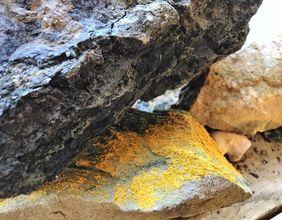

Blaze Minerals Limited (ASX:BLZ) has uncovered a major copper-in-soil anomaly at the Krokodil Prospect, part of its Dinokwe Project in Botswana, during the June 2026 quarter. Geological mapping, rock-chip sampling, and trenching have confirmed the anomaly aligns with an interpreted fault zone exhibiting substantial fluid flow. This discovery enables the company to advance exploration within the Limpopo Mobile Belt, a region known for significant base metal deposits similar to the nearby Selebi-Phikwe copper-nickel deposit.
Key Points
- Blaze Minerals Limited (ASX:BLZ) manages the Dinokwe Project, spanning roughly 1,771 square kilometres in Botswana's Limpopo Mobile Belt.
- A prominent copper-in-soil anomaly at the Krokodil Prospect measures approximately 1,000 metres in strike length by 100 metres in width, with copper concentrations reaching up to 288ppm.
- Seven trenches totaling 443 metres were excavated, yielding 89 channel samples with spot XRF readings up to 8.59% copper, 5.86% copper, and 3.23% copper accompanied by 2.96% lead.
- Geological mapping verified the anomaly coincides with an interpreted fault zone and related splay structures, showing significant fluid flow and visible copper minerals such as malachite and chalcopyrite.
- The Limpopo Mobile Belt hosts the Selebi-Phikwe copper-nickel deposit, located about 150 kilometres north, with inferred resources of 24.7 million tonnes at 1.50% copper and 0.92% nickel, highlighting the region's prospectivity.
- Blaze holds a binding agreement to acquire up to 90% of B&J Geoconsultants (Pty) Limited, which owns 100% of the prospecting licenses.
Significant Copper-in-Soil Anomaly Spans Over 1,000 Metres at Krokodil Prospect
During ongoing soil sampling on PL046 within the Dinokwe Project, Blaze Minerals detected a notable copper-in-soil anomaly at the Krokodil Prospect, with values reaching 288 ppm copper extending approximately 1,000 metres in strike by 100 metres in width. Initially announced in April 2026, this finding prompted follow-up exploration efforts aimed at defining the mineralisation style and economic potential. The anomaly's size and elevated copper levels justified detailed geological investigations to understand subsurface mineralisation controls and distribution.
Follow-up geological mapping and rock-chip sampling in the June 2026 quarter confirmed the anomaly aligns with an interpreted fault zone and associated splay structures that have undergone significant fluid flow. This structural context is consistent with fault-hosted base metal mineralisation observed in similar geological settings throughout the Limpopo Mobile Belt. Visible copper-bearing minerals such as malachite and chalcopyrite, alongside lead-bearing galena in grab samples, confirmed surface mineralisation and supported advancing trenching investigations.
Trenching Campaign Produces 89 Channel Samples with High Metal Grades
Subsequent to mapping and sampling, Blaze Minerals conducted a trenching program targeting the main mineralised zone and parallel structures. Seven trenches totaling 443 metres were excavated using a 30-tonne excavator, oriented north-south to northeast-southwest to intersect mineralised structures identified earlier. This methodical approach enabled direct visual and sampling confirmation of subsurface geology and mineralisation.
Detailed trench mapping recorded lithologies, structural features, and mineralisation characteristics. Eighty-nine channel samples were collected and sent to Scientific Services Laboratory in South Africa for comprehensive multi-element and gold analysis. Spot XRF readings from trenches revealed grades up to 8.59% copper with 0.38% lead and 0.23% zinc; 5.86% copper with 0.17% lead and 0.35% zinc; and 3.23% copper with 2.96% lead. These results confirm mineralised material within the fault zone and support ongoing exploration at Krokodil.
Rock-Chip Sampling Reveals Significant Copper and Lead-Zinc Mineralisation
Rock-chip sampling at Krokodil identified grab samples containing visible copper minerals such as malachite and chalcopyrite, along with lead-bearing galena. Handheld XRF analysis provided rapid metal grade assessments, confirming significant copper, lead, and zinc mineralisation. Notable spot XRF readings included 4.17%, 3.66%, and 3.16% copper, as well as 5.52% and 2.79% lead, indicating potentially economic grades within the anomalous zone.
Crushed grab and composite samples analyzed by handheld XRF showed copper and lead contents including 1.03% copper with 0.17% lead; 0.62% copper; 0.58% copper with 1.05% zinc and 0.95% lead; and 0.68% zinc with 1.83% lead. These findings demonstrate polymetallic base metal mineralisation at Krokodil across multiple samples.
Dinokwe Project Encompasses 1,771 Square Kilometres in Limpopo Mobile Belt
The Dinokwe Project comprises three granted prospecting licenses and one application, covering about 1,771 square kilometres, all fully owned by B&J Geoconsultants (Pty) Limited. Blaze Minerals has a binding agreement, announced on 11 March 2026, to acquire up to 90% of B&J, enabling consolidation of a large exploration portfolio within a proven mineralised belt while completing due diligence and regulatory approvals.
The licenses lie within the Mahalapye and Baines Drift Complexes of the Limpopo Mobile Belt, featuring Archean basement gneisses, migmatites, amphibolites, and metasediments intruded by ultramafic dykes. Mineralisation typically occurs in amphibolites or late-stage ultramafic rocks. These complexes are lithologically similar to the Phikwe Complex, which hosts the Selebi-Phikwe copper-nickel deposit about 150 kilometres north, underscoring the project's prospectivity.
Limpopo Mobile Belt Hosts Significant Selebi-Phikwe Copper-Nickel Deposit
The Limpopo Mobile Belt is a major mineralised province with significant base metal deposits. The nearby Selebi-Phikwe copper-nickel deposit, approximately 150 kilometres north of Krokodil, contains an inferred resource of 24.7 million tonnes at 1.50% copper and 0.92% nickel, as per a 2024 technical report. This deposit exemplifies the metal potential and economic viability of mineralisation systems in the region, providing a precedent for deposits within Blaze's project area.
Historical exploration supports the area's prospectivity. Albidon Limited (ASX:ALB) drilled the Sunnyside target in the Baines Drift Complex, intersecting significant sulphide mineralisation including 18.64 metres at 0.75% nickel and 0.55% copper in amphibolites. Together with Selebi-Phikwe, these results confirm that the Mahalapye and Baines Drift Complexes host geological structures and mineralisation styles capable of economic base metal deposits. Blaze's discovery and systematic exploration at Krokodil align with this proven metallogenic setting.
Kalahari Project Situated Along Major Copper-Silver Sediment-Hosted Belt
Besides Dinokwe, Blaze Minerals is advancing the Kalahari Project, with license applications along the Kalahari Copper Belt, a significant sediment-hosted copper-silver province extending from western Botswana into Namibia. Hosted in Neoproterozoic Ghanzi Group sedimentary rocks, mineralisation typically occurs as stratiform and structurally modified copper within reduced sedimentary units where oxidised copper fluids interacted with organic or reactive layers. Sulphide minerals such as chalcocite, bornite, and chalcopyrite are common.
The Kalahari Copper Belt contains large copper-silver deposits demonstrating economic viability and scale. MMG's Khoemacau Project includes the Zone 5 deposit, with a total resource of 110 million tonnes at 1.7% copper, including 13 million tonnes at 1.8% copper measured and 31 million tonnes at 1.6% copper indicated. This world-class deposit highlights the potential for substantial tonnage and grades in the belt, situating Blaze's portfolio within a proven copper province.
Binding Agreement to Acquire B&J Geoconsultants Strengthens Exploration Control
Blaze Minerals has a binding agreement to acquire up to 90% of B&J Geoconsultants (Pty) Limited, which holds 100% of the three granted prospecting licenses and one application comprising the Dinokwe Project. Announced on 11 March 2026, this agreement is a strategic move to consolidate control over the 1,771 square kilometre project within the Limpopo Mobile Belt. The binding nature provides ownership certainty and supports ongoing exploration and resource advancement.
This acquisition allows Blaze to maintain operational control over exploration and development decisions at Dinokwe. Such ownership structures are common in international ventures and demonstrate the company’s commitment to progressing from exploration to resource definition. The agreement facilitates securing permits and licenses essential for continued fieldwork and mineral deposit characterisation.
Upcoming Exploration Activities and Channel Sample Analysis at Krokodil
Blaze Minerals’ immediate next step is completing analysis of the 89 channel samples from the seven trenches at Krokodil. Samples have been sent to Scientific Services Laboratory in South Africa for comprehensive multi-element and gold assays. These results will quantify copper, lead, zinc, and precious metal grades within mineralised structures, guiding assessment of economic potential and informing future exploration planning.
Following laboratory results, Blaze will review June 2026 field program outcomes to determine the scale and scope of future activities at Krokodil and elsewhere in Dinokwe. The exploration strategy progresses systematically from regional soil sampling to detailed trenching, enhancing geological confidence and geochemical data to support potential drilling or other exploration phases. Channel sample results will be pivotal in shaping subsequent exploration steps.
Company Highlights Fluid Flow Evidence Along Interpreted Fault Zone
Geological mapping and rock-chip sampling at Krokodil confirmed that the copper-in-soil anomaly coincides with an interpreted fault zone and associated splays exhibiting significant fluid flow. Fluid movement through fault zones is a key mechanism for transporting and depositing base metals in many copper-lead-zinc and copper-nickel systems worldwide. Visible copper minerals such as malachite and chalcopyrite, along with lead-bearing galena in grab samples, provide direct evidence of mineralisation and support the fault zone as an active fluid conduit capable of hosting economic deposits.
The Krokodil Prospect’s geological setting within the Mahalapye Complex, featuring amphibolites and ultramafic dykes, parallels the host rocks of the nearby Selebi-Phikwe deposit. The combination of fault-controlled structures with fluid flow evidence, proven host rocks, and surface copper-lead-zinc mineralisation creates a compelling target. Blaze’s systematic approach—mapping structures, collecting rock-chip samples, and detailed trenching—represents an effective methodology to evaluate the economic potential of fault-hosted base metal mineralisation.
