
 AUS
AUS
 NZ
NZ
 UK
UK
 CA
CA
 USA
USA
 IND
IND




Highlights
- Guinea’s Simandou project is emerging as one of the largest new iron ore supply sources in decades.
- The arrival of fresh high-grade supply has added pressure to global iron ore prices and major Australian miners.
- Diversification and low operating costs are becoming increasingly important as market dynamics evolve.
Guinea’s Simandou project is emerging as a major force in global iron ore, reshaping supply expectations and highlighting the importance of scale, diversification and cost efficiency for Australian mining leaders.
Australia’s mining sector has long been powered by iron ore, making every shift in global supply closely watched across the local market. That is why the emergence of Simandou in Guinea has captured attention among traders following ASX 200. The massive project is beginning to reshape sentiment across the iron ore market, with major producers including Fortescue Metals Group (ASX:FMG), BHP Group (ASX:BHP) and Rio Tinto (ASX:RIO) feeling the effects of growing supply expectations. While the project’s full influence is still unfolding, its arrival signals an important change for the global iron ore landscape and for Australia’s leading mining companies.
A New Chapter for Global Iron Ore
For years, Australia and Brazil have dominated seaborne iron ore exports. Their established infrastructure, scale and production efficiency have helped shape global trade flows and pricing.
Simandou is changing that narrative.
Located in Guinea, the project is widely recognised as one of the world’s largest undeveloped high-grade iron ore deposits. After years of planning, construction and infrastructure development, exports have begun gaining momentum, bringing a new source of supply into a market already navigating softer demand conditions.
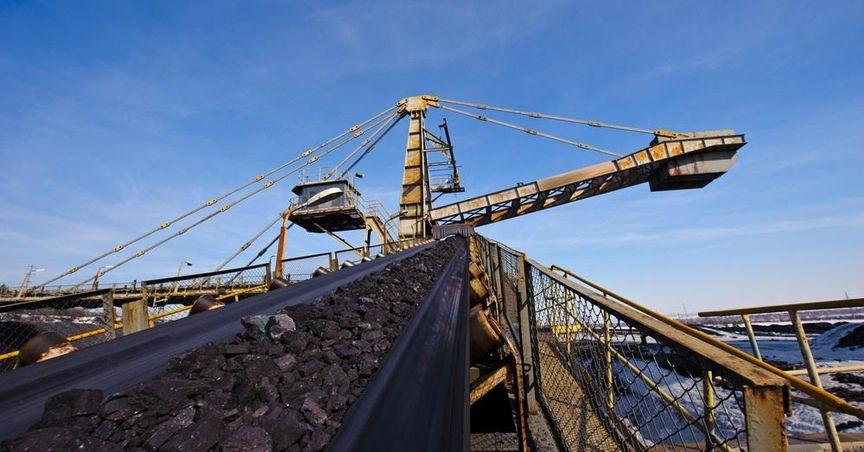
The significance of Simandou extends beyond its resource size. The development includes extensive rail infrastructure and a major export terminal, creating a new iron ore corridor capable of supporting large-scale shipments for decades.
For participants across the global steelmaking chain, the project represents a fresh source of premium-grade material. For Australian producers, it introduces another competitor into an increasingly competitive market.
Why Iron Ore Prices Are Feeling the Pressure
Iron ore stocks markets have recently experienced renewed weakness as traders digest the implications of rising supply.
The market is balancing several competing forces. On one side sits ongoing steel demand from China, the world's largest consumer of iron ore. On the other sits growing availability of material from established producers alongside new entrants such as Simandou.
Adding to the pressure are elevated stockpiles at Chinese ports and uncertainty surrounding industrial activity. Together, these factors have contributed to a more cautious pricing environment than the sector experienced during earlier commodity booms.
For companies operating within the broader ASX Metal & Mining Stocks category, commodity pricing remains one of the most influential drivers of earnings performance. Even relatively small shifts in iron ore sentiment can quickly affect market valuations across the sector.
Simandou’s Scale Changes the Conversation
What makes Simandou particularly important is not simply that it is entering production—it is the sheer scale of what lies ahead.
Once supporting infrastructure reaches full operational capacity, the project is expected to become one of the largest contributors of new seaborne iron ore supply seen in recent decades.
That level of production has the potential to alter supply-demand balances across global markets. Unlike temporary disruptions or short-term production increases, Simandou represents a structural addition to the industry.
Markets often respond to future expectations before those developments fully materialise. As a result, sentiment surrounding iron ore has already begun adjusting to the prospect of substantial new supply entering the system over coming years.
This shift highlights how commodity markets frequently price future realities long before they become visible in shipment data.
The Market May Be Looking Ahead of Reality
Despite the growing attention, the immediate impact of Simandou remains relatively modest.
The project is still progressing through its broader ramp-up phase, meaning current export volumes remain only a fraction of planned long-term capacity. Infrastructure development continues to play a critical role in determining how quickly production can expand.
This distinction is important.
Much of the recent market reaction appears linked to expectations rather than the current volume of ore entering global trade. Investors and traders are attempting to assess what the market could look like once Simandou reaches mature production levels.
As a result, some of the pressure seen across iron ore equities reflects future pricing assumptions rather than present-day supply conditions.
The next several years will therefore be closely watched as the project advances toward full operational capability.
How Australian Mining Leaders Compare
Australia’s major iron ore producers enter this period from positions of considerable strength.
Their large-scale operations, established logistics networks and decades of operational experience provide important advantages. Most importantly, they remain among the lowest-cost iron ore producers globally.
That cost advantage acts as a significant buffer during periods of weaker commodity pricing. Even when iron ore prices retreat, efficient producers can continue generating healthy cash flows while maintaining operational stability.
However, not all miners have identical exposure.
Fortescue’s Direct Iron Ore Link
Fortescue remains heavily focused on iron ore production, making its performance closely tied to movements in the commodity market.
When iron ore prices strengthen, the company often benefits significantly. Conversely, periods of market weakness can have a more direct impact on earnings sentiment.
As global supply dynamics evolve, pure-play iron ore exposure naturally attracts greater scrutiny.
BHP’s Diversification Advantage
BHP benefits from a broader portfolio spanning multiple commodities.
In addition to iron ore, the company maintains exposure to resources such as copper and other minerals essential to global industrial activity and energy transition trends.
This diversification can help smooth earnings performance when conditions in any single commodity market become challenging.
Rio Tinto’s Unique Position
Rio Tinto occupies a particularly interesting position because of its involvement in Simandou itself.
The company remains one of the world's largest iron ore exporters while also participating in the development of the project that is helping reshape future supply expectations.
This dual role places Rio at the centre of one of the most significant developments currently unfolding in the iron ore industry.
The Bigger Picture for Australian Mining
The emergence of Simandou reinforces a reality that has always existed within commodity markets: supply leadership can change over time.
Australia remains one of the world's most important iron ore exporters, supported by world-class deposits, efficient infrastructure and decades of industry expertise. Those advantages are unlikely to disappear simply because a new competitor enters the market.
However, the arrival of a major new producer highlights the importance of operational efficiency, cost discipline and diversified revenue streams.
Mining companies that can maintain strong margins across different commodity cycles are generally better positioned to navigate changing market conditions.
For the Australian resources sector, Simandou is less about immediate disruption and more about the gradual evolution of global competition.
Why Simandou Matters Beyond Iron Ore
The story extends beyond a single commodity.
Large-scale resource developments influence shipping routes, trade relationships, infrastructure investment and long-term industrial planning. Simandou is expected to play a role in each of these areas as production expands.
The project may also contribute to changes in the quality mix of seaborne iron ore supply, given its reputation for high-grade ore. That could become increasingly relevant as steel producers pursue efficiency improvements and emissions reduction initiatives.
Consequently, the mine’s influence may reach well beyond traditional supply and demand calculations.
A Structural Shift Taking Shape
Simandou’s emergence marks one of the most important developments in the iron ore market in many years.
While current shipments remain relatively modest compared with future ambitions, the project has already altered how market participants think about long-term supply. The impact on Australian miners is therefore as much about expectations as it is about current production volumes.
For Australia’s mining heavyweights, the challenge is not immediate survival but adapting to a market where another major supplier is steadily finding its place. As the project progresses through its next stages of development, the global iron ore industry could look noticeably different from the one investors have known for much of the past decade.
