
 AUS
AUS
 NZ
NZ
 UK
UK
 CA
CA
 USA
USA
 IND
IND


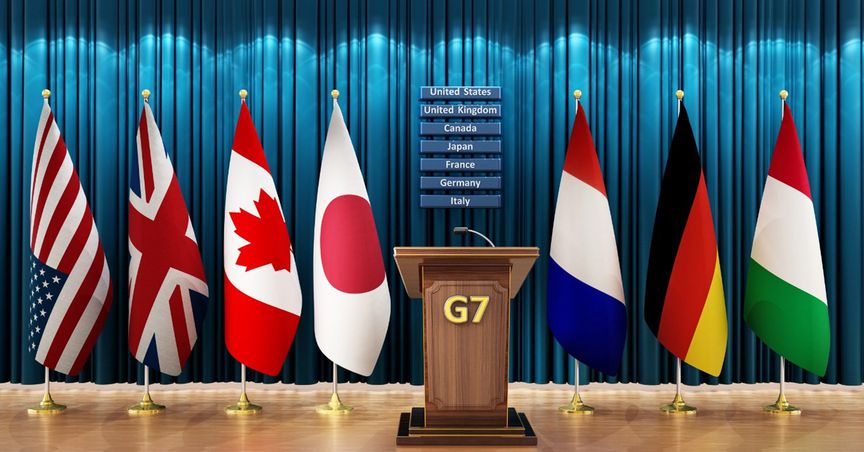





The Group of Seven, popularly known as G7, is a group of seven countries – the US, the UK, Canada, France, Germany, Japan and Italy – the heads of which hold an annual summit to address the issues of mutual concern. As on date, there is a lot of buzz around the impending G7 meeting that was held last weekend.
An informal group, it usually invites the European Union or other countries to attend its annual summits. As a combined force, these seven countries represent two-fifths of the world’s economy and one-tenth of world’s population – which makes it one of the richest blocs in the world.
However, the problem is that, unlike other multinational bodies such as the North Atlantic Treaty Organisation (NATO), the Association of Southeast Asian Nations (ASEAN) or the South Asian Association for Regional Cooperation (SAARC), the G7 has no legal existence – which in a way means that decisions made at the G7 meetings also have no binding impacts on policy. This would mean that the commitments made at G7 meetings need to be ratified independently by the governing bodies, in most cases parliaments, of member states. To put it simply, it is a perspective sharing forum, where these seven countries zero in on common goals to look out for.
When did G7 start?
The history of G7 goes around 50 years back in the time – to 1975. That year, the global economy was going through a recession due to the Organization of the Petroleum Exporting Countries (OPEC) oil embargo in retaliation to Arab-Israel war. The world back then was heavily dependent on the Arab countries for oil consumption – which led to a energy crisis in the western world, with long queues outside the petrol pumps. To help themselves out of this melee, the then Treasury Secretary US George Schultz called on the meeting of six countries. The thought was that it would be beneficial for the major economies of the world to synchronise efforts with each other on macro initiatives. Canada, at that point in time, was not part of invitees. This is how G7 started.
This became an annual ritual. However, for almost one and half decades this group had become G8. In post-cold war era, when Soviet Union collapsed, the west had found a new ally in Boris Yeltsin – the new President of Russia. So, the G7 invited Russia also to join the bandwagon. That is how it became G8 in 1998. However, in 2014, after Russia overnight annexure of Crimea in Ukraine it got expelled from the grouping.
Who heads the G7?
The head of the grouping is selected on an alternative basis. Every year, the president of G7 meetings is rotated – that is, each of countries gets a chance to head the G7 grouping every seven years. With the presidency of the grouping, comes the responsibility of hosting the event for each country. Since this time around the UK was heading the G7, the annual summit happened at Carbis Bay Hotel in Cornwall, UK through the last week. The guest invitee countries – that include India, South Korea and Australia – will be attending the summit only in the afternoon session.
So, what is the importance of G7?
Since G7 makes up 40% of the world’s economy and has the world’s only superpower – the US – as its member, the grouping helps in setting the global narrative and given birth to many global initiatives – from pumping US$300 million to contain aftereffects of Chernobyl meltdown to launch a global response to the endemic diseases like Malaria and AIDS. It also helps in the financing activity as the grouping has set apart US$45 billion in form of global aid till now. The grouping also lobbied for the steps to curb the climate change, which ultimately led to Paris Climate Accord.
Shortfalls of G7
The G7 is very prone to domestic political churning within the member countries. Take the example of Donald Trump’s presidency. One of the earliest moves in his tenure was to pull out of the Paris Climate Accord – which the US was strong votary of once. Similarly, Mr Trump, due to his unpleasant off-the-cuff remarks, shared strained relationship with other G7 leaders. The differences with Angela Merkel of Germany and Theresa May of UK, were even visible to the public eye during the bilateral meeting. In earlier days, the G7 meetings were closed door and discreet in nature. However, given the importance of these countries, atleast economically, these actions had global ramifications. This led to the international criticism and that is why it announces the agenda for their meetings in advance, nowadays.
