
 AUS
AUS
 NZ
NZ
 UK
UK
 CA
CA
 USA
USA
 IND
IND






Summary
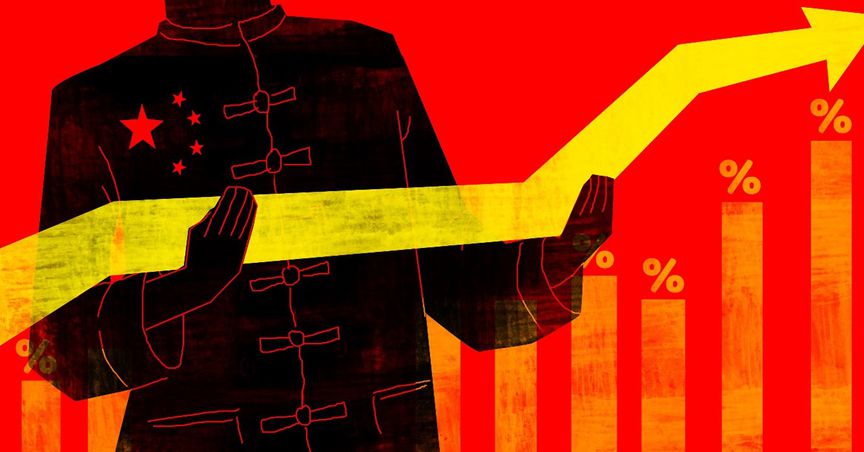
- China’s factory-gate prices hit a 12-year high in May on higher commodity prices.
- The producer price index (PPI) rose to 9% in May, up from 6.8% reported in April 2021.
- The consumer price index surged to 1.3% in May, compared to 0.9% in April.
China’s factory-gate prices rose at their highest annual rate in 12 years in May, official data showed on Wednesday. The record surge was driven by a spike in commodity prices. The rise in prices raised concerns that inflationary pressures could spread globally and force central banks to tighten monetary policy, derailing global recovery.
The producer price index (PPI), which indicates the prices that factories charge wholesalers for their products, spiked 9% in May, the highest level seen in more than 12 years since 2008, according to the National Bureau of Statistics (NBS) data released on June 9. This is 0.5% above the market estimates and 6.8% reported in April 2021.
The rise in the PPI index was driven by a sharp spike in the prices of crude oil, iron ore and non-ferrous metals, shows the NBS data.
As per the NBS data, this was the fifth straight month of increase in the PPI index due to a faster recovery in domestic production and rising commodity prices from last year's pandemic lows.
Meanwhile, the consumer price index (CPI), a measure of retail inflation, climbed to 1.3% in May, up from 0.9% in April. The CPI inflation rose to the highest level since September 2020, due to rise in the cost of non-food goods as well as food prices. While food price rose 0.3% on a year-on-year basis, non-food prices surged 1.6% in May.
The People's Bank of China, which is country’s central bank, has set a 2021 CPI growth target of around 3%, compared with around 3.5% last year.
Beijing, which is already battling a sluggish economy as well as disruption in travel and supply chains in the wake of the COVID-19 pandemic, faces a daunting task to protect its factories and workplaces from rising costs.
Surging costs in China, one of the world’s biggest manufacturer and exporter, could derail global economic recovery as higher inflation could prompt central banks across the world to tighten monetary policy. Globally, central banks have kept monetary policies easy and interest rates lower in a bid to support growth in the wake of the pandemic.
Meanwhile, Asian markets traded mixed on Wednesday as investors tried to digest the unsettling spike in inflation in China – the region’s largest economy.
The Mainland Chinese stocks were trading higher with the Shanghai Composite rising 0.3%, and the Shenzhen component trading flat with marginal gains. In the Chinese autonomous region of Hong Kong, the Hang Seng Index was trading near flatline – down just 0.13%.
Japan's Nikkei traded lower by 0.35% and Seoul's Kospi fell 0.95%, while Taiwan’s Weighted Index dropped 0.65%. Also, the Straits Times index in Singapore slipped 0.33%.
