
 AUS
AUS
 NZ
NZ
 UK
UK
 CA
CA
 USA
USA
 IND
IND








Summary
- Virtual reality (VR) in the healthcare sector is in a nascent stage. However, it is gaining popularity as many healthcare organizations have started implementing virtual reality.
- VR solutions allow both patients and healthcare professionals to interact with simulated environments.
- In healthcare, VR technology has been used for robotic surgery, surgery simulation, phobia treatment, and skills training.
- Virtual reality also helps with marketing, educating individuals about health and fitness regimes, and pain management.
Virtual reality or VR is a technology that lets a user imitate a situation by using a VR headset within an interactive, computer-generated environment. The simulation is immersive and may require the use of special goggles (3D) with a screen that offers sensory feedback, to help the user learn from their experiences in this virtual universe.
There have been several talks around virtual reality in the healthcare space, with many VR applications already being implemented in the industry. Applications like robotic surgery, healthcare devices, and others are gradually gaining popularity and are now more likely to be adopted by healthcare companies worldwide.
Some key drivers aiding the ever-increasing VR adoption in the healthcare industry include the growing demand for quality healthcare services, the need to reduce healthcare costs, and the increased role of connected devices in the healthcare industry.
ALSO READ: Virtual Simulation to Test Existing Cyber Resilience
This article will give you an overview of key virtual reality applications in the healthcare space.
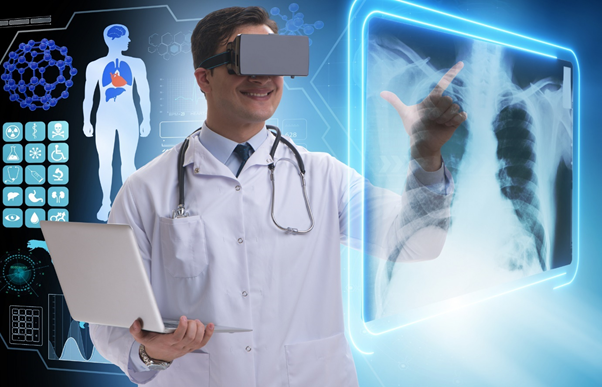
Source: © Elnur|Megapixl.com
Key applications of virtual reality (VR) in healthcare
Healthcare industry is adopting VR technology for robotic surgery, surgery simulation, phobia treatment, and skills training, among others. Virtual reality also helps with marketing, educating individuals about health and fitness regimes, and pain management.
Furthermore, many healthcare organizations worldwide have started making use of VR in their operations.
DO WATCH: What is Virtual Reality? What to expect from VR in the Future?
Some of the major VR applications are:
Medical education: VR simulation technologies are being employed in medical education and for training purpose for a long time now. The technology allows medical students to practice complicated, life-saving procedures in a risk-free environment and improve their skills.
Virtual reality in diagnostics: Many healthcare organizations use VR as an effective diagnostic tool that helps doctors and physicians perform accurate diagnoses. The diagnosis is performed in combination with other methods, like MRI or CT scans, and reduces the necessity for any invasive techniques.
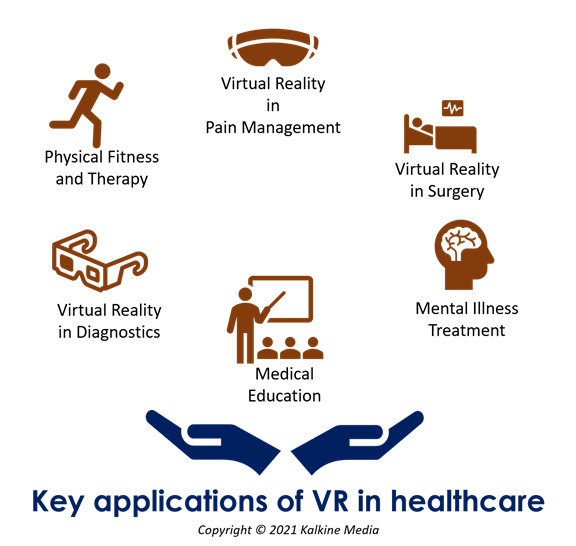
Treatment of mental illness: Exposure treatment is one of the standard methods for the treatment of several types of mental illness. Virtual reality is deliberately revolutionizing the approach in which exposure therapy is being performed in mentally ill patients. By offering innovative ways to keep the body calm and relaxed, VR helps in the therapy of anxiety and panic attacks.
Virtual Reality in Pain Management: Virtual reality is also a profound way to relieve pain and rehabilitation of patients who are suffering from severe pain. The VR pain management programs help reduce pain or severe discomfort by effectively diverting the attention of patients. By this way, VR minimizes the use of potentially harming painkillers and reduce the costs.
ALSO READ: Shedding light on another World within sight - Virtual Reality
Physical Fitness and Therapy: The fitness industry is witnessing an enormous shift in the way exercises are done now adays. The fitness industry is combining cardio practices with virtual reality and transforming the way of doing exercise. Furthermore, VR has a significant role in physical therapy, where patients need to follow an exercise routine that incorporates VR instead of other treatments or surgery.
Virtual Reality in Surgery: VR in surgery has gained enormous popularity. Through VR, the surgery is operated by a robotic device which is controlled by a human surgeon. Using this method can reduce the time and risk associated with complicated surgeries.
Pros and cons of using virtual reality in the healthcare space
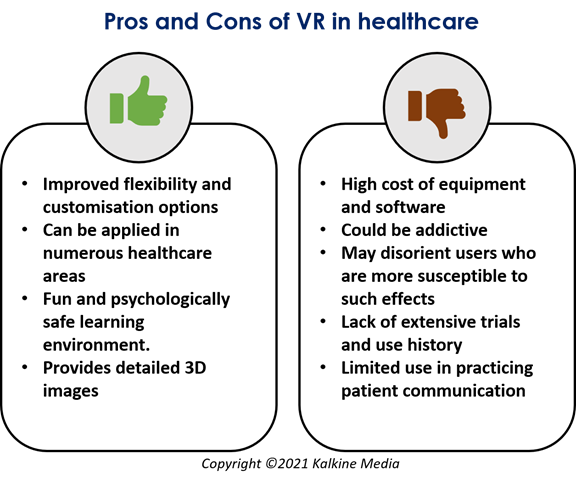
There are several beneficial effects associated with the great visual impressions provided by VR technology. However, as a rule, most of the benefits come at some cost, and virtual reality is no exception.
The illustration below highlights some pros and cons of using VR in healthcare:
Virtual reality (VR) in the healthcare industry is still in infancy and anticipated to expand as many healthcare organizations are increasingly using virtual reality for diagnosis, treatment, and other training purposes. Besides, the adoption is only expected to increase with significant advancements in technologies and faster internet speeds.
