
 AUS
AUS
 NZ
NZ
 UK
UK
 CA
CA
 USA
USA
 IND
IND






Highlights
- Australia has decided to ban all exports of alumina and bauxite to Russia, extending its existing sanctions.
- Australia has imposed a total of 476 sanctions on Russian individuals and institutions since the invasion began.
- Australia has vowed to expand its actions if Russia retaliates in a daunting manner.
Australia seems to have joined the movement in support of Ukraine while placing sanctions on Russia as a punitive measure. Utilising its sanctions mechanism, Australia has recently decided to ban all exports of alumina and bauxite to Russia. The country appears to be following in the footsteps of the West, where imposing sanctions has increasingly become a way of engaging in economic warfare.
The humanitarian crisis in Ukraine has only worsened with time, with individuals losing their lives and living under the constant threat of attacks. Many nations are resorting to non-violent means while standing in solidarity with Ukraine, including Australia. Imposing the first set of sanctions in February, Australia joined a list of countries battling against Russia’s actions, including the US, the European Union, Canada, Germany, and Britain.
Last month, Prime Minister Scott Morrison stated that Australia would stand up against Russia and its partners. He further stated that the first tranche of sanctions against Russia would be followed by subsequent tranches.
Here is a look at Australia’s sanctioning efforts against Russia in a bid to support Ukraine.
ALSO READ: What to expect from the Australian federal budget 2022?
List of sanctions against Russia
Australia seems determined to impose sanctions to stand up to the bullies. The country initially placed sanctions against a number of Russia’s elite citizens and lawmakers. Australia targeted eight senior Russian security officials and the oil and gas sector in its first effort to stand against Russia. Australian PM also cautioned that those supporting the extreme stance taken by Russia could also see retaliation from the country.
While keeping in line with ongoing global developments, Australia has vowed to expand its actions if Russia retaliates in a daunting manner. The first set of bans targeted the Russian President’s security council members, which restricted their travel into Australia. At the initial stage, financial sanctions were imposed on members of the Russian Federation Council, a body chaired by Vladimir Putin.
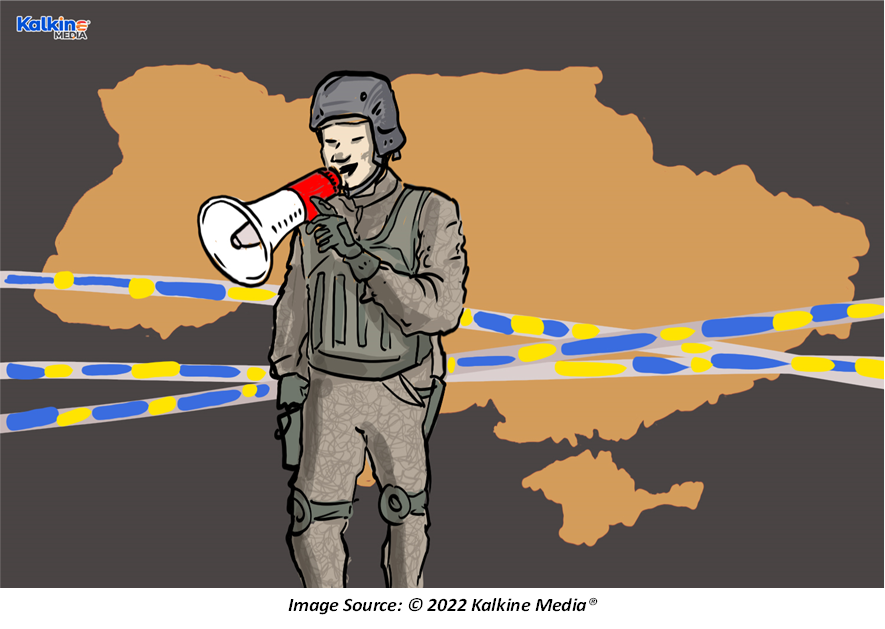
Despite these sanctions, geopolitical tensions continued to escalate while prompting the need for some solid action to be taken against Russia. Most political parties have supported the actions taken by the Australian government against Russia. Alternatively, efforts have been placed to ensure Ukrainians receive aid in the form of a faster visa acceptance process. Some of the initial sets of direct benefits announced by Australia for Ukrainians include automatic extensions on visas of Ukrainians living in Australia, allowing skilled workers and students to migrate.
Australia had also imposed sanctions against the Armed Forces of the Russian Federation. Early in March, targeted financial and travel restrictions were placed against Russian military commanders. A total of ten high-profile Russian officers were targeted under this tranche of sanctions. Additionally, Australia targeted eleven financial institutions in Russia via financial sanctions, which included the Central Bank of Russia.
ALSO READ: How 2022 rate hike might catch recent Aussie home buyers off guard
Has Australia Placed Sanctions Against Russia?
New sanctions on Russia
Since travel and financial bans might not show much effect in the short term, Australia recently introduced a fresh tranche of sanctions against Russia. This time, Australia aimed to hamper the direct exports of bauxite and alumina to Russia.
The move is crucial for Russian aluminium sector, which contributes heavily to Russian exports. These sanctions were imposed shortly after Canberra sanctioned Oleg Deripaska, the Russian oligarch who owns a stake in Queensland Alumina Limited - a joint venture between a Russian aluminium company and Australian mining pioneer Rio Tinto.
Who Tops The ‘Most Imposed Sanctions Countries’ List?
Apart from relying on retaliatory measures, Australia has also offered assistance to Ukraine, where circumstances are becoming challenging each passing day. Australian authorities recently announced that the country would donate around 70,000 tonnes of thermal coal to Ukraine as a goodwill gesture. Besides, military equipment and humanitarian aid will be provided to Ukraine from Australia.
Bottom line
By imposing these sanctions, Australian authorities intend to put “maximum cost” and “maximum pressure” on Russians to leave Ukraine. The new set of bauxite and alumina sanctions take the total tally to 476 sanctions on the oppressing country’s individuals and institutions. However, it could take some time before the collective efforts of several nations compel Russia to step back from its tormenting stance.
ALSO READ: Fed rate hike: What does it mean for Aussie investors and homeowners?
