
 AUS
AUS
 NZ
NZ
 UK
UK
 CA
CA
 USA
USA
 IND
IND







Summary
- Global healthcare institutions, research centres and drugmakers are working round the clock to develop a safe and effective vaccine against coronavirus with Pfizer Inc, BioNtech, etc as top vaccine challengers.
- However, 2 vaccine candidates’ trials in the US have come to a halt in the final stage of testing.
- Johnson & Johnson paused its ongoing coronavirus vaccine trials after a participant developed an unexplained illness, along with the British drugmaker AstraZeneca facing a similar setback.
- Moderna Inc announced the introduction of a rolling submission to Health Canada for its vaccine candidate against COVID-19, mRNA-1273 after positive results from preclinical viral challenge study of the vaccine and encouraging interim analysis of Phase 1 study of the vaccine.
- Moderna got an approval from the European Medicines Agency; its vaccine candidate mRNA-1273 is entitled for application submission to European Marketing Authorisation.
People are on tenterhooks in their wait for a coronavirus vaccine as the world continues to struggle, with COVID-19 spread, and experts claiming that life can return to normal only when a vaccine is in the market.
Drug companies, healthcare organisations and research institutions are working rigorously to develop a safe and effective vaccine against COVID-19, with significant global tests of several candidates in progress.
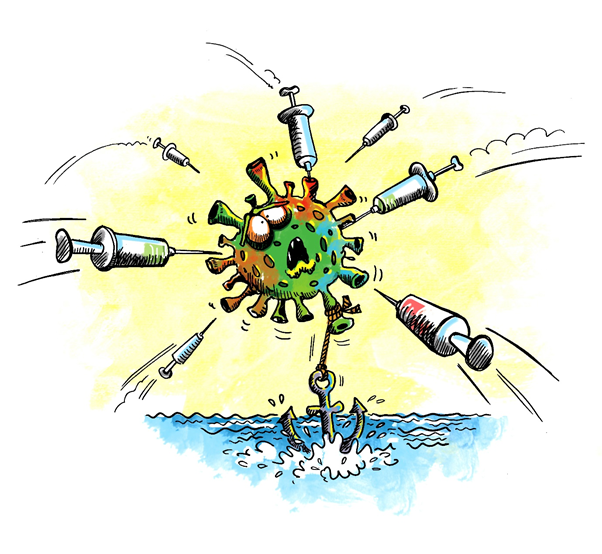
Image Source- © Kalkine Group
DO READ: How are developing world economies preparing for COVID-19 vaccine deployment and testing?
US drugmaker Pfizer Inc with German partner BioNTech SE, US biotech Moderna Inc and Britain-based AstraZeneca Plc in combination with University of Oxford researchers are some of the names in top vaccine contenders. However, they have faced specific challenges recently.
Vaccine candidates facing setbacks in trials
On 13 October, Johnson & Johnson, the world’s largest healthcare company, paused its coronavirus vaccine trials after a participant witnessed an unexplained illness, a second major impediment that hit a late-stage test of immunisation for coronavirus.
A vaccine trial by the British drugmaker, AstraZeneca is also experiencing a similar obstacle because of a suspected adverse reaction in a participant in September.
The UK arm of the trial has resumed, but the US arm is still under investigation by the US Food and Drug Administration (FDA). AstraZeneca’s representative described the pause as a regular action, which happens whenever there is an unexpected illness in one of the trials and to maintain the integrity of the tests.
ALSO READ: Trump was gung-ho on Eli Lilly Drug; Company hits pause button for COVID-19 antibody treatment
FDA Chief Dr Peter Marks stated that side effects generally pop up within 2-3 months if vaccines for other diseases are analysed.
The organisation also told developers of coronavirus vaccine that if they were to apply for an emergency use authorisation, to have their vaccine shot to the market more quickly than usual, following the last dose, half of the patients would still have to be under monitoring for 2 months.
DO READ: Trump boasts of pushing FDA to deliver, Claims Vaccine to Come out Shortly
Further, the FDA would take many weeks to work for concluding whether the coronavirus vaccine was appropriate for emergency use.
Moderna Inc (NASDAQ:MRNA) begins with the rolling submission
Moderna Inc is an American biotechnology company pioneering a new class of medicines made of messenger RNA.
On 13 October, the Company reported its rolling submission to Health Canada for its vaccine candidate against coronavirus, mRNA-1273 has been accepted under Canadian Minister of Health’s Interim Order.
The review will permit Health Canada to assess the performance of the vaccine in real-time as data comes up from patient trials, instead of waiting for drugmakers to submit everything at once.
The process is called a rolling review, which is one of the regulatory tools used to fast track the evaluation of a promising medicine or vaccine in cases of public health emergency.
However, Health Canada will not authorise any vaccine under rolling review until it gets all needed data to support its safety and efficacy.
The Phase 1 interim analysis showed that the vaccine (mRNA-1273) was tolerated well by all age groups and brought a solid immune reaction against SARS-CoV-2.
Some of the results for Phase 1 interim analysis across different age groups showed the following:
- Between 18-55 age group, neutralising antibody titers were detected in 100% of assessed participants and at 100 µg dose level chosen for Phase 3.
- In the 56-70 and 71+ age groups, the vaccine (mRNA-1273) generated consistently high levels of pseudovirus neutralisation antibody titers in all participants.
- Vaccination with mRNA-1273 prompted Th1-biased CD4 T cell responses in all age groups.
Moderna received eligibility confirmation from EMA
After positive results from a preclinical viral challenge study and positive Phase 1 interim analysis of mRNA-1273 across different age groups, Moderna received confirmation of eligibility in response to the submission of a letter of intent that enabled the Company to assess the prospect of submitting a Market Authorisation Application for its vaccine with European Medicines Agency (EMA).
On 14 October, Moderna Inc declared that it had got a written validation from EMA that mRNA-1273 was entitled for submission of an application for a European Union Marketing Authorization.
INTERESTING READ: Bill Gates on COVID: Wait Till Late 2021 to Lead Good Old Times
The Company appreciated the EMA’s effective response to the serious public health emergency by creating a fast-track framework that includes swift scientific guidance, rolling review and a quicker evaluation.
Stephane Bancel, CEO of Moderna, praised the valuable guidance of European regulatory authorities in Moderna for pursuing a Marketing Authorisation Application submission for approval in Europe for mRNA-1273. He also added that the Company is scaling up global manufacturing to provide about 500 million doses per year and probably up to 1 billion doses per year.
In Europe, the firm operates outside US, with its strategic industrial partners, Lonza of Switzerland and ROVI of Spain, for industrial and fill-finish activities.
The mRNA-1273 vaccine is presently under test in Phase 3 randomised, 1:1 placebo-controlled study with 30,000 participants at the 100 µg dose level in the US. The Phase 3 COVE study has registered about 28,618 participants as of 9 October, with more than 22,194 obtaining their second vaccine.
On 15 October 2020, Moderna last traded at US$75.58, decreasing by 1.28% from its last close.
