
 AUS
AUS
 NZ
NZ
 UK
UK
 CA
CA
 USA
USA
 IND
IND


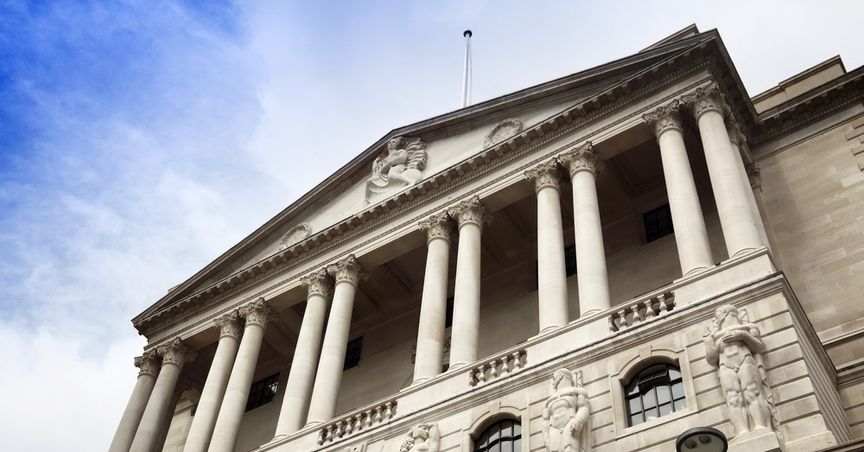





Silvana Tenreyro, policymaker, Bank of England said that the principal economic boost from the ongoing vaccination progress would only come once the Covid-19 vaccines are rolled out in the market. She added that the BoE needed to watch out for any prospective rise in interest rates not to threaten the economic recovery.
The policymaker appeared a little less optimistic than Andy Haldane, the bank’s chief economist who had earlier said that an effective vaccine scenario had improved the business confidence and the health of the financial markets. Tenreyro felt that the consumer spending was not likely to pick up substantially until the health restrictions get relaxed. This could happen only when a vaccine was widely available, she stressed.
Tenreyro pointed out that people could delay spending till they actually see for themselves that the vaccines are lowering the health risks. In the meantime, the ongoing progress on development of vaccines would definitely reduce the central bank’s downside risks for its economic forecasts, at least over the short and the medium terms.
She revealed that the BoE has been cautious this year not to raise the cost of borrowings to enable a speedier economic growth. So rather than pushing up the rates of interest, the bank has focused on ramping up the quantitative easing. To this end, the BOE’s has effectively initiated a 900 billion pounds bond-purchase program until now.
A rise in interest rates mostly accompanies a consequent increase in inflation. For this reason, the BoE has consciously not tightened the monetary conditions. Otherwise, it might become tough to bring back the inflation rate to the targeted value, she explained.
Is a negative interest regime possible?
Tenreyro said that in her view, reducing the interest rates below zero could boost the country’s economic growth.
The Bank of England has ordered a study to check the banking industry’s preparedness for a subzero rate. Earlier, Andrew Bailey, the bank’s governor had pointed out that he wanted to know if the computer systems could handle negative figures.
Sources pointed out that the 9-member monetary policy committee of the central bank had divergent views regarding reducing the interest rate any further.
Currently the bank rate set by the BoE stands at an all-time low level of 0.1 per cent and talks are going on if any further lowering of the same could boost the private investment and economic output.
Could inflation rise?
Well the answer is yes, if we go by Haldane’s views. The chief economist said that the vaccination progress coupled with a huge financial stimulus could raise inflation rate in the UK, at least in the medium-term.
Therefore, he emphasised that the central bank should focus on maintaining price stability in the short to medium term.
Last month the BoE had predicted that the British economy would not return to its pre-pandemic size until Q1 2022.
If we go by the results of a recent ‘react study’ conducted by the Imperial College of London, the current lockdown is doing good to Britain in lowering the number of infections across England. The second lockdown would end on December 5 when England would return back to a three-tier system of restrictions.
A fall in coronavirus cases
On November 27, the UK government reported that the R or the reproduction rate was estimated to be between 0.9 to 1 across the nation.
As per the latest available estimates, 12,330 people were tested positive for Covid-19 on November 30. Few weeks back on November 12, the corresponding number recorded was at a much higher value of 33,470.
