
 AUS
AUS
 NZ
NZ
 UK
UK
 CA
CA
 USA
USA
 IND
IND







Summary
- Tether is what’s known as a ‘stablecoin’ which is a crypto somehow tied to an external source like currency or precious resources.
- Tether released a “breakdown” of its capital reserves to assure the public that it is, in fact, backed by cash.
- The minimally detailed breakdown has again raised questions about the crypto’s transparency after the NYAG fined it earlier this year for lying about its reserves.
- That said, Tether was one of a few digital currencies which wasn’t adversely affected by yesterday’s crypto market crash.
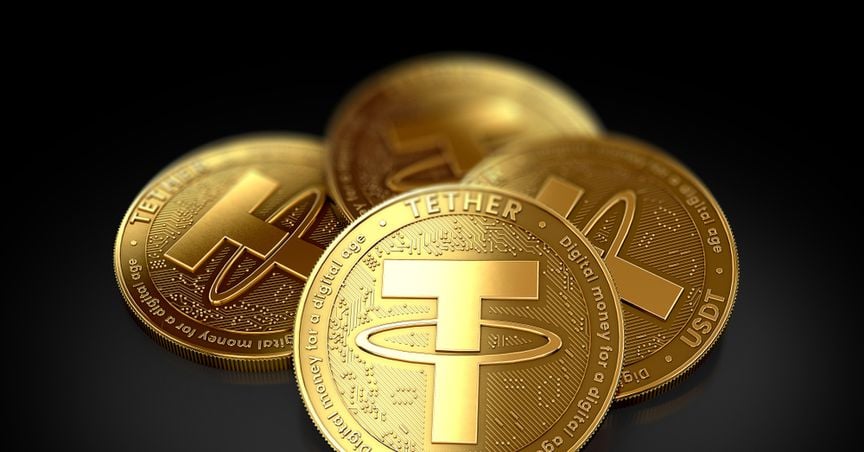
Cryptocurrency Tether released a breakdown of its holdings last week, leading some experts to believe the coin might not be as tied to the US dollar as it claims to be.
However, while several cryptos suffered significant crashes, Tether remained solid. The world’s largest cryptocurrency, Bitcoin, lost 31% once in the morning and a further 33% that evening, while Ether also free fell 44%. Tether held its ground, however, with a 24-hour low of US$0.995 and a high of $1.02.
ALSO READ: Crypto Market Crashes! US$1 Trillion Wiped Off In 5 Days
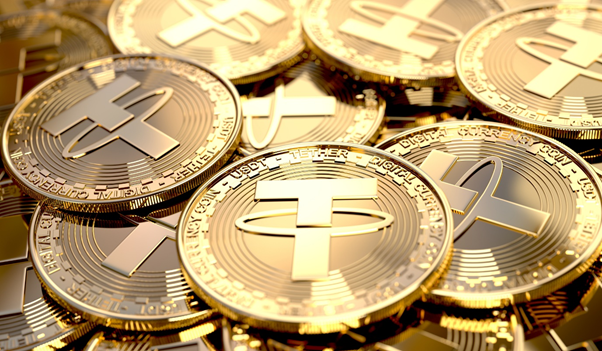
Tether remained relatively steady amid the recent crypto market crash (Source: © Avenger01| Megapixl.com)
What is Tether?
Tether was first created in 2014 – when it was known as RealCoin - by Brock Pierce, Reeve Collins, and Craig Sellars. When it was first created, Tether touted itself as one hundred per cent backed by the US currency. In other words, it was somehow linked to actual cash.
Tether (USDT) is labelled a stablecoin, which is a new type of crypto that ties itself to an external source. That external source is usually a fiat currency or, in some cases, a precious resource such as gold or silver.
In the case of Tether, that source is the US dollar. Therefore, if an investor puts one thousand American dollars into Tether, that will always be worth one thousand American dollars, at least in theory. This, of course, begs the question: Why would anyone want to do that? Two reasons. Firstly, if someone wants to pay with crypto for goods and services online, Tether is a place you can put it without the concern of whether it will crash overnight. After all, crypto is generally a volatile market.
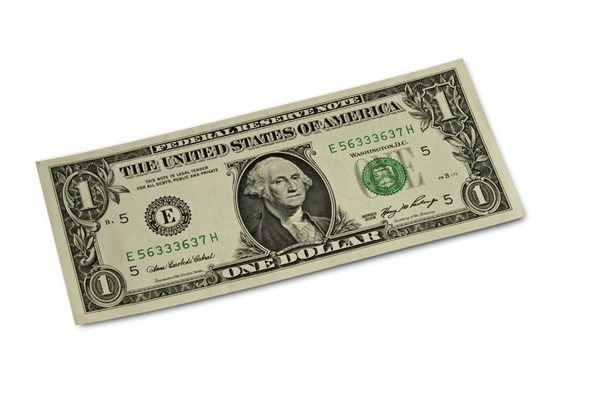
Tether is tied to the US dollar (Source: © Jaanall| Megapixl.com)
The second reason people purchase Tether is that it’s cheaper and faster to convert from crypto to crypto. For example, if one wishes to buy a cryptocurrency but that crypto doesn’t accept US dollars, that person can pay in Tether.
MUST READ: Is the wild ride still on for these five cryptocurrencies?
So How Tethered is Tether?
However, questions have arisen recently regarding just how closely is Tether tied to the US dollar? In February 2021, Tether released an assurance opinion to assure the public that cash reserves fully back it. In that report, an independent accountant concluded that there was sufficient evidence that Tether held an amount of capital and assets which did not exceed its liabilities, although in the report there’s no detailing of exactly what assets and liabilities Tether currently holds.
However, when the New York Attorney General read this report, it decided it would be best to conduct a thorough investigation into Tether. In that investigation, the NYAG discovered that Tether had, in fact, loaded funds into a couple of bank account a short time before the accountant looked over their books and then released the funds as soon as the accountant had left. The end result of that particular investigation was an US$18.5 million fine as well as a ban from operating out of New York. Moreover, it laid out how Tether had lied to the public.
Tether issues “Breakdown of Reserves”
Last week, Tether released what they call “a breakdown of their reserves”. However, the supposed “breakdown” only consists of two pie charts, and it only shows information up to 31 March 2021.
The breakdown purports to show that Tether is, at the very least, mostly backed by cash, with Tether claiming that 76% of its reserves – total consolidated assets - are in cash or “cash equivalents”. If a bank had admitted this breakdown, it would be grossly inefficient. So why is it ok for a digital currency? If the so-called stablecoin is going to advertise itself as a safe haven for crypto investors – an alternative place to hold capital and be considered as safe as a bank - surely it must be held to the same standards in terms of its transparency and due diligence.
ALSO READ: A glance at five Important Cryptocurrencies other than Bitcoin and Ethereum
