
 AUS
AUS
 NZ
NZ
 UK
UK
 CA
CA
 USA
USA
 IND
IND







Source: Momentum Fotograh, Shutterstock
Summary
- Hardcore Bitcoin enthusiasts say cryptocurrencies is the world’s best hedge against inflation, programmed to have a limited supply.
- An interesting relegation of a report is that just 2.4% of bitcoin-carrying accounts own 95% of all bitcoin in existence.
- The recent debate of Bitcoin VS gold has also challenged and tried to threaten gold’s throne.
Inflation concerns have again started to creep into the minds of market participants. It's intriguing that they are now eyeing bitcoin as a way to avoid the risks of weaker purchasing power. But according to some experts, it is better to look somewhere else to catch up with inflation.
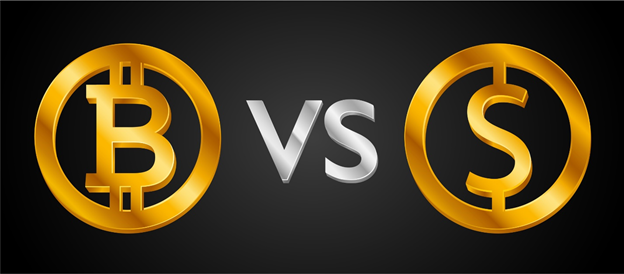
Image Source: ID 125559827 © Ogonkova | Megapixl.com
Hardcore Bitcoin enthusiasts say cryptocurrencies is the world’s best hedge against inflation. The underlying premise being, unlike U.S. dollars or any other fiat currency, it’s programmed to have a limited supply. Therefore, their purchasing power is bound to rise to catch up with inflation.
Another argument that comes up is, being a decentralized currency, governments or central banks cannot adopt their tools and policies to put a leash on the currency.
To put it simply, the bitcoin supply is capped at 21 million, which restricts the inflation risk typically arising from “money printing” by central banks.
But according to a report by Francisco Blanch, an analyst at Bank of America, Bitcoin has not been particularly compelling as an inflation hedge as commodities, and even equities provide better correlations to inflation. In fact, Bitcoin doesn’t have a long enough history to make an attempt to try to find its correlation with inflation.

Image Source: ID 142334515 © Aoutphoto | Megapixl.com
An interesting relegation of his report is that just 2.4% of bitcoin-carrying accounts own 95% of all Bitcoin in existence. This level of concentration in a few hands makes Bitcoin almost impractical to be used as a payment option or even a wide-scale investment vehicle.
The trading in Bitcoin by these “whale” accounts can also impact the entire space significantly with sharp price swings as what we have seen till now. This makes the price of Bitcoin to be manipulated easily than other mature markets like commodities or forex.
One of the go-to assets on the planet when it comes to a hedge against inflation is the mighty gold. However, Bitcoin VS gold's recent debate has also challenged and tried to threaten gold’s throne as the no. one safe-haven asset.
Gold is a great hedge against inflation, but it is also prone to manias and crashed over shorter periods. The current example being, gold is down by almost 9 per cent this year despite all the inflationary talks. It is also down by nearly 17 per cent from the peak of August 2020.
This is the case of one of the most stable assets. Now comparing it with Bitcoin, which is the epitome of volatility, moving even more than 10 per cent in a day, the question of an effective hedge against inflation is doubtful.
Bitcoin’s price is also driven by speculative and short term aggressive trading bets; therefore, it would be of no surprise if speculators take out their money from Bitcoin during an inflationary period, leading to a plunge in its price.
