
 AUS
AUS
 NZ
NZ
 UK
UK
 CA
CA
 USA
USA
 IND
IND






Highlights
- Australia is one of the world’s leading producers of bauxite, iron ore, and other metals.
- The domestic oil production in the country is not sufficient to be used commercially.
- As per the Australian Institute of Petroleum, the source of Australia's petroleum product imports has been dominated by Singapore.
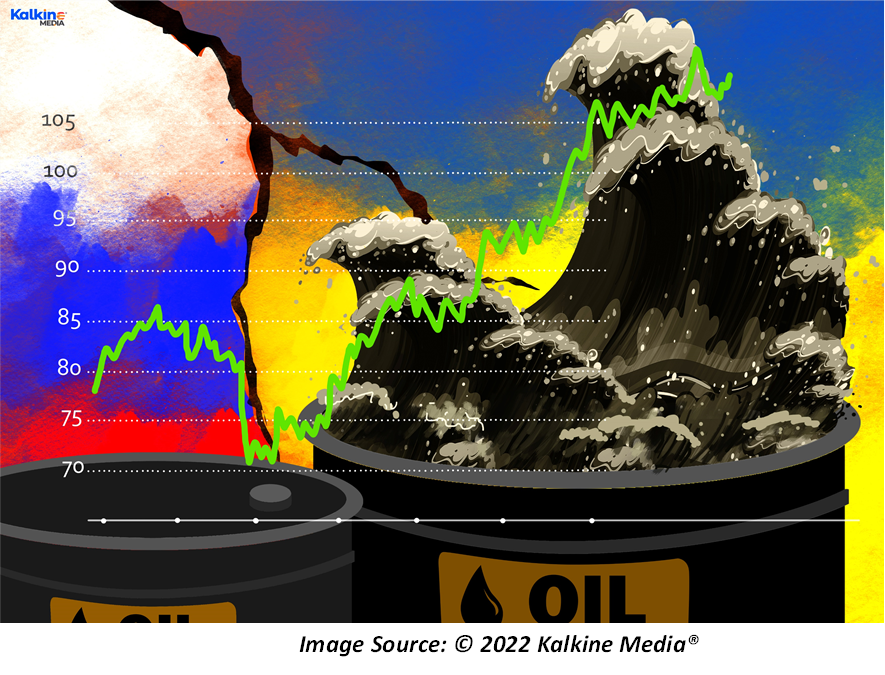
The ongoing Russia-Ukraine war has sparked chaotic price movements in commodities, primarily impacting oil prices. In recent days, the crude oil prices have been oscillating between the optimism of a supply boost from the United States and investors' concerns about the impact of oil sanctions on Russia.
Oil prices recently fell as investors eyed a truce in Yemen, which could lessen supply disruption concerns in the Middle East. Meanwhile, investors kept an eye on the release of supplies from strategic reserves from consuming nations.
While oil prices lately took a breather, the crude prices reached new highs last month on supply-side concerns and continue to remain at high levels. In the given scenario, it seems important to consider how much Australian imports might have been affected by elevated oil prices.
Australia is inherently a mineral-rich country and is one of the world’s leading producers of bauxite, iron ore, lithium, gold, lead, and many other minerals. According to the U.S. Energy Information Administration (EIA), Australia’s energy exports, excluding uranium, accounted for approximately 81% of its total energy production in 2020.
Interestingly, Australia also produces a decent volume of crude oil, which is mostly exported to other countries. Despite having abundant resources, Australia fulfils almost all of its oil requirements through imports, with only 12% of refinery feedstock domestically produced (Geoscience Australia).
RELATED READ: When will Australia’s petrol prices come down?
How much oil does Australia produce domestically?
The domestic supplies of crude oil are limited in Australia. However, the country exports a sizeable amount of its oil production. As per Geoscience Australia, the country exported around 80% of its domestically produced crude in 2019.
Additionally, there is a significant share of undiscovered resources in Australia, including shale oil, tight oil, basin centred oil and oil shale. The oil shale is the only unconventional oil resource that has been exploited in Australia so far. At present, there is no commercial production of oil shale resources in Australia.
Statistics from Geoscience Australia reveal Australia’s 2P reserves of conventional oil amounted to 10,263 petajoules or 1,803 million barrels in 2019. As per 2019 production rates, this was worth around 14 years of remaining conventional oil reserves. Most of the oil production in 2019 came from offshore north-western Australia, which included produce from Northern Carnarvon Basin and Browse Basin.
ALSO READ: Australia Budget 2022: How much paternity leave are fathers entitled to?
Why doesn't Australia produce its own fuel?
Before answering this question, it is important to understand that not all recovered oil reserves can be easily transformed into commercial oil. The domestic oil production in Australia is not sufficient to meet its demand.
How Is Australia’s Current Economy? And How Does It Impact You?
The majority of Australian oil production is condensate, or a very light form of crude that is a by-product of national gas production. This type of crude can be processed into usable fuel in an emergency. However, it is not viable as a source of commercial fuel. Thus, Australia finds it more beneficial to either import its fuel directly or indirectly in the form of crude feedstock, which is then refined.
Additionally, refining oil domestically is also not feasible as most of the country’s refineries are either old or relatively small, which have to compete against more efficient refineries in the Asian region. Thus, it is cheaper for the government to import already refined oil that is refined at a lower rate in the Asian region.
Where does Australia import its oil from?
The breakout of a war in Ukraine has sparked debates on oil imports from Russia. While Russia is not a central source of oil for Australia, the events in the country have triggered an oil price hike in Australia. Despite its reduced dependence on Russian oil imports, Australia has still managed to impose restrictions and bans on the country and its prominent members.
A 2017 report by the Australian Institute of Petroleum stated that the most important source of oil for Australia is Singapore. But the country has also seen growing South Asian oil imports from South Korea and Japan.
Some imports are also sourced from the Middle East. Up until 2021, fuel supply chains developed by the country were resilient and highly flexible. However, a lot has changed as the global oil shortage inflicts heavy volatility in oil prices.
ALSO READ: Why interest rate hike is a threat to Australia’s booming housing market?
