
 AUS
AUS
 NZ
NZ
 UK
UK
 CA
CA
 USA
USA
 IND
IND


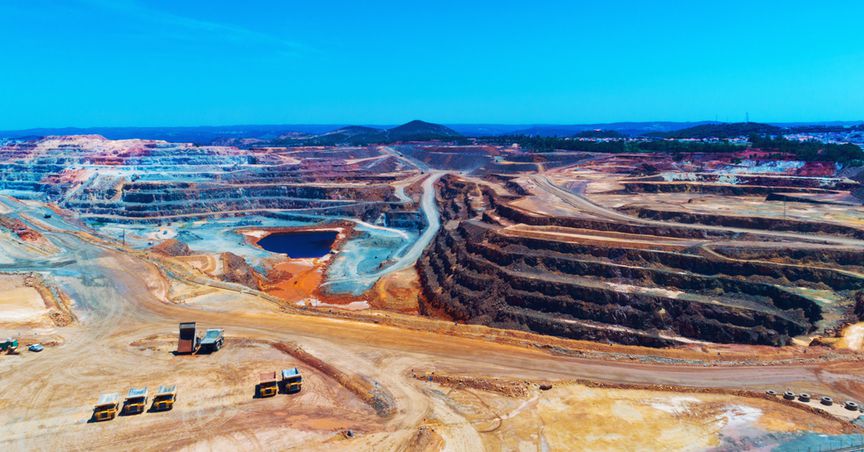





At present, many analysts believe that a copper supercycle is underway and the same has resulted in copper prices hitting a record high. So, what is a commodity supercycle?
Image Source: Megapixl
Supercycle is defined as a wave degree under the Elliot Wave Theory, which has classified a total of 9 degrees of waves, i.e., grand supercycle, supercycle, cycle, primary, intermediate, minor, minutee, minute, and sub-minutee.
Typically, commodity prices move in extended periods with industrialisation and modernisation. This dictates stories of the development of many civilisations. Moreover, commodity prices usually move well-above or below their long-term price trend with two major types of swing, i.e., an upswing and a downswing.
This upswing phase of the commodity price is where some economic commodities such as copper (commodity groups) trade and surge along their long-term price trend, this price behaviour is what is known as a commodity supercycle. Ideally, these upswings in commodity prices unfold due to a lag between unexpected, continuous, and positive trends arriving out of demand and supply imbalance.
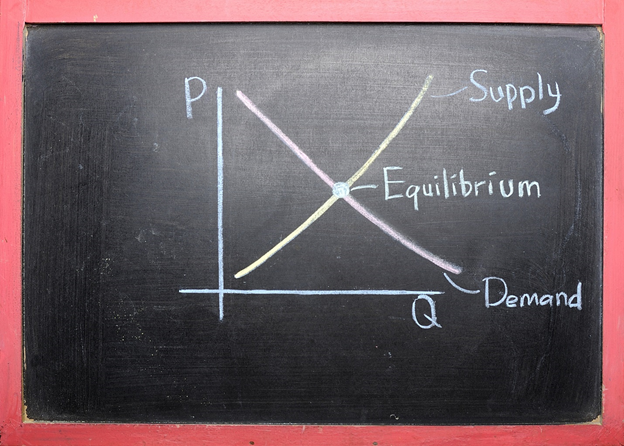
Image Source: Megapixl
In common terms, when the demand for a commodity exceeds the prevailing supply, or the future estimation of the demand is higher than the assessment of the present available supply, commodity prices move in an upswing to enter a supercycle.
Visualising a commodity supercycle requires charting various commodity groups together and eliminating their own price patterns through tools like detrending. Once integrated, these commodity groups show some extended periods of price movement, which is typically called a “Commodity Supercycle”.
What is presently leading the current commodity supercycle in base metals group?
As mentioned above, the commodity supercycle dictate stories behind economic development. For example, the commodity supercycle witnessed from 1899 to 1932 represented the industrialisation of the United States in the late 19th, and the cycle of 1962 to 1995 represented the re-industrialisation of Europe and Japan.
Just like that, the present supercycle, which as per some industry experts is the fourth such cycle, is primarily due to the rapid industrialisation in China with its major businesses such as the steel industry, trying to capture a large tranche of the global trade.
Also Read: China to tighten its grip on world’s copper market: Floats Cu Futures
Image Source: Megapixl
With rapid evolvement of the Chinese steel industry and an unprecedented industrial growth pushing the demand for metals group, this supercycle is marking its existence.
Apart from rapid development in China, a weaker dollar and oil market along with the go-green drive is also lifting the metals group as a whole.
Furthermore, many analysts believe that the future expectation of the possible deficit along with the above-mentioned factors are tell-tale signs for the copper supercycle. The positive fundamental newsprint has supported a supercyle wave in copper and the industrial metal price hit a multi-year high of USD 8,000 a tonne on 18 December 2020.
