
 AUS
AUS
 NZ
NZ
 UK
UK
 CA
CA
 USA
USA
 IND
IND


_06_16_2026_04_54_27_535266.jpg)




Highlights
• Bellevue Gold operates within Australia’s mining sector focused on gold exploration and resource development.
• The company advances gold projects located within established mineralised regions.
• Developments occur within benchmark indices including the ASX 300 and the All Ordinaries.
Bellevue Gold advances exploration and development activities within Australia’s gold mining sector, contributing to the broader precious metals industry.
Australia’s mining and materials sector forms a major part of the national equity market, with companies engaged in exploration, project development, and resource extraction. Organisations operating within this industry participate in benchmark indices including the ASX 300 and the All Ordinaries. The gold mining segment remains one of the most recognised components of this sector due to the metal’s role in financial systems, electronics manufacturing, and jewellery production.
Within this mining environment, Bellevue Gold Limited (ASX:BGL) operates as a gold developer focused on advancing projects located within mineral provinces of Western Australia. The company conducts exploration activities designed to identify gold mineralisation within geological formations associated with precious metal deposits. Exploration organisations working in this field rely on drilling campaigns, geological mapping, and metallurgical evaluation to understand the characteristics of mineral resources.
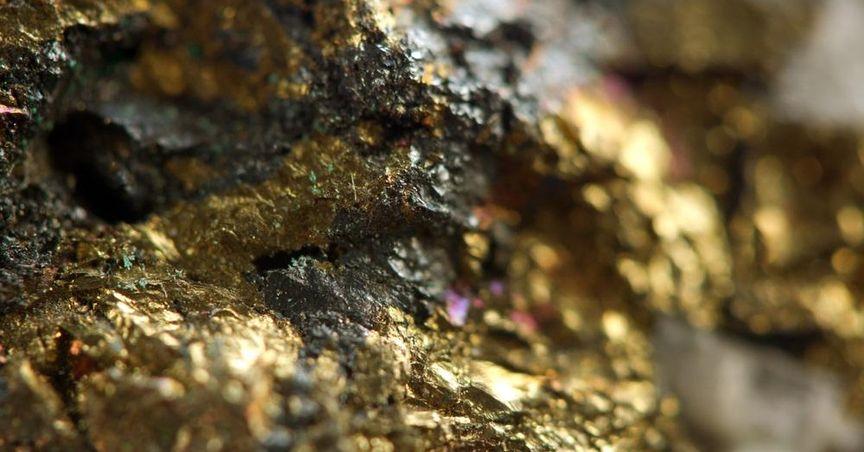
Gold exploration involves detailed investigation of rock formations that may contain deposits of precious metals. Geological surveys examine structural features such as faults, quartz veins, and mineralised zones that can host gold-bearing minerals. Exploration teams collect rock samples through drilling programs that allow geologists to evaluate the composition and distribution of mineralisation within underground formations.
Companies conducting exploration activities contribute to expanding knowledge of mineral resources across regions known for historic gold mining. These efforts help identify deposits that may support future resource development within Australia’s mining sector.
Mining organisations involved in exploration and development operate within the broader corporate ecosystem alongside firms representing multiple industries, including organisations commonly associated with income-focused segments such as ASX dividend stocks. This diversity illustrates the wide range of sectors present within Australian financial markets.
Geological Surveys and Gold Resource Identification
The process of identifying gold deposits begins with geological research designed to understand the structural characteristics of mineralised regions. Geologists study rock formations that may contain concentrations of gold within veins or disseminated mineral systems.
Exploration teams conduct field surveys that include mapping rock formations and collecting surface samples from mineralised zones. These studies help determine whether a region contains geological features associated with gold mineralisation.
Geophysical surveys represent another method used in mineral exploration. Instruments measuring magnetic and electrical properties of underground rock layers reveal anomalies that may correspond with mineral deposits. These data sets help geologists determine where drilling programs should be conducted.
Drilling campaigns provide direct access to rock formations located beneath the earth’s surface. Drill rigs extract cylindrical rock samples known as core samples from targeted areas within the exploration zone. Laboratory examination of these samples reveals mineral content and structural features of the deposit.
Geochemical testing determines the concentration of metals within rock samples collected during drilling operations. Scientists analyse these samples to identify zones where gold mineralisation occurs in meaningful quantities.
Information gathered from geological surveys and drilling programs contributes to building detailed models of mineral deposits. These models describe the geometry, depth, and distribution of gold within the exploration area.
Resource evaluation programs use this geological information to estimate the scale and characteristics of the deposit. These studies help determine whether a project may progress toward development within the mining lifecycle.
Gold Mining Development and Processing Methods
Once exploration activities identify a mineral resource, mining companies evaluate development pathways for extracting gold from the deposit. Development strategies depend on geological conditions and the depth of the mineralised zone.
Gold mining may occur through open-pit or underground methods. Open-pit mining involves removing surface rock layers to access ore deposits located near the earth’s surface. Underground mining involves constructing tunnels and shafts that allow access to deeper mineralised zones.
Ore extracted from mining operations is transported to processing facilities where gold is separated from surrounding rock material. Processing plants crush and grind ore to reduce it into smaller particles suitable for extraction methods.
One commonly used extraction method involves dissolving gold from crushed ore using specialised chemical solutions. The dissolved metal is later recovered through precipitation processes that isolate gold from the solution.
Gravity separation techniques may also be used to recover gold due to the metal’s density relative to surrounding minerals. These processes involve equipment designed to separate heavier gold particles from lighter rock material.
Refining processes convert extracted gold into high-purity metal suitable for commercial and industrial uses. Gold bars or refined products produced through these processes enter global markets where the metal is used across multiple industries.
Mining companies operating processing facilities therefore contribute to the supply of precious metals used in financial systems, manufacturing industries, and consumer products.
Industrial Applications and Global Gold Supply Chains
Gold plays an important role across numerous industries because of its physical and chemical properties. The metal conducts electricity efficiently and resists corrosion, making it useful in electronics manufacturing.
Electronic components used in computers, communication devices, and specialised industrial equipment often incorporate small quantities of gold to maintain reliable electrical connections. The metal’s durability and conductivity make it suitable for precision electronic systems.
Jewellery manufacturing represents another major application of gold. Precious metal jewellery remains widely produced across international markets due to gold’s appearance and resistance to corrosion.
Gold also serves as a financial asset within global monetary systems. Financial institutions and central banks maintain gold reserves as part of their asset portfolios. The metal has historically been associated with financial stability and wealth preservation.
Industrial uses of gold extend to aerospace engineering and specialised medical technologies. Gold coatings may be applied to electronic components used in aerospace systems where reliability under extreme conditions is required. Mining companies engaged in gold exploration and development contribute to supplying a resource that supports multiple sectors within the global economy.
Mining Companies Within the Australian Equity Market
Australia hosts extensive mineral resources across multiple regions, making the mining sector one of the most prominent industries represented within the national equity market. Companies involved in exploration, development, and production of commodities such as gold, copper, iron ore, and lithium participate in benchmark indices tracking Australian listed companies.
Mining organisations operate alongside businesses representing industries including finance, telecommunications, healthcare, and technology development. This diverse corporate environment reflects the range of economic activities present within the Australian market landscape.
Exploration companies perform an important function within the mining ecosystem by identifying new mineral deposits that may support future resource development. Their activities contribute to expanding geological knowledge of mineral-rich regions across the country.
Gold exploration remains particularly active within regions known for historic mining activity. Geological formations located within these areas may host additional deposits awaiting discovery through modern exploration techniques.
The presence of mining companies within benchmark indices highlights the importance of resource development within the national economy. Mining activities support employment, infrastructure development, and international trade through the export of mineral resources.
Companies participating in this sector operate within the broader corporate environment represented by benchmarks such as the asx all ords. These indices include organisations across multiple industries, illustrating the diverse structure of Australia’s equity market.
