
 AUS
AUS
 NZ
NZ
 UK
UK
 CA
CA
 USA
USA
 IND
IND






Highlights
- Australian equities experienced moderated momentum after early advances eased during the session
- Mining, energy, and financial companies influenced the broader market landscape
- Sector activity shaped movements across the Australian share market
The Australian equities landscape belongs primarily to the resource and financial sector, which forms a major foundation of the national capital market system. Market activity across Australia often reflects developments in mining, banking, energy, healthcare, and technology industries. During the session, movements unfolded across the broader ASX 200, the ASX 100, and the All Ordinaries, illustrating how multiple sectors contributed to the overall direction of trading throughout the day.
The trading session opened with a constructive tone across the domestic equities environment, with several large companies drawing attention in early activity. Among the widely followed corporations in the resource sector was BHP Group (ASX:BHP), which remained a closely watched participant within the mining landscape. Activity across major corporations continued to reflect the influence of commodity producers and financial institutions that maintain strong representation within the key Australian indices.
Sector Activity Across the Australian Market
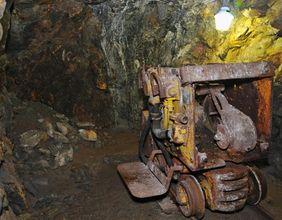
Mining companies remained an important focal point throughout the trading session. Resource producers represent a large portion of the Australian corporate environment and maintain considerable representation within benchmark indices. Activity in the mining industry often resonates across the broader ASX stock market, given the strong presence of metals and mineral exporters within the national economy.
Large mining corporations operate across a wide range of mineral resources including iron ore, copper, coal, and other industrial metals. These resources form a central component of international supply chains that support manufacturing, infrastructure development, and industrial production across many regions.
The presence of large mining corporations means movements within commodity markets frequently influence the overall direction of Australian equities. When metals producers experience shifts in operational or trading conditions, related industries such as transportation, logistics, engineering services, and export infrastructure may also reflect those changes.
The Australian mining ecosystem includes exploration companies, large-scale producers, and service providers that support extraction and processing operations. Together, these companies contribute to the broader resource supply network that supports domestic economic activity and international trade.
Many of these businesses are represented among well-known ASX mining stocks, highlighting the central role of mineral resources within the Australian corporate landscape. Mining companies frequently operate across multiple jurisdictions, maintaining mines, processing facilities, and shipping operations across global markets.
Their participation in international commodity networks ensures that developments in resource markets often remain closely observed during trading sessions across Australia.
Financial Institutions and Banking Sector Influence
Financial institutions represent another major component of the Australian equities environment. Banks, financial services providers, and insurance companies occupy prominent positions within leading market indices due to their operational scale and longstanding presence within the economy.
Australian banking institutions operate across retail banking, corporate lending, wealth management services, and payment infrastructure. Their services connect households, businesses, and institutions across the financial ecosystem, allowing capital to move between industries and supporting economic activity across the country.
During the session, financial companies contributed to the evolving market landscape as trading activity unfolded across multiple sectors. The presence of large banking groups within the major indices often results in notable influence over broader market movements.
The financial sector also intersects with the group of widely recognized ASX dividend stocks, which include companies that distribute shareholder income through periodic payments. Several large financial institutions fall within this category, reinforcing their visibility within the domestic equities framework.
Banks and financial services companies frequently maintain strong connections with industries such as infrastructure development, real estate, manufacturing, and consumer services. These interconnections highlight how financial institutions serve as a central pillar of the broader economic structure.
Their influence within the equities market extends beyond direct operations, as financial companies also provide lending facilities, transaction services, and advisory support to numerous businesses across Australia.
Energy Companies and Resource Producers
Energy producers formed another integral element of the trading session. The Australian energy sector includes corporations engaged in exploration, production, and distribution of oil, natural gas, and related resources. These companies operate across both domestic and international markets, contributing to global energy supply networks.
Energy companies often operate alongside mining groups within the broader resource-focused segment of the market. Their activities involve large-scale infrastructure projects such as offshore drilling platforms, liquefied natural gas processing facilities, and pipeline transportation networks.
Energy producers play a crucial role in supporting industrial supply chains that require fuel and energy inputs. Industries such as manufacturing, transportation, and construction depend on consistent access to energy resources to maintain operational efficiency.
Within the Australian equities environment, the energy sector contributes to the diversity of companies represented across benchmark indices. Oil and gas producers frequently maintain international operations, connecting Australian projects with global energy distribution channels.
The presence of energy corporations alongside mining companies highlights the importance of the resource sector within the national corporate landscape. These companies often collaborate with engineering firms, logistics providers, and equipment manufacturers to develop and maintain complex energy infrastructure.
Their operations extend across exploration, extraction, transportation, and processing, forming an interconnected system that supports domestic industry and export activity.
Technology and Healthcare Sector Movements
Beyond traditional industries such as resources and banking, technology and healthcare companies also contributed to the broader market narrative. The Australian technology sector includes companies engaged in software development, digital infrastructure services, cloud platforms, and cybersecurity solutions.
Technology firms frequently develop digital systems used across financial services, supply chain management, healthcare networks, and government services. Many Australian technology companies maintain international client bases and operate across multiple continents.
Healthcare companies represent another essential component of the Australian corporate ecosystem. These organizations include biotechnology developers, pharmaceutical producers, diagnostic equipment manufacturers, and healthcare service providers.
Healthcare businesses operate within research-driven environments where scientific innovation plays a significant role in product development. Many organizations collaborate with universities, research institutes, and hospitals to conduct medical studies and develop healthcare solutions.
The presence of healthcare companies within the major indices demonstrates the sector’s importance within the broader economic landscape. Medical technology, pharmaceutical research, and healthcare services contribute to both domestic health systems and international medical markets.
Sector activity across technology and healthcare highlighted the diversity of industries represented within the Australian stock market. These sectors operate alongside mining, energy, and financial institutions to form a multifaceted corporate environment.
Broader Market Participation and Index Composition
The Australian equities ecosystem includes hundreds of listed corporations operating across a wide range of industries. Many of these companies appear within the group known as ASX ordinaries stocks, which represents a broad cross-section of the national corporate environment.
The All Ordinaries index includes companies from sectors such as mining, banking, consumer services, telecommunications, healthcare, technology, and industrial manufacturing. This broad representation provides insight into the overall structure of the domestic equities market.
Indices such as the ASX three hundred and the ASX two hundred track large groups of companies across the Australian corporate environment. These benchmarks serve as reference points for observing how different industries contribute to market activity during trading sessions.
The Australian stock market operates as a platform where companies access capital for expansion, institutions allocate financial resources, and investors participate in corporate ownership structures. Trading sessions reflect the ongoing interaction between corporate developments, global economic conditions, and industry-specific developments.
Companies listed on the Australian exchange often maintain international operations, exporting commodities, services, and technologies to customers across many regions. These global connections link the Australian corporate environment with international supply chains and economic activity.
The interaction between domestic industries and global trade continues to shape the broader structure of the Australian share market. Mining companies contribute mineral resources, financial institutions provide capital infrastructure, energy producers support industrial supply chains, and technology firms deliver digital solutions across industries.
