
 AUS
AUS
 NZ
NZ
 UK
UK
 CA
CA
 USA
USA
 IND
IND





_07_03_2026_03_50_21_133108.jpg)

Highlights
- June quarter production reports are set to place Australia's coal producers under intense market scrutiny.
- Whitehaven Coal, New Hope and Yancoal each carry different blends of metallurgical and thermal coal exposure.
- A sharp rise in crude oil prices is increasing diesel costs just as investors examine operating cost discipline.
Whitehaven Coal Ltd (ASX:WHC), the Australian coal producer with operations spanning New South Wales and Queensland, enters the June quarterly reporting season under heightened attention as investors assess whether operational performance has matched annual production guidance. With the broader market opening cautiously following weaker offshore sentiment, the reporting period is expected to provide one of the clearest assessments of how Australia's major coal producers have navigated production, costs and logistics over the financial year. Alongside Whitehaven, New Hope Corporation (ASX:NHC) and Yancoal Australia (ASX:YAL) are also preparing to release updates that could shape sentiment across All Ordinaries mining stocks.
The June quarter is the industry's report card
The June quarter represents the final opportunity for mining companies to demonstrate that annual production guidance has been achieved.
Throughout the year, producers update expectations around:
- Production volumes.
- Unit costs.
- Sales guidance.
- Operational performance.
The final quarter ultimately confirms whether those targets have been delivered or missed.
Coal producers often face additional operational complexity because output depends on factors including:
- Weather conditions.
- Longwall relocations.
- Equipment availability.
- Rail capacity.
- Export terminal access.
These variables frequently determine whether production reaches customers on schedule.
Metallurgical and thermal coal remain different markets
Coal is often discussed as a single commodity, although its end markets remain fundamentally different.
Metallurgical coal is primarily used in blast furnace steelmaking and continues supporting global steel production.
Thermal coal is burned for electricity generation and faces increasing competition from renewable energy, natural gas and nuclear generation across many developed economies.
This distinction increasingly influences how market participants evaluate individual producers.
Whitehaven's greater exposure to metallurgical coal differs materially from New Hope's stronger thermal coal portfolio, while Yancoal maintains a more diversified production mix.
For investors following ASX Metal & Mining Stocks, commodity exposure often explains company performance more effectively than broad sector labels.
Steel production continues driving metallurgical coal demand
Demand for metallurgical coal remains closely linked to blast furnace steel production.
India continues expanding steelmaking capacity while possessing relatively limited domestic supplies of premium coking coal.
This growing import requirement has become an increasingly important structural driver for Australian exporters.
Although alternative steelmaking technologies continue developing, conventional blast furnace production remains dominant across much of global steel manufacturing.
Higher oil prices increase mining costs
The recent rise in crude oil prices presents an additional challenge for coal producers.
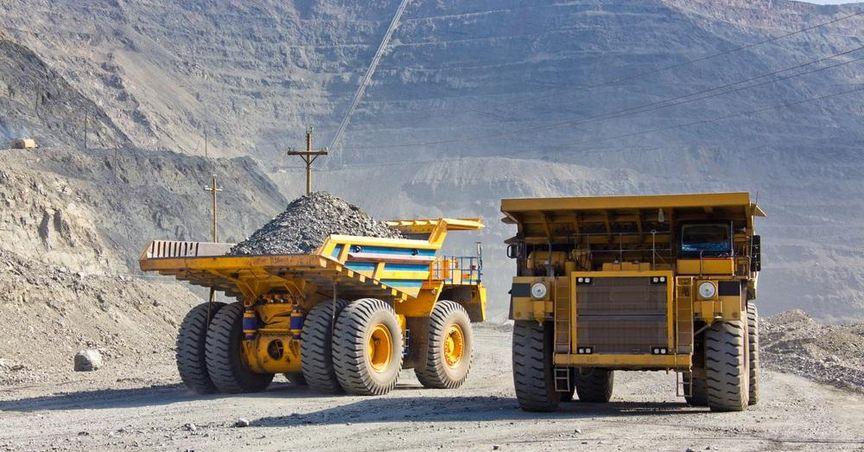
Mining operations rely heavily on diesel-powered equipment, including:
- Haul trucks.
- Excavators.
- Draglines.
- Loaders.
- Rail transport.
Higher fuel prices gradually flow into operating costs, placing additional pressure on margins during a reporting period where cost discipline is already receiving close attention.
Labour availability, contractor expenses and consumable costs also remain important components of the industry's cost base.
Queensland royalties remain an ongoing policy consideration
Queensland's progressive royalty framework continues influencing earnings across the state's coal producers.
As coal prices increase, royalty rates also rise, meaning a larger share of incremental revenue is directed towards government royalties.
This structure remains an important consideration when evaluating future project economics and capital allocation decisions across the sector.
Logistics often determine quarterly outcomes
Mining performance alone does not determine quarterly sales results.
Export performance also depends upon:
- Rail network availability.
- Port capacity.
- Maintenance schedules.
- Shipping logistics.
Production may remain strong while sales volumes temporarily soften if coal cannot be transported to export terminals efficiently.
Understanding inventory movements and logistics commentary often provides important context when reviewing quarterly reports.
Capital allocation remains closely watched
Strong cash generation has created important strategic choices for Australian coal producers.
Companies continue balancing:
- Mine life extensions.
- Capital investment.
- Debt reduction.
- Shareholder distributions.
Different capital allocation strategies have contributed to varying market performance across the sector despite broadly similar commodity conditions.
What investors may focus on
As quarterly reports are released, market attention is likely to remain focused on:
- Production versus guidance.
- Unit operating costs.
- Realised coal pricing.
- Inventory movements.
- Logistics performance.
- Commentary on diesel and input cost inflation.
These operational indicators may ultimately carry greater significance than daily commodity price movements.
The June quarterly reporting season represents one of the most important periods of the year for Australia's listed coal producers. Whitehaven Coal, New Hope and Yancoal each enter reporting with different commodity exposures, operational priorities and market expectations. While higher oil prices have introduced fresh cost pressures, production delivery, logistics execution and capital discipline remain the key factors likely to shape investor attention as the sector's financial year comes to a close.
