
 AUS
AUS
 NZ
NZ
 UK
UK
 CA
CA
 USA
USA
 IND
IND





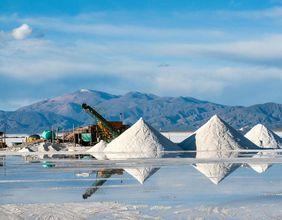


Highlights
• McLaren Minerals expands Barossa Project footprint in Eucla Basin.
• Data review highlights zircon-rich mineral sands composition.
• Follow-up drilling program planned to extend exploration activity.
McLaren Minerals (ASX:MML) expands Barossa Project activity, highlighting mineral sands exploration within the ASX All Ordinaries market.
The mining and mineral sands sector continues to play a significant role in Australia’s resource-driven economy, supporting industrial supply chains and export activity. Companies operating in this space are key contributors to indices such as the All Ordinaries, reflecting their importance within the broader equity landscape.
McLaren Minerals Ltd operates within the mineral sands exploration segment and has advanced work at the Barossa Project located in South Australia’s Eucla Basin. The company has completed an initial review of recently acquired tenements, expanding its project footprint and strengthening its position within the region.
Mineral sands projects typically involve the extraction of heavy minerals such as zircon, ilmenite, and rutile, which are widely used in industrial applications including ceramics, pigments, and coatings.
Within the broader framework of the asx all ords, mining companies operate alongside sectors such as financials, healthcare, and consumer industries, contributing to a diverse market structure.
Barossa Project and Eucla Basin Expansion
The Barossa Project represents a key exploration focus within the Eucla Basin, a region recognised for hosting mineral sands deposits. McLaren Minerals Ltd (ASX:MML) has strengthened its presence in the basin through the acquisition of additional tenements, enabling a broader evaluation of the project area.
The initial review has highlighted the scale of the deposit, described as a large titanium-bearing system that forms the foundation of the company’s exploration efforts. This system supports ongoing work aimed at understanding mineral distribution across the project.
The Eucla Basin’s geological characteristics provide suitable conditions for the accumulation of heavy mineral sands. These formations support continued exploration activity within the region.
The expansion of the Barossa Project reflects ongoing efforts to identify and evaluate mineral sands opportunities across prospective basins.
Across the broader equity market, companies are also often associated with ASX dividend stocks, highlighting the diversity of sectors within Australian equities.
Mineral Composition and Geological Insights
The data review undertaken at the Barossa Project has identified a mineral assemblage that includes zircon, ilmenite, and rutile within the heavy mineral suite. These minerals are key components of mineral sands deposits.
Zircon is widely used in ceramics and refractory materials, while ilmenite and rutile are primary sources of titanium dioxide, which is used in pigments and coatings. The presence of these minerals highlights the industrial relevance of the project.
Historical exploration has provided insights into heavy mineral distribution across the project area. Drilling results have identified multiple intersections containing concentrations of heavy minerals at various depths.
Geological evaluation of these findings supports continued exploration planning and further investigation of mineral distribution.
Exploration Strategy and Drilling Plans
Exploration programs form the basis of mineral sands development, involving drilling, sampling, and technical evaluation. These activities provide essential data for understanding the structure and extent of mineral deposits.
McLaren Minerals Ltd (ASX:MML) has outlined plans for follow-up exploration at the Barossa Project. This includes additional drilling aimed at extending known mineralisation and assessing new target areas.
Drilling programs allow companies to gather subsurface data, enabling a more detailed understanding of deposit characteristics and continuity. These insights support ongoing exploration efforts.
The identification of extensional opportunities highlights areas where mineralisation may extend beyond currently defined zones, supporting further exploration activity.
Operational Framework and Project Development
Mining exploration projects operate within structured frameworks that include regulatory compliance, environmental considerations, and technical planning. These elements guide project advancement.
Operational planning involves coordinating exploration activities with regulatory requirements and stakeholder engagement. Companies ensure that exploration programs are conducted in accordance with industry standards.
The Barossa Project’s development pathway includes continued data evaluation and exploration activities aimed at refining the project’s scope. These processes support the progression of mineral sands exploration.
The integration of technical data with operational planning enables companies to manage exploration activities effectively within defined frameworks.
Sector Contribution and Market Presence
The mineral sands sector contributes to the broader mining industry by supplying materials used in industrial and manufacturing processes. Companies engaged in this sector support supply chains across multiple industries.
The inclusion of mining companies within indices such as the All Ordinaries reflects their role in shaping the Australian equity market. These companies contribute to economic activity and export performance.
Sector participation highlights the interconnected nature of the market, where developments in mining influence other industries. Mineral sands projects form part of this broader economic ecosystem.
The continued advancement of exploration projects within regions such as the Eucla Basin demonstrates ongoing activity within the mining sector and its contribution to market dynamics.
