
 AUS
AUS
 NZ
NZ
 UK
UK
 CA
CA
 USA
USA
 IND
IND





Highlights
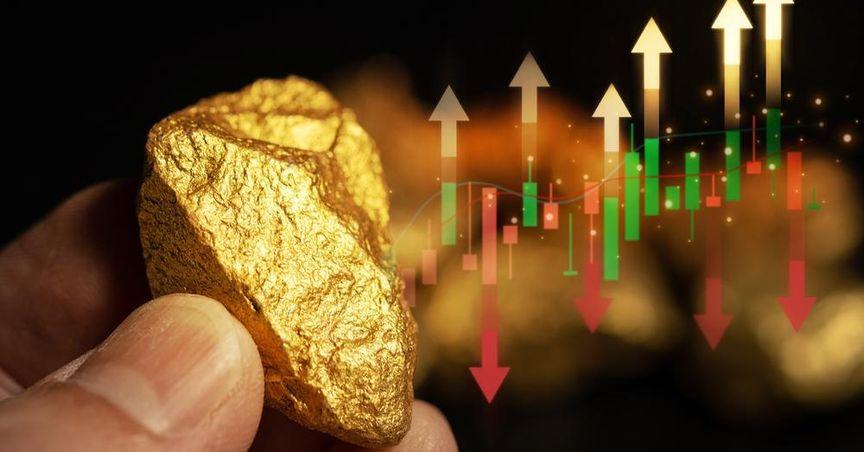
- A sharp retreat in bullion sentiment has dragged Australian gold equities lower, with the metal sliding to its weakest levels in months.
- Producers including Northern Star Resources, Evolution Mining, Perseus Mining and Ramelius Resources have felt the pressure as margins compress.
- Operating leverage means miners typically fall harder than the metal itself, putting cost discipline back at the centre of the sector conversation.
A sharp pullback in bullion sentiment has washed over the Australian gold sector, and Northern Star Resources (ASX:NST), the Kalgoorlie-centred producer behind the famous Super Pit, is among the heavyweights wearing the damage. The metal has retreated to its weakest levels in months after a shift in interest-rate expectations, and gold equities — for so long the market's favourite trade — have fallen considerably harder than bullion itself. The new week opened with the wider Australian market on a steadier footing, but the gold space remains under a cloud.
Bullion loses its shine, quickly
The trigger for the retreat sits offshore. Firmer energy prices have rekindled inflation worries in the United States, nudging expectations toward tighter policy for longer, and gold — which pays no income — tends to suffer when the outlook for interest rates hardens. Add a firmer US dollar and a wave of profit-taking after a historic multi-year run, and the conditions for a swift pullback were all in place.
Domestic signals have not helped. Minutes from the Reserve Bank's latest meeting leaned more cautious than markets had hoped, while the International Monetary Fund trimmed its growth outlook for Australia, souring risk appetite broadly. For a sector that had been priced close to perfection, the excuse to take money off the table was readily accepted.
Why miners fall harder than the metal
The mathematics of mining explain the outsized share-price moves. A producer's costs — labour, diesel, power, consumables — are largely fixed over the short term, so a modest percentage decline in the gold price translates into a much larger percentage decline in the margin between revenue and cost. That operating leverage works beautifully on the way up and brutally on the way down.
It is why the recent falls across the sector have been a multiple of the move in bullion. Traders following ASX Gold Stocks have watched the sector surrender in weeks gains that took months to accumulate, even though the metal itself remains far above where it traded a year ago.
Northern Star's cost equation
For Northern Star, the pressure lands on an already sensitive spot. The company has been guiding to materially higher all-in sustaining costs this financial year as it works through a major expansion of its Kalgoorlie processing hub, and a softer metal price compresses margins from that elevated cost base. As one of the largest names in the ASX 50, it also attracts the heaviest index-related flows, amplifying moves in both directions.
None of this changes the company's long-run position. Its Kalgoorlie operations rank among the most significant gold complexes in the world, and the mill expansion now in progress is designed to lift output and lower unit costs over time. But in a margin-squeeze phase, the market tends to punish spending first and reward it later.
Evolution's copper cushion
Evolution Mining (ASX:EVN), the gold and copper producer with operations spanning Cowal in New South Wales and Ernest Henry in Queensland, has also traded lower through the pullback, though its copper exposure offers a partial hedge. Copper revenue behaves differently from gold, tracking industrial demand rather than monetary sentiment, and at Ernest Henry it effectively subsidises the cost of every ounce produced.
That diversification has historically made the company's earnings less twitchy than pure-play rivals through gold-price swings. Even so, when sentiment sours on the whole complex, correlation does the talking first and fundamentals only get their say later.
The mid-tier feels it too
Perseus Mining (ASX:PRU), the West African producer with operations across Ghana and Côte d'Ivoire, entered the pullback carrying one of the strongest balance sheets in the sector, a war chest built through years of disciplined operating. Ramelius Resources (ASX:RMS), enlarged by its recent combination with a Murchison developer, similarly banked the boom rather than spending it. Cash-heavy names like these tend to outperform within a falling sector, because the market trusts them to keep paying distributions and to shop for assets when prices are depressed.
The squeeze is sharpest instead for higher-cost, single-mine operators, some of which were only marginally profitable before the metal turned. For them, an extended period of softer prices would revive questions about mine plans, hedging and financing that the boom had comfortably buried.
Pullback or turning point?
The question dividing the market is whether this is a correction inside an intact structural story or the end of the run. The forces that powered bullion's historic climb — central-bank accumulation, geopolitical fragmentation, and appetite for assets outside the traditional financial system — have not obviously reversed. What has changed is the near-term rates arithmetic, and that can shift again just as quickly.
Seasoned observers note that gold's great bull phases have always included violent shakeouts that cleared crowded positioning before the trend resumed. Whether this proves one of those episodes or something more durable, no one can say with confidence. What can be said is that the sector's margin cushion, even after the squeeze, remains generous by the standards of most of the past decade.
The hedging debate stirs again
One conversation the pullback has revived is hedging. Through the boom, boards faced little pressure to lock in prices, and unhedged production was celebrated as pure exposure to a rising metal. A few weeks of softer bullion changes that mood quickly. Producers with heavy spending commitments may now face questions about whether to secure a floor under a portion of future output, trading away some upside for certainty while expansion works complete.
The counterargument is equally familiar: hedges struck in fear near cycle lows have destroyed enormous value in past decades, and Australian-dollar gold remains historically elevated even after the retreat. How each board navigates that tension will say a great deal about its confidence in the metal's next move.
What the coming weeks may reveal
Quarterly production reports due over the coming weeks will show how much cash the industry generated before the pullback bit, and guidance commentary will reveal which operators feel compelled to trim spending. Currency will matter too: a softer Australian dollar cushions local producers by lifting the Australian-dollar gold price relative to the US-dollar quote. For now, the sector that led the market for so long has handed over leadership — and the speed of any recovery in bullion sentiment will decide how long it stays in the shadows.
