
 AUS
AUS
 NZ
NZ
 UK
UK
 CA
CA
 USA
USA
 IND
IND






Highlights
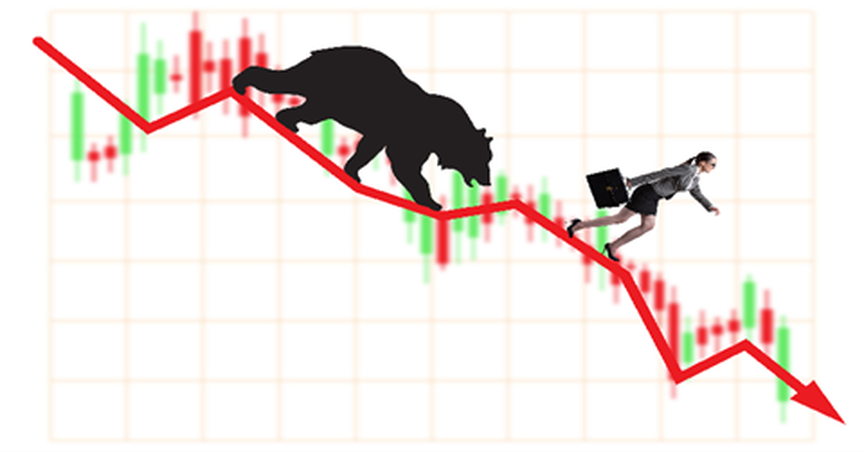
- Setting a new 100-day low, the Australian share market declined sharply today due to a selloff in global equities.
- ASX 200 closed 3.55% lower/ dropping 246.00 points at 6,686.00 points
- Global market selloff resulted from recession fears among investors propelled by the US inflation data released Friday.
The last two trading sessions have been extremely difficult for global equities due to the continuous decline in share prices of the US stocks. The US inflation data has added to the gloomy picture of stock markets, which has signaled an aggressive monetary tightening by the Federal Reserve in its June meeting, due this week.
Global equities fell sharply on Friday and extended these losses on Monday after key inflation data from the US revealed that on an annual basis, in May this year, the CPI rose 8.6%, the biggest increase since 1981. This catalysed recession fears, and there are apprehensions that the Fed might announce a 75-basis points rate hike in its meeting tomorrow. Data Friday revealed that the Consumer Price Index for All Urban Consumers (CPI-U) increased 1.0% in May on a seasonally adjusted basis after rising 0.3% in April.
How did ASX 200 perform?
The Australian share market opened lower today and set a new 50-day low. The benchmark ASX 200 index was 5.00% lower at 6,585.20 points in the initial few minutes of trading. In early morning trade, all the eleven sectors traded lower.
Eventually, at market close, ASX 200 closed 3.55% lower, dropping 246.00 points to 6,686.00. Over the last five days, the index has lost 5.77%. All the eleven sectors closed lower today. The energy, materials, information technology and financial sector, topped the loser’s list in today’s trading session.
Who gained? Who lost?
Coming to the top ASX 200 gainers, Polynovo Limited (ASX:PNV), Domino’s Pizza Enterprises Limited (ASX:DMP), and Computershare Ltd. (ASX:CPU) led the pack with 7.792%, 2.034%, and 1.553% gains, respectively. On the flip side, ZIP Co Limited (ASX:ZIP), Chalice Mining Ltd (ASX:CHN), and Unibail-Rodamco-Westfield (ASX:URW) were the top losers, falling 15.873%, 14.199% and 11.700%, respectively.
Asian and global market
Yesterday, the pan-European STOXX 600 index dropped 2.4% at 412.52 points, lowest since 7 March. China stocks declined as Covid-19 uncertainty sparked worries of lockdowns and inflationary concerns. Asian shares tumbled sharply as Wall Street hit a confirmed bear market milestone over fears that the aggressive rate hike by the US central bank would push the largest economy into recession.
On the Wall Street, all three US indices fell sharply overnight. The S&P 500 slumped 3.88% at 3,749.63 points, the tech-heavy Nasdaq Composite Index was 4.68% lower at 10,809.23 points, while the Dow Jones Industrial Average ended 2.79% lower at 30,516.74 points. Shares of US tech stocks, including Meta platforms, Apple Inc, Amazon.com, and Meta platforms, declined sharply, falling 6.44%, 3.83%, and 5.45%.

©2022 Kalkine Media®
What’s impacting markets?
Latest figures presented by the Bureau of Labor Statistics have dimmed the hopes of investors expecting some relaxation in the interest rates. Investors seem to be emptying their portfolios, especially growth stocks, as quick global economic recovery chances look bleak as of now.
Meanwhile, gold, the precious metal, also lost its gleam due to a rise in treasury yields and a firmer US dollar. It is believed that as the dollar rises, Americans see their money go further while buying goods and services from foreign lands. But American products tend to become less affordable to foreigners, cutting into global sales for all types of businesses. Tech companies, pharmaceutical companies that sell medical products in global markets and manufacturers with large export markets, are mostly those impacted by the rising dollar.
