
 AUS
AUS
 NZ
NZ
 UK
UK
 CA
CA
 USA
USA
 IND
IND



Highlights
- ASX falls 1% amid global tariff tensions
- US announces hefty 104% tariffs on China
- Major ASX sectors suffer, with mining and energy hit hardest
The Australian Securities Exchange (ASX) encountered significant turbulence, dropping by 1% as the global market reels from the latest tariff announcement by the US. This new development involves a substantial 104% tariff on Chinese goods, set to be implemented by midnight New York time, echoing concerns across the financial markets worldwide.
As the clock neared 12 PM, the S&P/ASX 200 index had decreased by 82.6 points to 7427.4, marking a reduction of 1.1%. This follows a decline of up to 2% earlier in the trading session. The downturn was mirrored by a decline in US futures and heightened anxieties over the economic relationship between Australia and China, which have also affected commodity prices such as iron ore and oil.
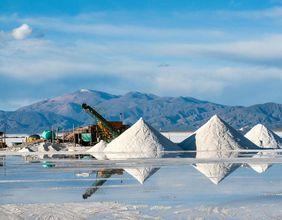
The commodities sector felt immediate impact, with iron ore hitting a new seven-month low, while oil prices slipped under $60 a barrel for the first time since 2021. Among the hardest hit were major mining firms; (ASX:BHP) BHP saw a 3% decline, while (ASX:RIO) Rio Tinto faced a steeper fall of 4.4%. Additionally, (ASX:MIN) Mineral Resources experienced the largest drop in early trading, plunging by 10.9%.
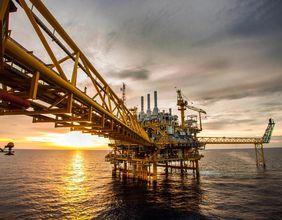
On the energy front, (ASX:WPL) Woodside and (ASX:STO) Santos saw declines of 2.5% and 3.7% respectively, reflecting the broader challenges faced by the sector due to fluctuating global oil prices. Conversely, some stability was observed in the financial sector where (ASX:CBA) Commonwealth Bank and (ASX:NAB) National Australia Bank managed gains of 0.6% and 1.9%, helping to moderate the broader market losses.
In other corporate movements, (ASX:RRL) Regal Partners saw a 6.3% retreat after reporting a significant loss, and (ASX:NEC) Nine Entertainment adjusted by 1.5% despite securing a promising broadcast rights deal. Meanwhile, (ASX:ELS) Elsight surged 8.6% following a lucrative contract with a European defence contractor.
This market fluctuation underscores the interconnected nature of global economics and the immediate impact of policy changes on financial markets. With the US steadfast in its tariff implementation and China vowing to mitigate the adverse effects through countermeasures, investors remain on edge about the potential ramifications on global trade dynamics and economic stability.
