
 AUS
AUS
 NZ
NZ
 UK
UK
 CA
CA
 USA
USA
 IND
IND







Highlights
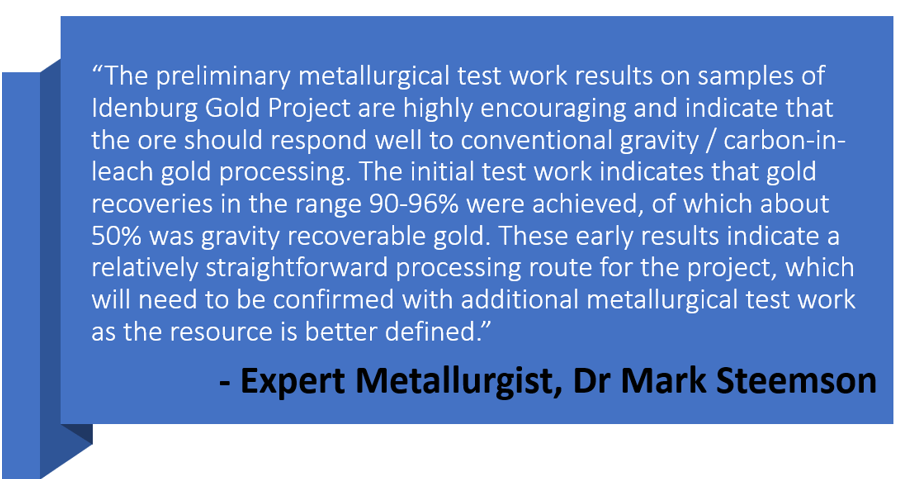
- Preliminary metallurgical testing recorded gold recovery of around 95% across low, average, and high-grade composite samples.
- Diagnostic leach results show that 94–96% of the gold is free cyanidable, indicating suitability for Carbon-in-Leach processing.
- Gravity recovery tests using Knelson concentrators achieved over 50% recovery for high and low-grade samples.
- Combined gravity and CIL delivered overall gold recovery of approximately 95% under test conditions.
Far East Gold Limited (ASX:FEG) has released preliminary metallurgical test results from the Sua prospect within the Idenburg project, indicating promising gold recovery outcomes. The testing, conducted on limited composite samples of drill core, indicates that the industry standard gravity and leach processing methods have the potential to deliver high gold recovery, subject to further analysis. Furthermore, the results confirm gold recoveries reported in 2007.
High Recovery Levels Observed Across Sample Types
Initial metallurgical testing was carried out on three composite samples representing different grade ranges: low-grade (1.1 g/t Au), average-grade (3.7 g/t Au), and high-grade (39.8 g/t Au). The average grade sample is the average grade of the inferred Sua resource (JORC 20210 as estimated by SMGC.
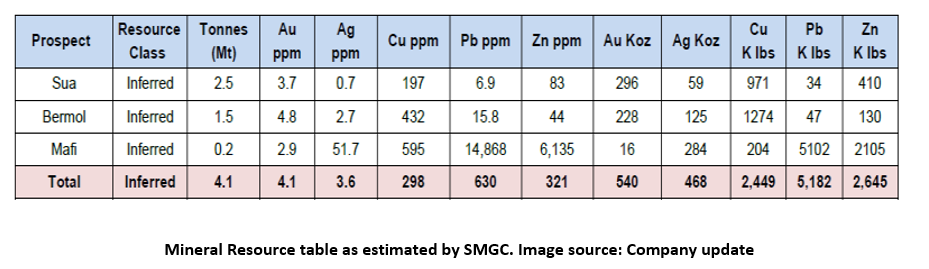
The results highlighted high gold recovery across all test conditions, with recovery reaching approximately 95% across all tested samples. The outcomes also showed limited presence of silver and copper, consistent with prior resource estimates, and low grades of arsenic or other deleterious elements.
Processing Methods Show Compatibility with Conventional Techniques
Diagnostic leach testing revealed that gold in the samples is present as free cyanidable gold. Between 94% and 96% of the gold readily amenable to cyanidation. This supports the potential application of a Carbon-in-Leach (CIL) processing approach.
Bench-scale Knelson concentrators showed that Gravity Recoverable Gold (GRG) recoveries were above 50% for both high-grade and low-grade samples. It is noted that bench-scale Knelson units can produce a higher relative mass pull compared to processing plant, meaning these results may overestimate recovery levels achievable in production conditions. Even so, the findings indicate that a notable share of gold is recoverable through gravity methods, supporting the inclusion of a gravity circuit in the processing design.
Subsequent bottle roll leach testing of gravity tails further delivered high gold recovery. The total recovery of the combined gravity and CIL test was 95%.
Additional Testing Highlights Variability in Alternative Methods
Whole-of-ore bottle roll tests conducted on average-grade and low-grade samples achieved recovery levels exceeding 95% for the average-grade material, with slightly lower outcomes for the low-grade sample. These results remained higher for the combined gravity and leach testing, subject to additional work.
Separate intermittent bottle roll tests were performed to evaluate heap leach processing. In comparison, gold extraction rates were lower, particularly for the low-grade sample, which recorded recovery of approximately 60%.
The metallurgical test work from the Sua prospect provides early-stage confirmation of high gold recovery potential using established processing techniques. These findings are consistent with earlier studies. However, the results remain preliminary and are based on limited samples. Further metallurgical testing will be necessary to refine recovery assumptions, confirm processing routes, and support future resource development decisions.
FEG shares were trading 4% higher at AUD 0.13 per share at the time of writing on 21 April 2026.
