
 AUS
AUS
 NZ
NZ
 UK
UK
 CA
CA
 USA
USA
 IND
IND


_06_16_2026_04_54_27_535266.jpg)




Highlights
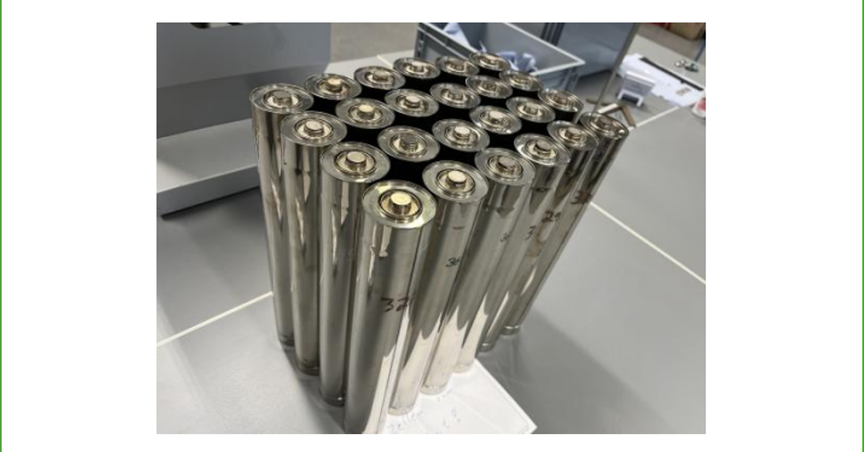
- Latest performance results of the CERENERGY® cell and battery pack prototypes demonstrated that the cells completed over 650 charge–discharge cycles with no capacity loss.
- The cells achieved nearly 100% Coulombic efficiency, and energy efficiency reached up to 92%, surpassing the 70–80% efficiency of competing battery technologies.
- Abuse testing showed no gassing, leakage, or rupture even under extreme testing conditions.
- The ABS60 (60 kWh) prototype pack achieved ~88% round-trip efficiency under real-world testing.
- After 110+ cycles, the ABS60 showed no capacity fade and only a minimal internal resistance increase.
Altech Batteries Limited (ASX:ATC) (FRA:A3Y) has released testing results of its CERENERGY® cell and battery pack prototypes, confirming the robustness and technological maturity of the CERENERGY® technology. The company stated that these results mark another step on the path towards industrialisation.
CERENERGY® Cell Performance
The CERENERGY® prototype cells have completed over 650 charge–discharge cycles and recorded no capacity loss. This highlighted the stability of the materials used and demonstrates a long operational lifespan, in comparison to conventional batteries. For energy storage operators, such performance translates into fewer replacements, lower maintenance costs, and improved reliability.
The cells achieved nearly 100% Coulombic efficiency, confirming the intrinsic stability and safety of sodium nickel chloride chemistry and indicating minimal side reactions. Such efficiency is important for ensuring reliability, scalability and long-term operation in commercial energy storage applications.
Energy efficiency reached up to 92%, far higher than the 70–80% typically recorded by competing technologies.
The cells delivered a nominal capacity of 100 Ah and 250 Wh and demonstrated performance across multiple discharge rates. A standout characteristic is the ability to support several daily charge–discharge cycles within the 20–80% state of charge (SoC) range at 25 A.
The cells also excelled under abuse testing, maintaining stability during overcharge, deep discharge, and thermal cycling up to 300 °C. The testing reported zero gassing, rupture or leakage. These results highlighted the inherent stability of sodium nickel chloride chemistry, which eliminates the use of flammable electrolytes and runaway risks seen in lithium-ion batteries. The results confirmed its suitability for renewable energy storage and large-scale grid.
ATC shares were trading nearly 5% higher at AUD 0.033 per share at the time of writing on 12 September 2025.
