
 AUS
AUS
 NZ
NZ
 UK
UK
 CA
CA
 USA
USA
 IND
IND





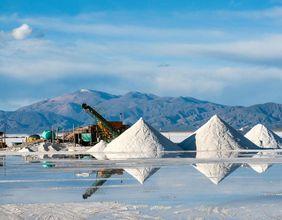

Sovereign Metals Limited is shifting its strategic focus towards a U.S.-centered critical minerals approach following Rio Tinto's decision to forgo its option to operate the Kasiya Rutile-Graphite Project in Malawi. This change enables Sovereign to independently advance its commercial and strategic initiatives, targeting critical mineral supply chains in the U.S. and allied nations.
Key Points
- Sovereign Metals Limited (ASX:SVM)
- Rio Tinto opts out of operating the Kasiya Rutile-Graphite Project
- Sovereign pivots to a U.S.-focused critical minerals strategy
- Investors should watch for upcoming offtake agreements and U.S. collaborations
Rio Tinto's Withdrawal and Its Impact on Sovereign Metals
Rio Tinto has chosen not to exercise its right to operate Sovereign Metals' Kasiya Rutile-Graphite Project, aligning with its updated corporate strategy that concentrates on core commodities such as iron ore, copper, aluminium, and lithium. As a result, exclusive marketing and pre-emptive rights under the Investment Agreement have expired.
This move by Rio Tinto does not diminish the fundamental value or strategic significance of the Kasiya Project. The Definitive Feasibility Study (DFS), completed with Rio Tinto's technical support, highlights the project's strong economic potential. Sovereign Metals remains the operator and will now progress the project independently, focusing on its strategic objectives.
Sovereign Metals' U.S.-Centric Critical Minerals Strategy
Following Rio Tinto's exit, Sovereign Metals is prioritizing a U.S.-focused strategy for the Kasiya Project. The project aims to supply critical minerals like natural rutile and graphite to the U.S. and allied economies, addressing essential supply chain requirements. This strategic realignment seeks to provide non-Chinese sources of these vital minerals for diverse industrial uses.
Sovereign is intensifying its engagement with the U.S. Government and industry stakeholders. The company is advancing talks with potential offtake partners, including Mitsui & Co., Ltd. and Traxys North America, aiming to convert existing Memorandums of Understanding (MOUs) into binding contracts. This effort is expected to strengthen Sovereign's role in the global critical minerals market.
Commercial Initiatives and Strategic Collaborations
Sovereign Metals is actively developing commercial initiatives to enhance the project's value. The company is progressing rutile and graphite offtake negotiations with key strategic partners, including major U.S. firms and stakeholders in allied countries, which are vital for securing long-term supply agreements.
Moreover, Sovereign's partnership with the International Finance Corporation (IFC) enables access to development financing opportunities. As a member of the World Bank Group, the IFC plays a crucial role in advancing Sovereign's financing strategy for Kasiya. This collaboration aims to secure funding from development-finance and export-credit institutions across the U.S. and allied economies.
Strategic Significance of the Kasiya Project
The Kasiya Rutile-Graphite Project is strategically important due to its capacity to supply critical minerals identified by the U.S. government, including titanium (via natural rutile), graphite, and heavy rare earth elements, all essential for various industrial applications. Its strategic location and resource potential make it a key asset in the global critical minerals supply chain.
Sovereign Metals' emphasis on the U.S. market is driven by the necessity to secure dependable, non-Chinese sources of these minerals. The company's collaborations with U.S. stakeholders are anticipated to enhance its market position and contribute to diversifying critical mineral supply chains.
Outlook for Investors and Future Developments
Investors are likely to monitor Sovereign Metals closely as it advances its U.S.-focused strategy. Successfully converting MOUs into binding offtake agreements could significantly improve the project's commercial prospects. Additionally, Sovereign's interactions with U.S. government entities and industry partners are expected to open new growth avenues.
While the immediate impact on share price remains unclear from public sources, the company's strategic shift and potential new partnerships could positively influence investor sentiment. Stakeholders should keep an eye on forthcoming developments, including offtake agreements and financing arrangements, as these will be critical indicators of project progress.
