
 AUS
AUS
 NZ
NZ
 UK
UK
 CA
CA
 USA
USA
 IND
IND







Highlights
- Deere & Company delivers advanced agricultural and construction machinery
- Equipment portfolio integrates precision farming technologies
- Market presence aligns with companies tracked in Russell 1000
Deere & Company (NYSE:DE), widely recognized through its John Deere brand, operates as a global manufacturer of agricultural, construction, and forestry equipment, along with turf care systems and power solutions. The company’s long-standing presence in industrial manufacturing reflects its integration within large-cap benchmarks such as the Russell 1000, which includes prominent corporations across sectors listed on U.S. exchanges. Headquartered in the United States, Deere & Company combines traditional machinery manufacturing with digital technologies that enhance operational efficiency across farming and infrastructure development environments.
Agricultural Machinery Drives Core Operations
Deere & Company maintains a strong focus on agricultural equipment designed to support farming activities across diverse geographies. Its portfolio includes tractors, harvesters, planters, sprayers, and tillage tools that enable cultivation, planting, and harvesting processes. These machines are engineered to operate across varying soil conditions, crop types, and environmental settings.
The company’s agricultural division remains central to its operational identity, providing machinery that supports food production systems worldwide. Equipment is developed with durability and adaptability in mind, ensuring consistent performance across both large-scale commercial farms and smaller agricultural operations. Through this segment, Deere & Company contributes to global agricultural productivity by supplying tools that enhance efficiency and crop management.
Precision Technology Enhances Equipment Capabilities
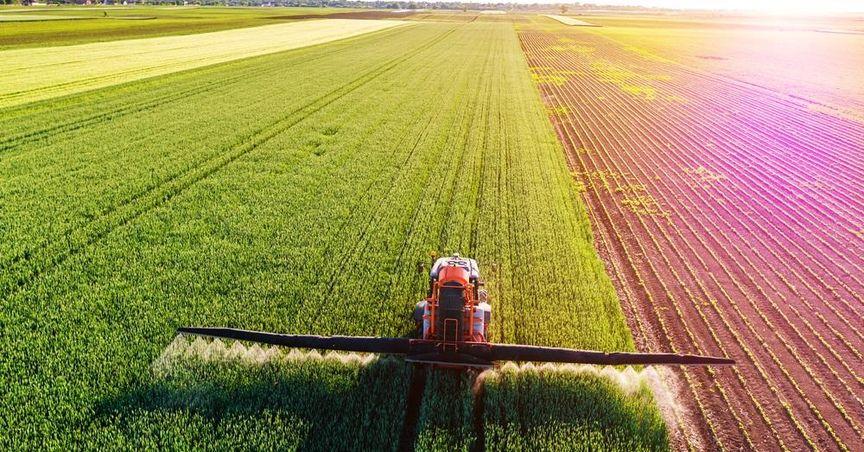
A defining aspect of Deere & Company’s product strategy lies in the integration of precision agriculture technologies. These systems incorporate sensors, data analytics, and connectivity tools that allow farmers to monitor field conditions and optimize resource usage. Precision technology enables equipment to perform tasks such as planting and spraying with high accuracy, reducing input waste while maintaining consistent field coverage.
Telematics systems embedded within machinery provide real-time data on equipment performance, location, and operational status. This connectivity allows users to manage fleets of equipment remotely and make data-driven decisions regarding maintenance and field operations. By integrating digital capabilities into traditional machinery, Deere & Company aligns its offerings with evolving agricultural practices that emphasize efficiency and sustainability.
Construction And Forestry Equipment Expansion
Beyond agriculture, Deere & Company operates within construction and forestry equipment markets. The company produces machinery used in infrastructure development, including excavators, loaders, and graders. These machines are essential for construction projects ranging from road building to urban development.
Forestry equipment represents another important segment, with machines designed for logging, timber harvesting, and land management activities. These systems support forestry operations by enabling efficient cutting, processing, and transportation of timber resources. The combination of construction and forestry equipment diversifies Deere & Company’s operational scope, positioning it within multiple industrial sectors.
Financial Structure Reflects Operational Scale
Deere & Company’s financial structure reflects its position as a large industrial manufacturer. Public disclosures outline liquidity ratios that demonstrate the company’s ability to meet short-term obligations, alongside leverage measures that describe the balance between debt and equity financing. These financial indicators support capital-intensive operations required for machinery production and research initiatives.
Market capitalization places the company among major industrial enterprises, while valuation metrics provide context regarding market pricing relative to operational performance. Moving averages illustrate historical trading activity without implying directional interpretation. These financial characteristics align with companies represented within benchmarks such as the S&P 500 Index, which includes established firms across industrial, technology, and service sectors.
Institutional Ownership And Market Participation
Ownership data indicates that a significant portion of Deere & Company’s shares is held by large asset management organizations. These institutions adjust positions periodically as part of broader portfolio strategies. Such participation reflects the company’s inclusion in diversified equity allocations that track large-cap industrial enterprises.
Institutional ownership patterns contribute to governance structures through shareholder engagement and voting participation. Companies operating at Deere & Company’s scale often attract consistent attention from asset managers seeking exposure to industrial manufacturing and equipment production sectors.
This level of participation also aligns with the company’s role within widely followed benchmarks, reinforcing its position among established corporations that represent core components of U.S. equity markets.
Operational Performance And Production Output
Deere & Company’s operational performance is closely tied to equipment production, distribution, and service support. The company manufactures machinery through a network of facilities that supply products to markets worldwide. Production processes emphasize quality control and engineering precision to ensure consistent performance across equipment lines.
Quarterly reporting reflects variations in operational output and demand across agricultural and construction markets. Comparative figures from prior reporting periods provide context regarding changes in equipment demand and production levels. These metrics serve as descriptive indicators of business activity without projecting forward-looking outcomes.
The company’s service network supports customers through maintenance programs, replacement parts, and technical assistance. This service infrastructure ensures that equipment remains operational throughout its lifecycle, reinforcing long-term customer relationships.
Global Market Reach And Distribution Channels
Deere & Company operates across multiple regions, including North America, Europe, Asia, and Latin America. Its global distribution network allows the company to supply machinery to diverse agricultural and industrial markets. Regional presence enables adaptation to local farming practices, climate conditions, and regulatory requirements.
Dealership networks play a central role in product distribution and customer engagement. These networks provide sales, service, and technical support, ensuring that customers receive comprehensive assistance throughout the equipment lifecycle. By maintaining strong distribution channels, Deere & Company sustains its reach across international markets.
Global operations also allow the company to balance demand across regions, mitigating the impact of localized market fluctuations. This diversified presence contributes to operational resilience within a cyclical industrial environment.
Innovation And Engineering Development Focus
Engineering innovation remains a key component of Deere & Company (NYSE:DE), long-term strategy. The company is in research and development to enhance machinery performance, improve fuel efficiency, and integrate advanced technologies. Innovations in automation and machine learning are gradually being incorporated into equipment systems.
Autonomous machinery represents an emerging area of development, with systems designed to perform tasks such as planting and harvesting with minimal human intervention. These technologies aim to address labor challenges and improve operational consistency across agricultural environments.
In addition to automation, Deere & Company continues to refine its digital platforms, enabling seamless integration between equipment and data management systems. These advancements support modern farming practices that rely on data-driven decision-making.
