
 AUS
AUS
 NZ
NZ
 UK
UK
 CA
CA
 USA
USA
 IND
IND








Highlights
- Portfolio diversification implies investing in different assets for minimising the aggregate risk associated with a portfolio.
- Diversification is a commonly used hedge by laymen of the investment market against market volatility.
- A mix of high risk, low risk, constant return and fluctuating return instrument is a diversification method.
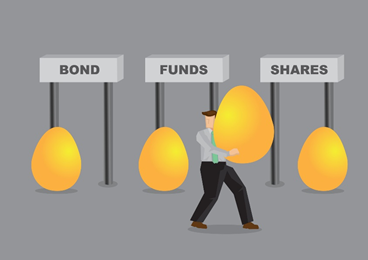
A diversified portfolio investment is a must-have to absorb the shocks arising from the stock market. A sound investment strategy will include hedging as a solution to absorb losses in a bearish market. According to the concept of portfolio diversification, an investor must not park all their money in one stock or one market sector.
A diversified portfolio is one wherein the movements of the securities have a negative correlation. This is a sound strategy to neutralise a situation where one security is moving in an unfavourable direction. It also helps an investor reduce the risk and maximise returns.
For an investment portfolio, diversification is a safety harness. So, let us see seven ways to create a diversified portfolio.

© 8vfand | Megapixl.com
Have clarity on the nature of diversification
While creating a portfolio, an investor must have a specific understanding of the various bases of diversification. A rationale should back the basis of diversification chosen by the investor. For instance, some investors can diversify investments based on tenure (long, medium or short term) or based on geography, business sector, market capitalisation, type of instrument (debt, equity or hybrid) etc.
Build an understanding of financial markets
Financial markets are very dynamic and are highly impacted by various variables like inflation, exchange rate fluctuations, changes in interest rate by the central bank etc. Investors should also learn more about the technical and fundamental analysis of companies to make sound investment decisions. An updated investor can often have the edge over other investors.
Related Reads: Should you check the stock market portfolio every day?
Invest some amount in fixed income assets
To minimise risk, it is a good idea to park some money in bonds that have lower but stable returns compared to stocks. Assets can be distributed in a portfolio based on the age and lifestyle of an investor. Younger investors have more scope to take risks. However, this decision is also specific to the individual and their family's wealth and income status. For instance, investors who may be the sole breadwinners of the family, who take care of the family expenses could tilt their preferences towards bonds instead of risky shares.
Ensure assets with ease of liquidation in the portfolio basket
Investors must own securities in the money market too. Parking money in instruments like commercial papers and certificates of deposits are considered easy to liquidate, low on risk, and hence are tagged as a safe investment. Thus it can also offset the risks associated with high-risk shares of companies.
Mutual Funds
Mutual funds are one of the easiest ways to diversify the portfolio. This is because mutual funds is a model where investment is done in different classes of assets or different categories of the same asset. Thus the risk spread is already diversified within the instrument itself.
Evaluate the qualitative factors
Often a qualitative risk analysis is helpful. This can be done by assessing factors like the brand value, reliability of the company's products/ services, corporate governance, initiatives towards Corporate Social Responsibility (CSR), the integrity of the board of directors and others in the senior leadership, the competitive advantage of the company in the market sector etc.
Think long term
Investments usually are a part of an investor's long-term saving plan. Thus it is wise to buy a security, hold it for its value to increase and trade it only later to maximise their returns. It means that even in situations of market volatility, an investor must keep the portfolio constant instead of hopping between multiple securities. A Warren Buffet quote says that "the stock market is a device for transferring money from the impatient to the patient."
Related Read: How diversification helps investors shield their portfolios against risk
© Hofred | Megapixl.com
Bottom Line
There may be different schools of thought on the matter of diversification. For instance, there is an opinion by Warren Buffet that diversification doesn't make much sense for people who have clarity on what they are doing. This too is true, some investors follow the fundamentals of a company like a Bible before parking their money in it. In such cases, their strong knowledge and updated insights could hedge against volatility, and thus they may be safe even without diversification. That said, not everyone is the Oracle of Omaha! So it would be good to practice diversification of portfolio till the investor does not mature enough to understand a company's valuation well enough to be hedged against the troughs in the market.
