
 AUS
AUS
 NZ
NZ
 UK
UK
 CA
CA
 USA
USA
 IND
IND








If you are new to insurance, the different plan types and policy terms may feel confusing at first. However, once you learn how health insurance works, it becomes easier to compare policies and see what they cover. This blog explains the basics and highlights what you should check before choosing a plan.
What is Health Insurance and How Does It Work?
A health insurance plan is an agreement between you and an insurer. You pay a premium to keep the policy active, and in return, the insurer may cover eligible medical expenses during the policy period, as mentioned in the policy wording.
Most health insurance plans are meant to help cover expenses related to hospitalisation and treatment, such as:
- Hospital room charges
- Doctor consultation fees
- Diagnostic tests and procedures
- Pre- and post-hospitalisation medical expenses
- Day-care treatments
For example, if you are hospitalised for an illness, the policy may cover certain medical expenses related to that treatment.
What are the Common Types of Health Insurance Plans?
Health insurance policies are available in different forms to suit different needs. The common types are:
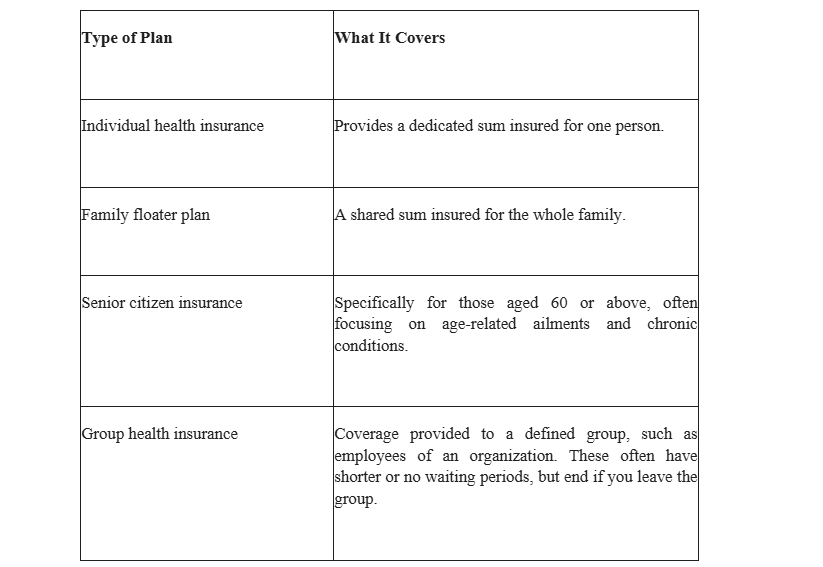
Many households choose health insurance plans for the family because a single policy can cover several members under one shared coverage amount.
What Key Features to Look at Before Buying a Policy?
Before selecting a health insurance plan, it is helpful to understand these policy features:
- Sum Insured
The sum insured is the maximum amount the insurer may pay for eligible medical expenses during the policy period. Choosing a suitable sum insured helps ensure that major hospital bills can be handled within the coverage limit.
- Waiting Periods
Most health insurance plans include waiting periods for certain conditions. This means coverage for some illnesses or treatments begins only after a specified period from the start of the policy.
Waiting periods may apply to:
- Pre-existing diseases
- Specific illnesses
- Certain medical procedures
The duration of these waiting periods varies across policies.
- Network Hospitals
Insurers usually maintain a network of hospitals where policyholders can receive treatment through the cashless facility. Under this arrangement, the hospital coordinates with the insurer for eligible claim settlement, subject to policy conditions.
Checking the network hospital list helps you know whether hospitals near you are included.
- Sub-Limits
Some policies place limits on specific expenses, such as room rent or certain treatments. These limits are known as sub-limits.
If the hospital charges exceed these limits, part of the expense may need to be paid by the policyholder.
- Policy Wording
Policy wording is the document that explains how the health insurance plan works. It describes the coverage conditions, waiting periods, exclusions, and limits related to the policy.
While reviewing policies, many people also compare benefits and features to identify what may suit them as the best health insurance option. Remember, the right policy may differ from person to person depending on age, health conditions, and coverage needs.
Conclusion
Health insurance plans can help individuals and families manage medical expenses that may arise due to illness or hospitalisation. However, it is important to understand how a policy works before choosing one. Reviewing key details such as coverage, limits, and waiting periods helps you know what the plan covers and what support it may offer when medical treatment is needed.
The content has been authored in collaboration with our guest contributor, Vishal Thakur.
