
 AUS
AUS
 NZ
NZ
 UK
UK
 CA
CA
 USA
USA
 IND
IND



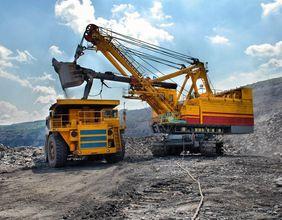




Source: ded pixto, Shutterstock
Energy stocks witnessed heavy trading action across North American markets this week as crude price rallied over US$ 65.70, led by Saudi’s bet on production cut. The West Texas Intermediate (WTI) was up over 3.12 per cent on Friday, March 5 (at 10:40 AM ET) while Brent had surpassed US$ 69 a barrel.
The S&P/TSX Capped Energy Index has risen almost 7 per cent in the last two trading session, boosted traders’ interest on Suncor Energy (TSX:SU) and Cenovus Energy (TSX:CVE). Both the large-cap stocks are trading nearly 5 per cent, with a heavy market opening volume.
Let us deep dive into both stocks’ performances amid ongoing crude oil price bull-run:
Suncor Energy (TSX: SU)
Stock of the one of the leading Canadian energy companies zoomed by 5.35 per cent to C$ 28.33 in the early market hours of Friday with ~5.21 million outstanding shares exchanging hands.
Suncor scrips are yet to recover from the pandemic blows and has declined almost 16 per cent in one year.
The blue-chip stock has market cap of C$ 42.46 billion, with a price-to-book ratio of 1.186. It has a massive 10-day average volume of 19.58 million. The stock is down over 20 per cent from its 52-week high of C$ 35.54.
The giant energy producer recently offered senior unsecured Canadian and US notes worth C$ 500 million and US$ 750 million, respectively.

Image Source: Kalkine Group @2020
Cenovus Energy (TSX:CVE)
The Alberta-based energy company’s stock hit a new 52-week high of C$ 10.55 on Friday morning. It surged approximately 6 per cent in the first hour of the market today, with a volume of 4.37 million.
Shares of Cenovus has flown over 412 per cent against its 52-week low of C$ 2.06 apiece. Its share price has swelled more than 16 per cent in one year, led by its merger announcement with Husky Energy.
The firm’s cash from operating activities was C$ 273 million in full-year 2020 against C$ 3.3 billion in 2019. The company concluded 2020 with an outstanding debt of C$ 7.2 billion, as it battled the COVID-19 blues and crude price slump.
