
 AUS
AUS
 NZ
NZ
 UK
UK
 CA
CA
 USA
USA
 IND
IND


.jpg)




The S&P/TSX Composite Index rocketed past the 20,000-mark to close at a historic level of 20,029.19 for the first time ever on Friday, June 4, up 87.80 points or 0.44%.
The base metal sector climbed 1.5% as spot gold added 1.1%. The energy sector, on the other hand, jumped 1.4% as oil extended gains on Friday, where in Brent reached US$ 72 per barrel for the first time since 2019.
Oil has performed quite well over the past few trading sessions, consistently trading above the US$ 70/bbl-mark. With the Canadian economy being broadly oil-based, the country’s indices have been boosted by the recent oil performance, especially with several large oil stocks doing quite well.
However, Canada also recorded some 68,000 job losses in the month of May, while the unemployment rate surged to 8.2%. This data has offset some of gains lately.
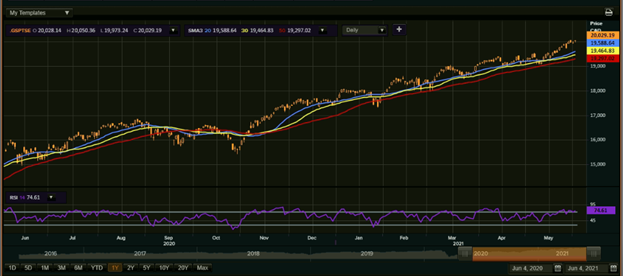
1-Year Price Chart (as on June 07, 2021). Source: EODHD/Others
Major Movers and Gainers
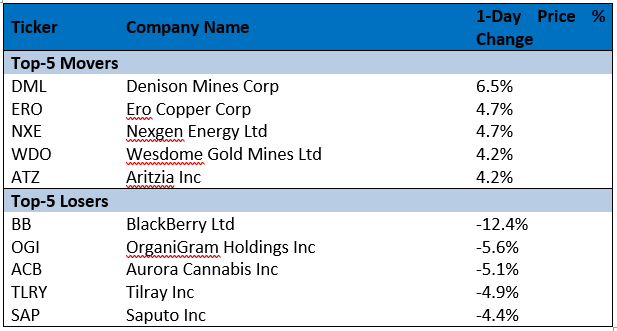
Active Volume
BlackBerry Limited, with 16.88 million, Great-West Lifeco Inc, with 8.69 million, and Suncor Energy Inc, with 7.55 million, were the most actively traded shares on the TSX on Friday.
Wall Street
US markets rose on the back of the technology sector on Friday, as a weak monthly employment data eased market worries regarding the Federal Reserve reducing monetary assistance soon.
The Dow Jones Industrial Average gained 179.35 points to close at 34,756 and the S&P 500 closed at 4,230. The Nasdaq Composite Index ended at 13,814, with a gain of 199.98 points.
Commodity Update
The gold market faced some positive atmosphere. It traded at US$ 1,892.00, up 1.00%.
Brent Oil traded higher at US$ 71.89/bbl. WTI Crude Oil stood at US$ 69.62/bbl, up 1.18%
Forex Update
The Canadian Dollar recovered some grounds against the US greenback on Friday, with currency pair USD/CAD trading 0.19% higher at 1.2079.
The US Dollar Index settled 0.41% lower at 90.133 on Friday, losing some gains of the previous trading session.
Bond Market Update
The US 10-Year Treasury Bond Yield slipped 4.2% lower at 1.557% on Friday.
Canada 10-Year, on the other hand, shrugged off 4% to settle at 4%.
