
 AUS
AUS
 NZ
NZ
 UK
UK
 CA
CA
 USA
USA
 IND
IND







Highlights
- Interest Rate Decision: RBA keeps policy rate unchanged, maintaining a 12-year high to curb inflation.
- Market Impact: The S&P/ASX 200 index fell 0.4% as banking and energy sectors suffered losses.
- Investor Caution: Global market sentiment is tense ahead of the U.S. presidential election.
Australian shares experienced a significant downturn on Tuesday after the Reserve Bank of Australia (RBA) decided to maintain the key policy rate at its highest level in 12 years. The central bank reiterated its commitment to a restrictive policy stance until core inflation eases, prompting a reaction across various sectors.
The benchmark S&P/ASX 200 index declined 0.4% to 8,131.4 points (at the time of writing on 5 November 2024) , extending losses that had begun before the RBA's policy decision. Prior to the announcement, the index was down 0.3% and had closed 0.6% higher on Monday, indicating market volatility around central bank moves.
The RBA’s decision to keep interest rates steady came as no surprise, aligning with predictions in a Reuters poll. The central bank emphasized that the current policy settings must remain restrictive until inflation, particularly core inflation, slows to acceptable levels. This stance follows persistently high core inflation data released last week, reinforcing market expectations that the RBA will lag behind other central banks in cutting rates.
Financial stocks were among the hardest hit, with the Australian banking sector index sliding 0.8% as investors sought to lock in profits. The nation’s largest bank, Commonwealth Bank of Australia (ASX:CBA), saw a 0.7% drop in share value, while Westpac (ASX:WBC) fell 1.5%. The energy sector was also under pressure, declining 0.7%, driven by a dip in global oil prices. Industry heavyweights Woodside (ASX:WDS) and Santos (ASX:STO) recorded losses of 1.1% and 0.7%, respectively.
Investor sentiment was also subdued due to global uncertainties. The upcoming U.S. presidential election added a layer of caution, as Republican candidate Donald Trump and Democrat Kamala Harris were locked in a tight race. The risk of a delayed outcome, with results possibly taking days to finalize after polling ends, further amplified market jitters.
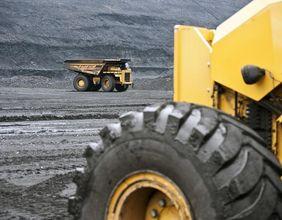
On the other hand, the mining sector bucked the downward trend, offering some relief to the Australian market. Major miners, including BHP (ASX:BHP), Rio Tinto (ASX:RIO), and Fortescue Metals (ASX:FMG), posted gains of 0.7%, 0.9%, and 0.7%, respectively. The uptick in mining stocks helped to mitigate broader losses and underscored the sector's resilience amid economic challenges.
Other sectors, however, struggled to maintain momentum. Consumer staples, real estate investment trusts (REITs), and gold stocks faced declines, reflecting a cautious investment landscape. Domino's Pizza Enterprises emerged as one of the biggest losers on the day, with shares plunging to their lowest level in nearly two months. The drop followed the announcement that long-time CEO Don Meij would step down, marking a significant leadership transition for the company.
Across the Tasman Sea, New Zealand’s S&P/NZX 50 index managed to stay marginally positive, contrasting with the Australian market's broader weakness.
