
 AUS
AUS
 NZ
NZ
 UK
UK
 CA
CA
 USA
USA
 IND
IND




_07_12_2023_11_05_52_936360.jpg)


Australian shares slipped on Monday, with the S&P/ASX 200 index falling 0.8% to 7,947.4, as all sectors traded in negative territory. All sectors trade in the red, led by financials and healthcare, as global economic uncertainty weighs on investor sentiment.
This follows a 1% decline last week as mixed U.S. jobs data failed to provide clarity on the Federal Reserve's upcoming interest rate decisions. The uncertainty has cast a shadow over global markets, with Australian investors reacting cautiously to the developments.
The U.S. jobs report released on Friday showed slower-than-expected employment growth in August, raising questions about the Federal Reserve’s next move. While unemployment rates dipped, the mixed data left investors uncertain about the scale of the anticipated rate cuts at the Federal Reserve's meeting next week.
Investors Await U.S. Inflation Data
Investors are now focusing on upcoming U.S. inflation data, which is expected later in the week. This data will be crucial in providing final clues on how aggressive the Federal Reserve might be in cutting interest rates. A higher-than-expected inflation figure could lead to a smaller rate cut, adding more volatility to the markets.
With the Fed's rate cut decision looming, Australian stocks have been caught in the crossfire, as investors remain on edge about the global economic outlook and the potential ripple effects of U.S. monetary policy changes.
Financials Lead Losses as Rate-Sensitive Stocks Tumble
Domestically, rate-sensitive financial stocks led the losses, with the financials index down 1.3%. The "Big Four" banks, which typically react strongly to changes in interest rate expectations, all traded lower. Westpac Banking Corporation (ASX:WBC) shed 2.1%, as the country’s third-largest lender announced the appointment of its new chief executive officer.
Commonwealth Bank of Australia (ASX:CBA), National Australia Bank (ASX:NAB), and ANZ Banking Group (ASX:ANZ) also posted losses between 1.3% and 2%, further dragging the financial sector lower.
Healthcare and Miners Follow in Decline
Healthcare stocks were not immune to the broader market sell-off, with the healthcare index slipping 0.9%. Major players like CSL Limited (ASX:CSL) and Ramsay Health Care (ASX:RHC) fell by 1.3% and 0.9%, respectively.
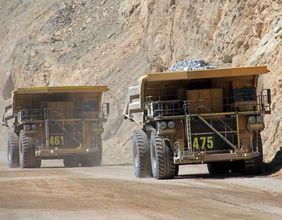
Meanwhile, miners experienced a slight decline, with the materials index down 0.2%, as iron ore prices hovered near a one-year low. The slump in underlying commodity prices weighed heavily on key mining stocks, reflecting a broader trend of global weakness in resource-linked markets.
Energy and gold stocks also posted declines, with the energy index dropping 0.9% and gold stocks down 2%. Despite a brief recovery in crude prices, with Brent crude rising 1.11% to $71.85 a barrel and U.S. West Texas Intermediate (WTI) crude gaining 1.2% to $68.48 per barrel, energy stocks were unable to find upward momentum.
Premier Investments Suffers Worst Day in Four Years
Premier Investments (ASX:PMV) took a significant hit, plunging as much as 8.1% and on track for its worst trading day in more than four years. The retail conglomerate reported earnings from its retail brands that fell short of market expectations, triggering a sharp sell-off in its shares.
New Zealand Shares Follow Suit
In New Zealand, the benchmark S&P/NZX 50 index dropped 0.6% to 12,540.45, mirroring declines in Australia and other global markets. Like its Australian counterpart, New Zealand’s market remains under pressure from global economic uncertainties.
