
 AUS
AUS
 NZ
NZ
 UK
UK
 CA
CA
 USA
USA
 IND
IND






Highlights
- South Harz Potash expands into copper-gold exploration via Glava project in Sweden.
- Existing German potash licences remain central to long-term value.
- Dual-asset approach positions the company across potash and critical minerals.
A New Chapter for South Harz Potash
The firm known for its extensive potash holdings in Germany has entered into an agreement to acquire the Glava Copper-Gold-Silver Project in southern Sweden, pushing its strategy beyond traditional potash production into the domain of critical and precious metals. This step marks the beginning of a dual-asset strategy by South Harz Potash (ASX:SHP), combining its well-known potash assets with a promising base and precious-metal exploration project.
The German Legacy: Potash Foundations
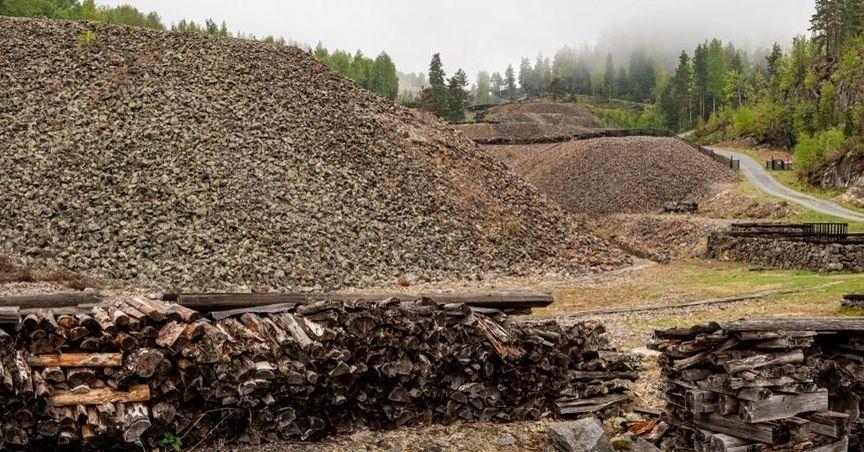
South Harz Potash’s core asset remains the potash portfolio in Germany’s historic South Harz district, which includes three perpetual mining licences and multiple exploration tenements. The flagship portion of this portfolio is the Ohmgebirge Potash Project. The perpetual licences grant long-term tenure with no royalty obligations, offering stability and flexibility.
The project’s potash deposits are of a well-understood sylvinite type, and the development plan draws on decades of established potash-mining knowledge in the region. Given its location in central Europe, the project is positioned to serve European agricultural markets, potentially offering a lower-carbon and locally sourced supply of Muriate of Potash (MOP).
This potash portfolio remains a strategic long-term asset for South Harz Potash, forming a strong foundation even as the company widens its exploration scope.
Why Glava? — The Appeal of the Swedish Copper-Gold-Silver Project
The Glava Project lies in Sweden’s Värmland region, within a geological belt that has emerged as a favourable exploration district for base and precious metals across Scandinavia and beyond.
Exploration work at Glava has identified outcropping copper-bearing minerals such as bornite, covellite, and chalcocite, alongside mapped telluride-bearing veins — a geological feature often associated with gold-bearing epithermal systems. This combination adds geological appeal and enhances the prospectivity of the asset.
Moreover, the regulatory and funding environment in Europe for critical minerals exploration is viewed as supportive. The relative ease of deploying conventional exploration techniques — thanks to favourable surface mineralisation and minimal glacial cover — adds to the attractiveness of swift project advancement.
Strategic Rationale: Diversification and Flexibility
By extending its portfolio beyond potash into copper, gold, silver and other critical metals, South Harz Potash addresses two strategic aims:
- Reducing reliance on a single commodity and geography. The potash market, while offering steady long-term relevance, can be cyclical. Diversification into metals adds exposure to different market dynamics.
- Capturing value across multiple commodities — from fertilizer essentials to metals that power technology, industry and global demand for critical raw materials.
The dual-asset strategy aligns with emerging global trends: demand for critical and precious metals is rising as industries pivot toward sustainable technologies, while agricultural demand for high-quality potash remains steady in Europe.
What This Means Going Forward
South Harz Potash retains optionality. The German potash assets stay intact — representing a stable, long-term resource base with European demand potential.
Concurrently, the Glava acquisition opens a new exploration frontier. The initial findings suggest a geologically interesting copper-gold system. If exploration advances, the company could build a multi-commodity platform well suited to evolving global supply-demand dynamics.
This dual-asset model may appeal to those tracking companies that balance traditional resource plays (like potash) with emerging critical-metals potential, offering a blended resource exposure.
Broader Context: Resource Trends and Market Dynamics
In recent years, global supply constraints and geopolitical issues have raised concerns over supply of strategic minerals — including fertilizers and critical metals. As Europe seeks locally sourced, low-carbon potash to reduce dependence on traditional exporters, companies with domestic resources like South Harz Potash become increasingly relevant.
Meanwhile, demand for copper, gold, silver and other metals remains elevated due to industrial demand, electrification, and the push for sustainable infrastructure — strengthening the appeal of projects like Glava.
Thus, South Harz Potash’s repositioning reflects a wider trend among resource companies aiming to combine foundational commodity assets with metals critical to future technologies and supply chains.
