
 AUS
AUS
 NZ
NZ
 UK
UK
 CA
CA
 USA
USA
 IND
IND







Highlights:
Fortescue Ltd’s revenue and profit have been on a decline over recent years, with a compound annual growth rate (CAGR) of -6.5% for revenue and -18.0% for profit.
The company maintains a relatively low debt/equity ratio of 27.6%, indicating a strong balance between equity and debt.
Fortescue’s dividend yield is slightly below its 5-year average, suggesting a change in the company’s financial dynamics.
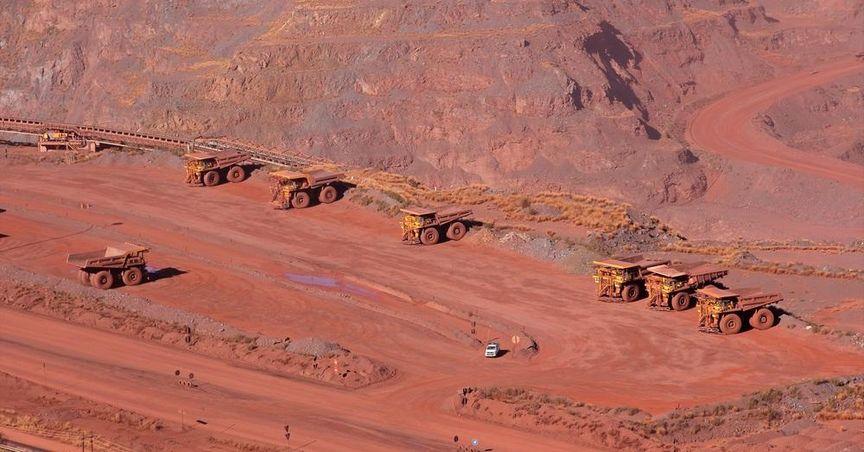
Fortescue Ltd, (ASX:FMG) a major player in the global iron ore production industry, has recently experienced a significant decrease in its share price, which has dropped by 36.27% in 2024. Founded by Andrew “Twiggy” Forrest, the company has diversified its operations to include exploration in key materials such as copper, lithium, and rare earths, all crucial for the renewable energy transition. Despite these efforts, the company’s financial performance has shown a decline over the past few years.
Fortescue’s latest reported revenue stands at $18.22 billion, but the company has experienced a negative compound annual growth rate (CAGR) of -6.5% over the past three years. Profit has also taken a downturn, with a reported $5.68 billion last year compared to $10.3 billion three years ago, reflecting a CAGR of -18%. These figures suggest a slowdown in Fortescue’s ability to maintain its previous growth trajectory.
On the financial health front, Fortescue’s net debt is $497 million, which indicates the company holds more cash than debt, providing a moderate buffer against financial risks. Its debt/equity ratio stands at a relatively low 27.6%, signifying that the company is not overly reliant on debt to fund its operations. Furthermore, Fortescue generated a solid return on equity (ROE) of 30.2% in FY24, demonstrating efficient use of shareholder capital.
The company’s dividend yield, currently at 10.48%, is slightly below its 5-year average of 10.52%. While this could suggest a decrease in the dividend or an increase in the share price, the growing dividend payments in recent years suggest the company remains committed to returning value to its shareholders. However, evaluating the share price based on metrics like dividend yield or profit growth requires a deeper analysis using models such as Discounted Cash Flow (DCF) and Dividend Discount Models (DDM) for a more accurate valuation.
