
 AUS
AUS
 NZ
NZ
 UK
UK
 CA
CA
 USA
USA
 IND
IND


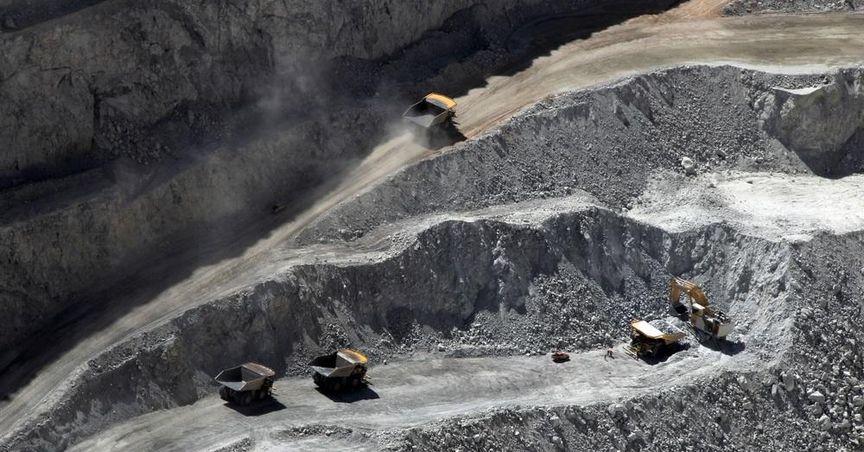




Ark Mines Limited (ASX:AHK) has announced a substantial update to its Mineral Resource Estimate (MRE) for the Sandy Mitchell Rare Earth Elements and Heavy Minerals Project located in North Queensland. This updated MRE reflects the positive outcomes from Ark’s initial Stage 1 drilling program completed in 2023, as well as results from the subsequent Stage 2 drilling. The new estimate indicates an impressive 231% increase, amounting to a 50.1 million tonne resource upgrade compared to the May 2024 MRE. Furthermore, the confidence classification for this resource has improved from Indicated in the May 2024 estimate to Measured in the latest September 2024 assessment.
The updated MRE was compiled by independent consultants HGS Australia, adhering to the 2012 JORC Code. It utilized variographically informed ordinary kriging in conjunction with an ID2 validation model, ensuring a rigorous approach to data analysis and resource estimation. The current MRE categorizes the resource entirely as measured, totaling 71.8 million tonnes at an average grade of 1,733 parts per million (ppm) monazite equivalent (MzEq), based on a lower cut-off grade of 700 ppm. To maintain statistical accuracy, top-cuts were applied to specific elements to control for outliers.
In addition to valuable economic commodities, the MRE also includes estimates for environmental considerations, specifically Arsenic (As) and Sulphur (S). These elements were found to be at very low levels, with sulphur averaging 143 ppm and arsenic averaging 9 ppm—levels that are manageable in terms of environmental impact.
This updated Mineral Resource Estimate positions Ark Mines favorably to implement its development strategy for the Sandy Mitchell Project. The company plans to pursue low-cost mining of rare earths and heavy minerals, supplemented by affordable downstream processing methods that rely on simple gravity separation techniques.
The grades reported in the MRE build upon previous drilling results that were utilized for metallurgical testing conducted by the independent processing firm, Mineral Technologies. The initial water-based beneficiation test work on air core samples yielded impressive final concentrate assays of 51.9% Total Rare Earth Oxides (TREO), equivalent to 519,000 ppm, underscoring the project's potential.
