
 AUS
AUS
 NZ
NZ
 UK
UK
 CA
CA
 USA
USA
 IND
IND







Highlights
ASX defence stocks continue to attract attention as DroneShield and Austal represent contrasting growth models across technology and shipbuilding within long-term global defence spending cycles.
Australian equities are entering a period where defence-linked industrial companies are drawing sustained attention, reflecting a broader shift in global security priorities and government spending cycles. Within the broader ASX 200 landscape, the industrials segment has become a focal point for investors tracking structural changes in defence procurement, drone warfare technology, and naval expansion programs.
Two companies often placed at the centre of this discussion are DroneShield (ASX:DRO), a counter-drone technology specialist, and Austal (ASX:ASB), a shipbuilder with a significant footprint in naval defence manufacturing. Both operate within the broader ASX Industrial Stocks space, yet their business models reflect very different sides of the defence growth story.
While market conditions remain influenced by macroeconomic signals and global tensions, defence spending cycles continue to provide a long-duration demand backdrop for suppliers embedded in government contracts and national security programs.
DroneShield and Austal: Two paths through the same sector
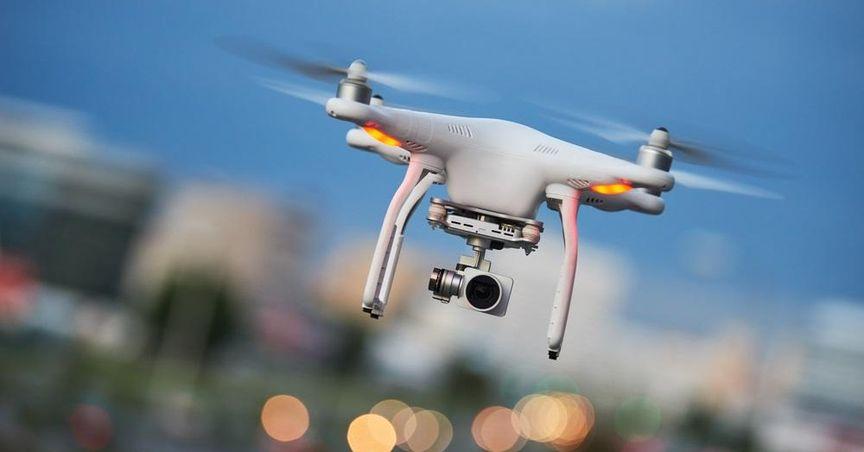
DroneShield (ASX:DRO), a developer of electronic warfare and counter-drone systems, represents the fast-evolving technology side of defence. Its systems are designed to detect and neutralise unmanned aerial threats, a capability increasingly relevant in modern conflict environments where drone usage has expanded rapidly.
The company’s growth profile has been shaped by rising demand for drone detection and jamming systems across defence and critical infrastructure sectors. At the same time, its market journey reflects the volatility often associated with fast-scaling technology suppliers operating in sensitive geopolitical environments.
On the other side, Austal (ASX:ASB), a Western Australian shipbuilder specialising in naval vessels, represents the long-cycle infrastructure arm of defence spending. Its operations are closely tied to government shipbuilding programs, including multi-decade naval construction commitments linked to AUKUS defence cooperation frameworks.
Together, these companies illustrate how defence exposure across the Australian market is not a single theme but a layered structure spanning electronics, naval construction, logistics, and advanced manufacturing.
The rise of defence as a structural market theme
Defence has become one of the defining industrial narratives across global markets, and Australia is no exception. Within the broader ASX stock market, defence-related companies have benefited from a sustained shift in government spending priorities, driven by geopolitical uncertainty and renewed focus on national security capabilities.
This has created a long-term pipeline of demand across shipbuilding, surveillance systems, autonomous defence technologies, and logistics support services. Companies operating in this ecosystem are increasingly positioned within multi-year procurement cycles rather than short-term contracts.
DroneShield (ASX:DRO) sits within the ASX AI Stocks category due to its integration of sensing and analytics technologies into defence applications, while Austal (ASX:ASB) aligns with heavy industrial manufacturing and naval infrastructure delivery under ASX Industrial Stocks.
The combination of technology-driven defence systems and large-scale manufacturing programs highlights the sector’s dual structure: rapid innovation on one side and long-duration infrastructure execution on the other.
DroneShield: Fast-moving technology in a high-scrutiny environment
DroneShield (ASX:DRO), a specialist in counter-unmanned aerial system solutions, has become one of the most closely watched names in Australia’s defence technology landscape.
Its product suite is designed to detect, track, and disrupt drone activity across military and civilian environments. This capability has gained relevance as drone usage expands across modern conflict zones and critical infrastructure protection scenarios.
The company’s rapid scaling reflects strong demand signals, but it also operates within an environment where regulatory oversight and disclosure standards remain stringent. This dual dynamic places emphasis on transparency, operational delivery, and contract conversion as key performance drivers.
Within the broader ASX narrative, DroneShield represents the high-velocity end of defence innovation, where technology adoption cycles can shift rapidly based on global security conditions and procurement priorities.
Austal: Long-cycle naval growth anchored in contracts
Austal (ASX:ASB), a shipbuilding and defence manufacturing company based in Western Australia, operates within a very different framework. Its business model is anchored in long-term government contracts that span naval vessel construction and maintenance programs.
The company’s role in Australia’s defence industrial base has expanded significantly in recent years, supported by multi-decade naval shipbuilding commitments and international defence partnerships.
Unlike fast-moving technology suppliers, Austal’s growth is closely tied to project delivery timelines, manufacturing capacity, and supply chain execution. This makes backlog visibility and program conversion central to its operational narrative.
Within the broader ASX Bluechip Stocks landscape, Austal is often viewed through the lens of industrial scale and national infrastructure importance rather than rapid innovation cycles.
Order books, contracts and execution pressure
A defining feature of the defence sector is the growing importance of contracted revenue visibility. Companies such as Austal (ASX:ASB) operate with substantial order pipelines tied to government programs, which provide long-term revenue clarity but also introduce execution complexity.
For DroneShield (ASX:DRO), the focus shifts toward converting committed pipeline agreements into realised revenue, while managing production scalability and procurement timelines across multiple jurisdictions.
Across both models, the central challenge is not demand but delivery. Defence budgets across allied nations continue to expand, but companies must demonstrate consistent execution against multi-year commitments.
This distinction is shaping how market participants assess industrial defence exposure within the broader ASX 100 environment.
Valuation reset and shifting sentiment
As defence equities have re-rated over recent years, market attention has shifted toward sustainability of growth rather than early-stage expansion narratives.
DroneShield (ASX:DRO) reflects the high-growth segment of the sector, where expectations are closely tied to contract flow and operational milestones. Austal (ASX:ASB), by contrast, reflects industrial stability supported by long-term government partnerships.
This divergence highlights an important shift in market behaviour: attention is increasingly focused on revenue certainty, backlog strength, and delivery capability rather than thematic momentum alone.
Within this environment, ASX mining stocks and resource-linked sectors continue to move on commodity cycles, while defence stocks respond more directly to policy frameworks and procurement announcements.
AUKUS and the multi-decade defence pipeline
A major structural driver for Australian defence companies is the AUKUS framework, which is reshaping naval procurement, submarine capability development, and advanced defence collaboration between Australia, the United Kingdom, and the United States.
Austal (ASX:ASB) is directly positioned within this framework through naval shipbuilding programs that extend across long operational timelines. DroneShield (ASX:DRO), meanwhile, benefits from broader technological adoption trends linked to modern warfare and surveillance requirements.
The result is a multi-layered defence ecosystem where both heavy industrial capability and advanced electronics play essential roles in national security infrastructure.
What defines the next phase of defence growth
The next phase for ASX defence-linked companies is likely to be defined by execution rather than expansion announcements.
Key areas of focus include:
-
Conversion of contracted pipelines into delivered revenue.
-
Scaling production capacity across manufacturing and technology segments.
-
Integration of new defence technologies into operational deployment frameworks.
For companies operating within this space, the challenge lies in aligning long-term government demand with consistent operational performance across global supply chains.
The defence theme across the Australian market is no longer emerging—it is established, structured, and deeply integrated into industrial planning cycles. Yet within that maturity lies clear contrast.
DroneShield (ASX:DRO) represents fast-moving technological adaptation in modern warfare environments. Austal (ASX:ASB) reflects long-cycle industrial delivery tied to national infrastructure programs. Together, they illustrate a sector where growth is not uniform but layered, shaped by execution capability, contract depth, and geopolitical alignment.
