
 AUS
AUS
 NZ
NZ
 UK
UK
 CA
CA
 USA
USA
 IND
IND








Highlights
- Mesoblast advances its platform with the acquisition of CAR technology for MSC therapies.
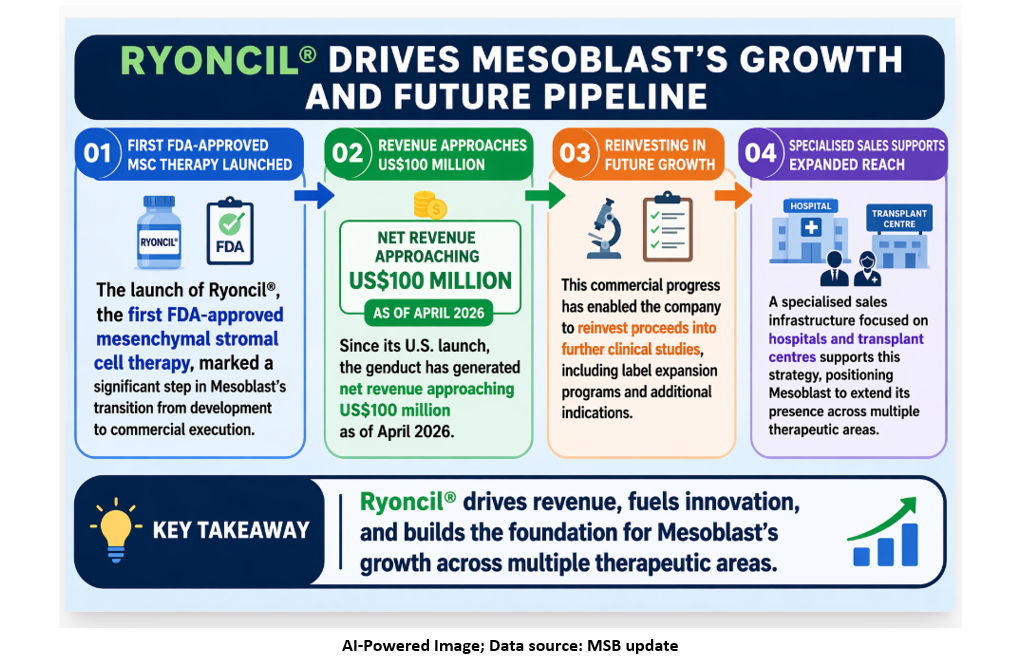
- The company has reported Ryoncil® revenue approaching US$100 million since launch.
- CAR-MSC approach aims to enhance tissue targeting and treatment potency.
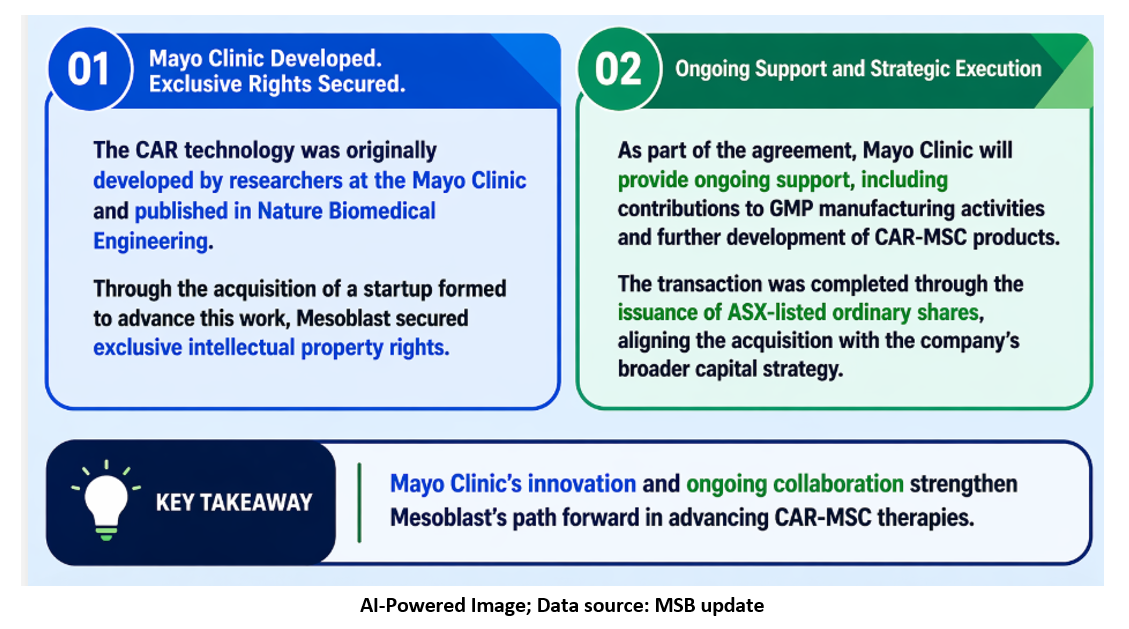
- Mayo Clinic collaboration supports further development and manufacturing.
Over the past month, Mesoblast Limited (ASX:MSB; NASDAQ:MESO) has quietly captured market attention, with its ASX-listed shares climbing nearly 11% as of 20 April 2026. But beyond the share price movement lies a more compelling story — one of transformation, innovation, and strategic expansion in the rapidly evolving field of cellular medicine.
With its first FDA-approved product already commercialised and a growing pipeline of therapies, the company is now entering a new phase of development. The company is also taking a strategic step forward by integrating advanced genetic engineering technologies — including recently acquired CAR-based capabilities — to enhance precision and broaden its reach in treating inflammatory diseases.
A Platform Built on Cellular Innovation
Mesoblast has established itself as a developer of off-the-shelf cellular medicines designed to address severe and life-threatening inflammatory conditions. Its therapies, based on mesenchymal lineage stromal cell (MSC) platforms such as remestemcel-L and rexlemestrocel-L, are engineered to modulate immune responses and target inflammation at its source.
With operations spanning the United States, Australia, and Singapore, the company has built a global presence supported by an extensive intellectual property portfolio extending to at least 2044.
Its manufacturing processes and facilities have undergone FDA inspection, aligning its development pipeline with commercial-scale readiness.
Commercial Milestone Anchors Strategy
Pipeline Expansion Across Indications
Building on its initial commercial success, Mesoblast continues to advance a pipeline targeting multiple indications. Phase 3 programs are underway for rexlemestrocel-L in conditions such as degenerative disc disease and inflammatory heart failure.
At the same time, the company is pursuing additional studies to expand Ryoncil® (remestemcel-L) into adult acute graft-versus-host disease and pediatric rare diseases including Duchenne Muscular Dystrophy. These programs reflect a broader effort to leverage existing platforms across diverse clinical applications.
CAR Technology Adds Precision Layer
On 14 April 2026, Mesoblast announced the acquisition of exclusive worldwide rights to a patented chimeric antigen receptor (CAR) technology platform. This development introduces a new layer of precision to its existing MSC therapies.
By integrating engineered CAR constructs into stromal cells, Mesoblast aims to enhance their ability to target inflamed tissues more effectively. The approach is designed to improve both specificity and therapeutic potency, potentially extending applications into conditions such as ulcerative colitis, Crohn’s disease, and Lupus Nephritis.
Strategic Collaboration and Development Path
Positioning for Next-Phase Growth
As Mesoblast integrates CAR technology into its platform, the company is aligning its commercial, clinical, and research strategies toward expanding therapeutic applications. The combination of an approved product, advancing late-stage programs, and new precision-engineered approaches reflects a multi-layered development pathway.
This progression connects its established foundation in allogeneic therapies with emerging innovations, shaping the next phase of its efforts in treating inflammatory and autoimmune diseases.
