
 AUS
AUS
 NZ
NZ
 UK
UK
 CA
CA
 USA
USA
 IND
IND


_12_19_2025_05_54_13_098716.jpg)




Highlights
Australian equity participation reflects constrained movement across core sectors
Structural market factors shape activity levels on the national exchange
Resource and financial segments continue to define index composition
Australian equities reflect restrained participation as sector composition, liquidity concentration, and governance frameworks shape activity across key market benchmarks.
The Australian financial services and exchange operations sector remains a foundational pillar of domestic capital markets. Within this sector, equity trading activity during the period has reflected a restrained tone, shaped by sector balance and institutional alignment. The ASX stock market has operated under conditions marked by measured participation, with benchmark representation centred primarily on the ASX 200 and the All Ordinaries. These indices collectively capture a broad cross-section of listed companies and continue to reflect the structural makeup of Australian equities. The exchange operator ASX Limited (ASX:ASX) remains integral to this environment, providing listing, clearing, and settlement services that support market continuity.
Trading patterns across these benchmarks have highlighted a landscape influenced by macro alignment, sector weighting, and liquidity distribution rather than expansive market breadth. Large capitalisation entities within financial services, resources, and infrastructure have retained visibility, while participation across other segments has shown periodic moderation. This environment underscores how index composition and sector representation influence overall exchange activity without reliance on directional expectations.
Structural Market Factors Shaping Equity Participation
Equity participation across Australian markets has been shaped by a convergence of structural factors embedded within the financial system. Monetary settings, currency alignment, and international capital flows have influenced allocation behaviour among institutional participants. These elements have contributed to a trading environment where activity reflects calibration rather than expansion.
Corporate reporting cycles have also played a role in shaping engagement, particularly among companies associated with ASX dividend stocks. Distribution schedules and income-focused mandates influenced the timing of participation, especially within sectors traditionally associated with stable cash flow profiles. Financial institutions, utilities, and infrastructure-linked entities continued to form the backbone of index representation under these conditions.
Exchange infrastructure has remained consistent throughout this phase. Clearing and settlement systems functioned efficiently, reinforcing confidence in transaction processing and post-trade operations. This operational continuity ensured that participation levels, while moderated, were not affected by system-related constraints. Instead, activity levels reflected broader structural alignment across domestic and international markets.
Sector Composition and the Role of Resources
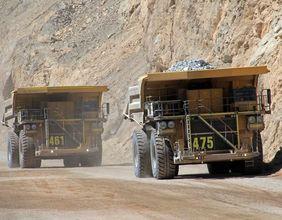
Sector composition remains a defining characteristic of Australian equities, with materials and energy segments continuing to shape benchmark profiles. The country’s global positioning within commodities ensures that ASX mining stocks remain a core component of index representation. These companies contribute significantly to turnover and visibility within both the ASX 200 and All Ordinaries, reflecting Australia’s export-oriented resource economy.
Financial services entities have continued to provide structural balance within indices. Major banking institutions and diversified financial firms retain significant weighting, contributing to baseline liquidity and index stability. Their presence supports consistent participation across trading sessions, particularly during periods when other sectors display variable engagement.
Beyond resources and finance, healthcare, consumer staples, and industrials have contributed to diversification within index composition. While these sectors carry comparatively smaller weightings, their inclusion supports broader representation of the domestic economy. This balance across sectors has reinforced index resilience, even as overall participation remained contained.
Liquidity Distribution and Index Representation
Liquidity patterns across Australian equities have reflected a concentration within larger index constituents. Companies included in the ASX 200 and All Ordinaries have continued to attract consistent trading interest due to their established profiles and index-linked exposure. Passive investment vehicles tracking these benchmarks have reinforced this concentration, directing flows toward constituent securities during rebalancing periods.
Smaller listed entities outside the primary index weightings experienced more episodic engagement. Activity within these stocks often aligned with company-specific disclosures or sector developments rather than sustained market-wide participation. This contrast highlights how index inclusion influences visibility and liquidity distribution across the exchange.
Derivatives and futures markets associated with Australian benchmarks mirrored this environment. Activity within these instruments aligned closely with index movements, reinforcing the role of macro-level factors in shaping participation. This alignment further emphasised the influence of benchmark composition on overall trading behaviour within the ASX stock market.
Governance Standards and Market Transparency
Market governance and transparency frameworks have remained central to maintaining confidence within Australian equities. Continuous disclosure requirements ensure that listed companies provide timely information regarding material developments, supporting informed participation across the market. These obligations apply uniformly across index constituents, reinforcing consistency in information flow.
The exchange’s regulatory oversight supports orderly trading conditions through surveillance mechanisms designed to monitor activity and uphold compliance standards. This oversight contributes to market integrity, ensuring that participation occurs within a structured and transparent framework.
Operational enhancements and system upgrades continue to strengthen exchange resilience. These initiatives support efficient order execution and data dissemination, reinforcing the reliability of Australia’s equity infrastructure. Educational resources and market data availability further enhance transparency, enabling participants to understand index composition and sector representation within the ASX 200 and All Ordinaries.
