
 AUS
AUS
 NZ
NZ
 UK
UK
 CA
CA
 USA
USA
 IND
IND







Too much anaesthesia leads to post-operative complications, longer hospital stays and severe conditions like PTSD. It is estimated that 37-46% of surgical patients are affected by postoperative Delirium (a serious disturbance in mental abilities). In the US alone, it is estimated that Delirium costs the US healthcare system USD 164 billion per annum.
Thus, it becomes imperative that there is a reliable objective measure of consciousness during surgery. In an attempt to address this significant unmet need in the global market, Cortical Dynamics has come up with an innovative medical device technology-based system, the Brain Anaesthesia Response Monitor (BARM).
Cortical Dynamics is engaged in the commercialisation of BARM, a brain monitoring system that uses a fundamentally superior algorithm to analyse the brain’s electrical activity (‘brain waves’) through the electroencephalogram (EEG). BARM provides two indexes, namely the Composite Cortical State (CCS), a measure of hypnosis (unconsciousness); and the Cortical Input (CI), which is a measure of analgesia (pain).
BARM – Key Advantages
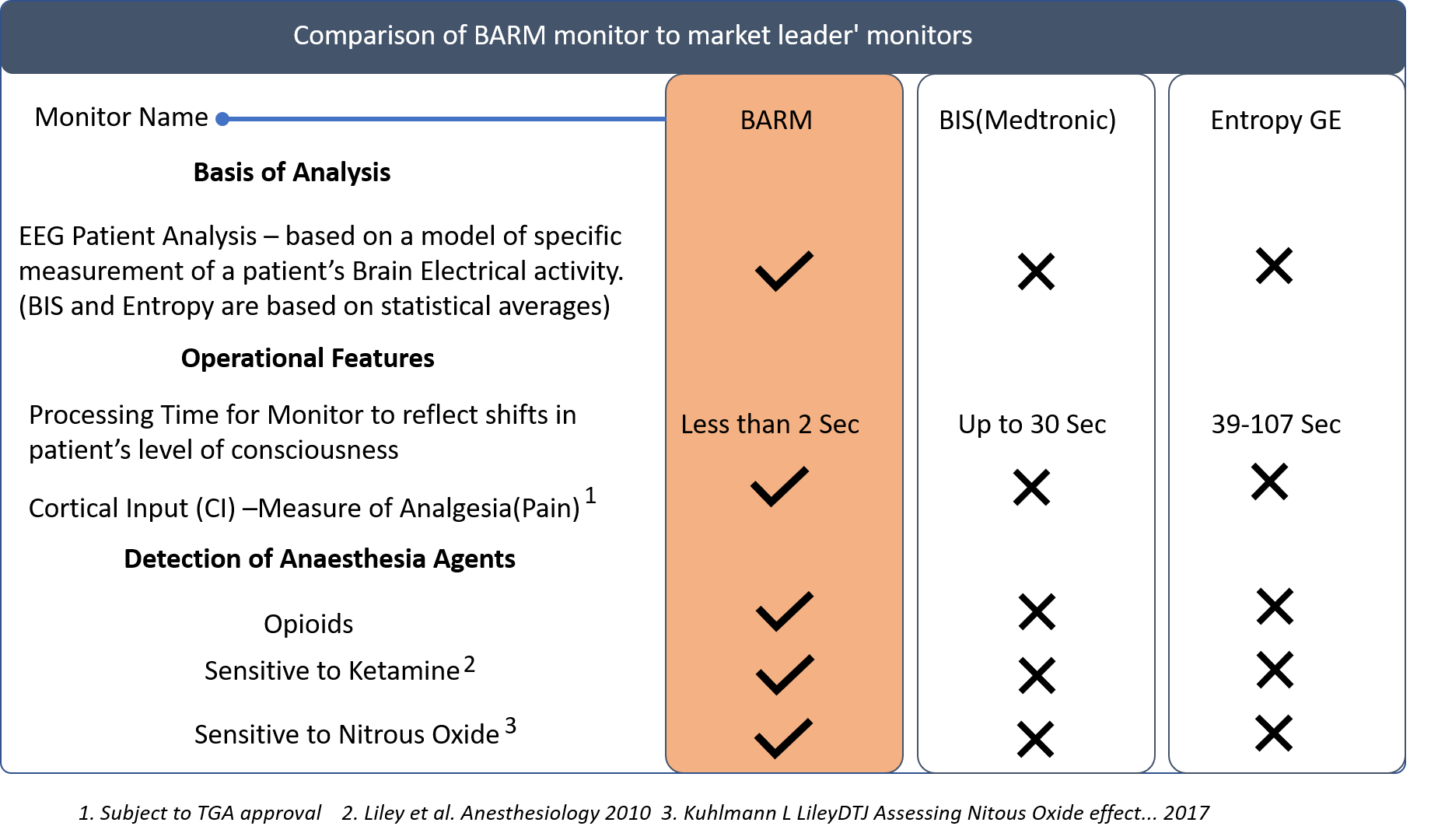
BARM stands out by calibrating real-time anaesthetic monitoring for an individual patient rather than using a statistical average as used in systems developed by competitor products, which most importantly include the BIS and Entropy monitoring systems. Additionally, it monitors a wider range of drugs than BIS and Entropy. The quick response from the BARM is an additional advantage.
The key aspect to note is that the BARM takes less than 2 seconds of processing time to reflect shifts in a patient’s level of consciousness as compared to the processing time of up to 30 seconds and 39 to 107 seconds taken by BIS and Entropy monitoring systems, respectively. This feature indicates that the responsiveness of the BARM system provides a key competitive advantage.
Additionally, BARM’s measure of brain activity with the Cortical Input (or CI), can help medical professionals track the brain’s response to pain, providing BARM with a unique edge over the BIS and Entropy systems, which entirely lack any such measure to monitor pain.
BARM’s improved, faster and more robust detection of the effect of anaesthetic agents can ensure that the patients are optimally anaesthetised, which, in turn, improves the accuracy of clinical decisions involving anaesthetic delivery. The improved accuracy enables an anaesthetist to deliver the minimum anaesthetic dosage to the patient, minimising side effects and lowering costs.
The key aspect to note is that BARM now has both TGA (The Therapeutic Goods Administration) approval and CE mark.
Indicative Market Opportunity
Globally, around 312 milliona major surgical procedures requiring anaesthesia are performed yearly. In 2012 China was reported to have 90 million major anaesthesia cases in 146,800 operating theatres. In contrast in 2012 North America had over 48 millionb general anaesthesia cases in 44,558 operating rooms, whereas Western Europec was reported to have 29 million major anaesthesia cases in 59,740 operating theatres. Closer home, Australia has approximately 2.5 milliona hospitalisations per annum requiring surgery and anaesthesia.
Scaling Multiple Segments
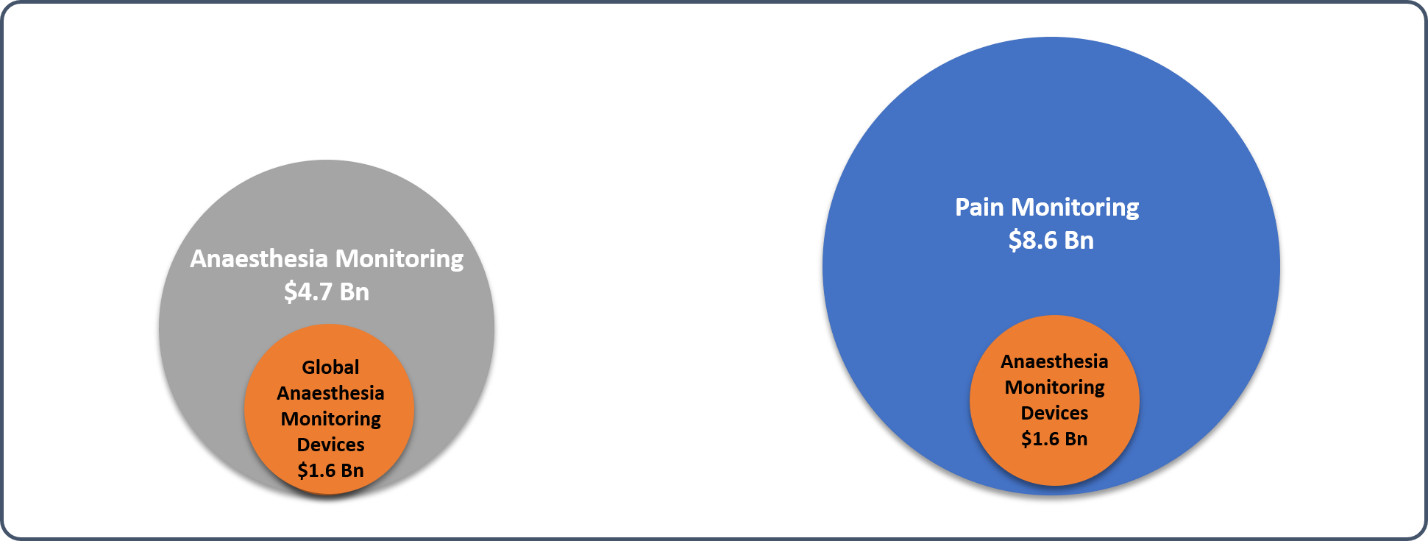
Cortical Dynamics’ BARM has enormous growth potential as it addresses two substantial patient monitoring market segments.
- Anaesthesia Monitoring Devices
- Pain Management Devices
Pain Management Devices are estimated to reach the value of US$8.6 billion per annum by 20224, while the global market for anaesthesia monitoring devices is anticipated to reach over US$1.6 billion by 20205.
In addition to the patient care, efficient and effective methods to measuring anaesthesia plays an important role in increasing the reach of Cortical Dynamics’ BARM. Operating theatres produce approximately 70% of hospital revenue and 40% of costs; and thus, effective utilisation of an operating theatre becomes a key determinant of hospital economics.
Cortical Dynamics’ BARM aids in substantially reducing costs and increasing the operating theatre utilisation.
Global Patent Coverage and Approvals
Cortical Dynamics has 22 patents registered in Australasia, Europe, USA, Japan & China. The company secured approval from TGA in Australia along with the CE mark in Europe in early 2016. Austrade identified the company as an “Australian unlimited” technology success company.
The Market Implementation
The Stage 1 market implementation involves using in-country distributors. The company is currently focused on Australia, New Zealand and Europe, where the product is already in use and supported by a direct sales team.
In Europe, the company already has a leading medical device distributor on board, Innomed, whose territory of activity includes the high-growth western European Benelux region. To further increase its reach, Cortical Dynamics is presently in discussions with distributors in the UK, France and Germany.
The company appointed a leading Asian distributor, Globaluck, in May 2018 and signed an MoU with GGBV Pty Ltd in Australia for distribution opportunities in South Africa and other African countries.
The Stage 2 market implementation aims to integrate BARM into patient monitoring of global OEMs (global original equipment manufacturers). Cortical held preliminary and open discussions with four global manufacturers, namely, Draeger, Mindray, Philips and GE.
Clinical Publications and Clinical studies
Cortical Dynamics had published 12 clinical papers related to BARM, which also include the results of the clinical trial conducted by the company.
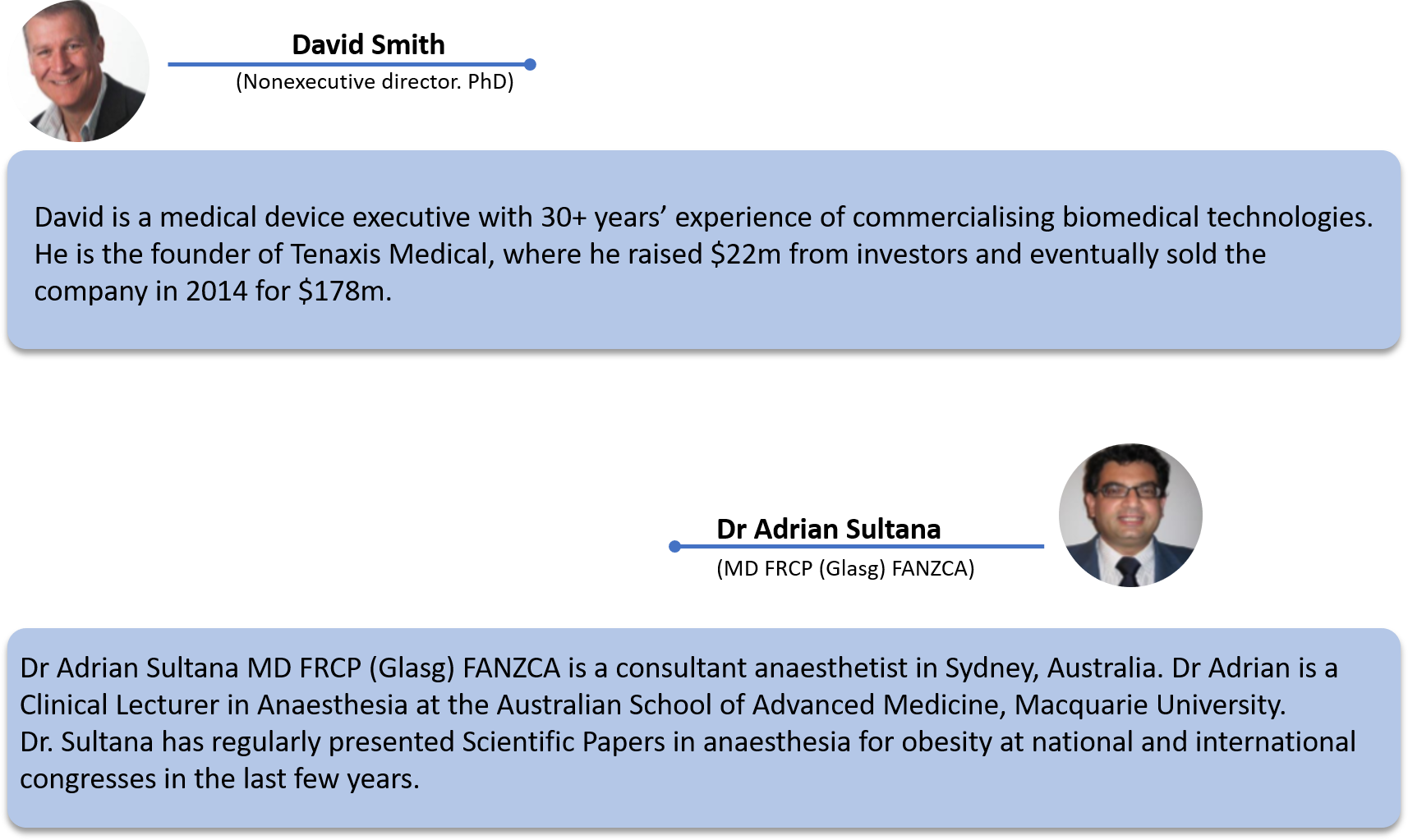
Dr Adrian Sultana MD FRCP (Glasg) FANZCA, a consultant anaesthetist in Sydney, who used the BARM on around 115 patients during 2018, made the following comments:
“[BARM use resulted in] significant reduction in anaesthesia recovery time using TIVA”
“BARM was remarkably stable and the responsive signal permitted a new level of belief in the awareness monitoring technique and allowed me to run cases at a CCS index of 45 with confidence in early tapering “of the patients anaesthesia” using TCI.”
Commenting on the stability and speed, Dr Sultana said:
“I was able to administer significantly less TIVA”.
“Often when using the BIS/Entropy, they dramatically lag the patients emergence and I have had patients that take up to 20 minutes to wake up after exceeding 65 on either modality or conversely that in a rapidly changing situation eye opening may occur before the processed EEG signal “takes off” from a baseline of 35-45”.
Strong Management Team, the driving force behind this Medtech company
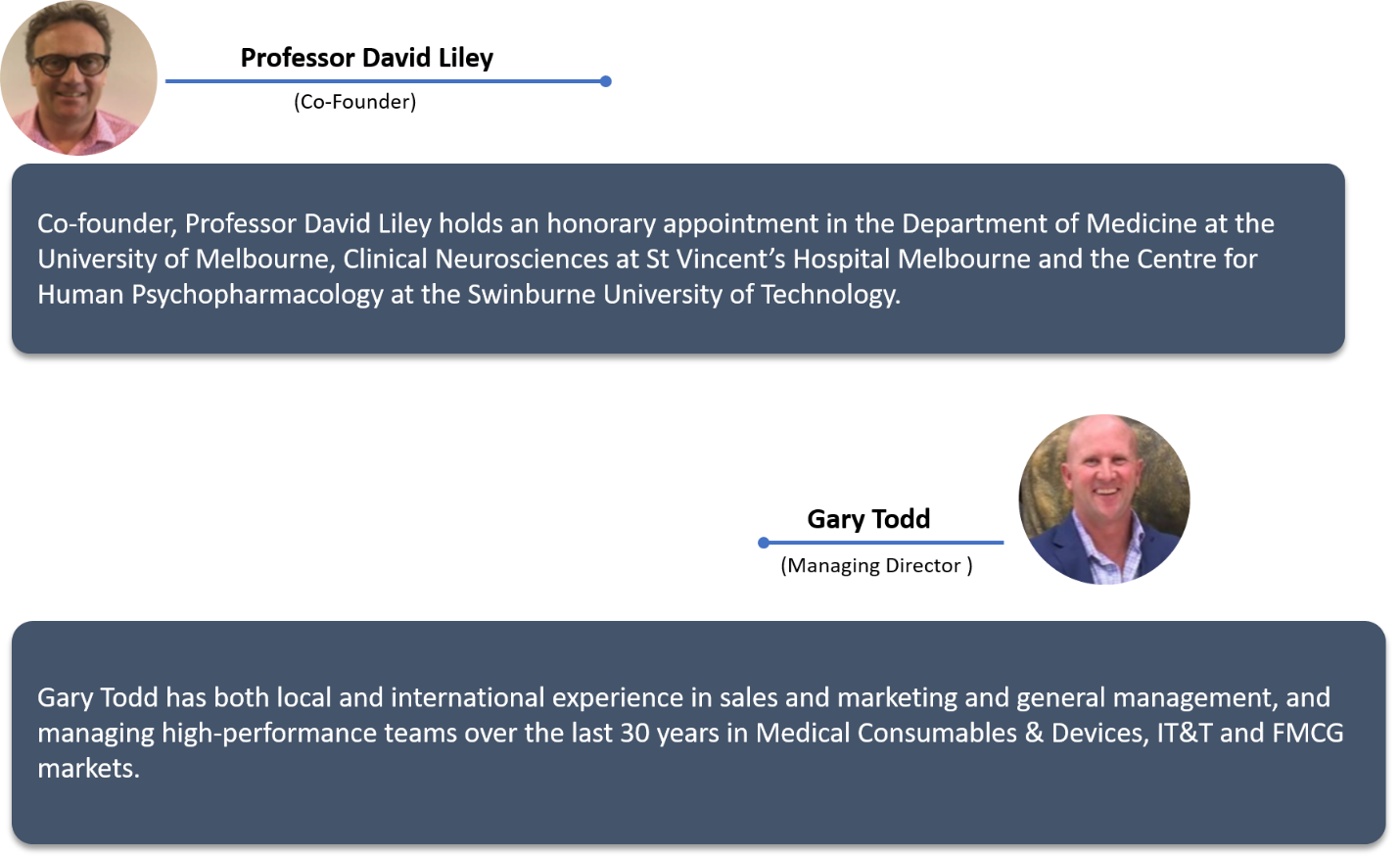
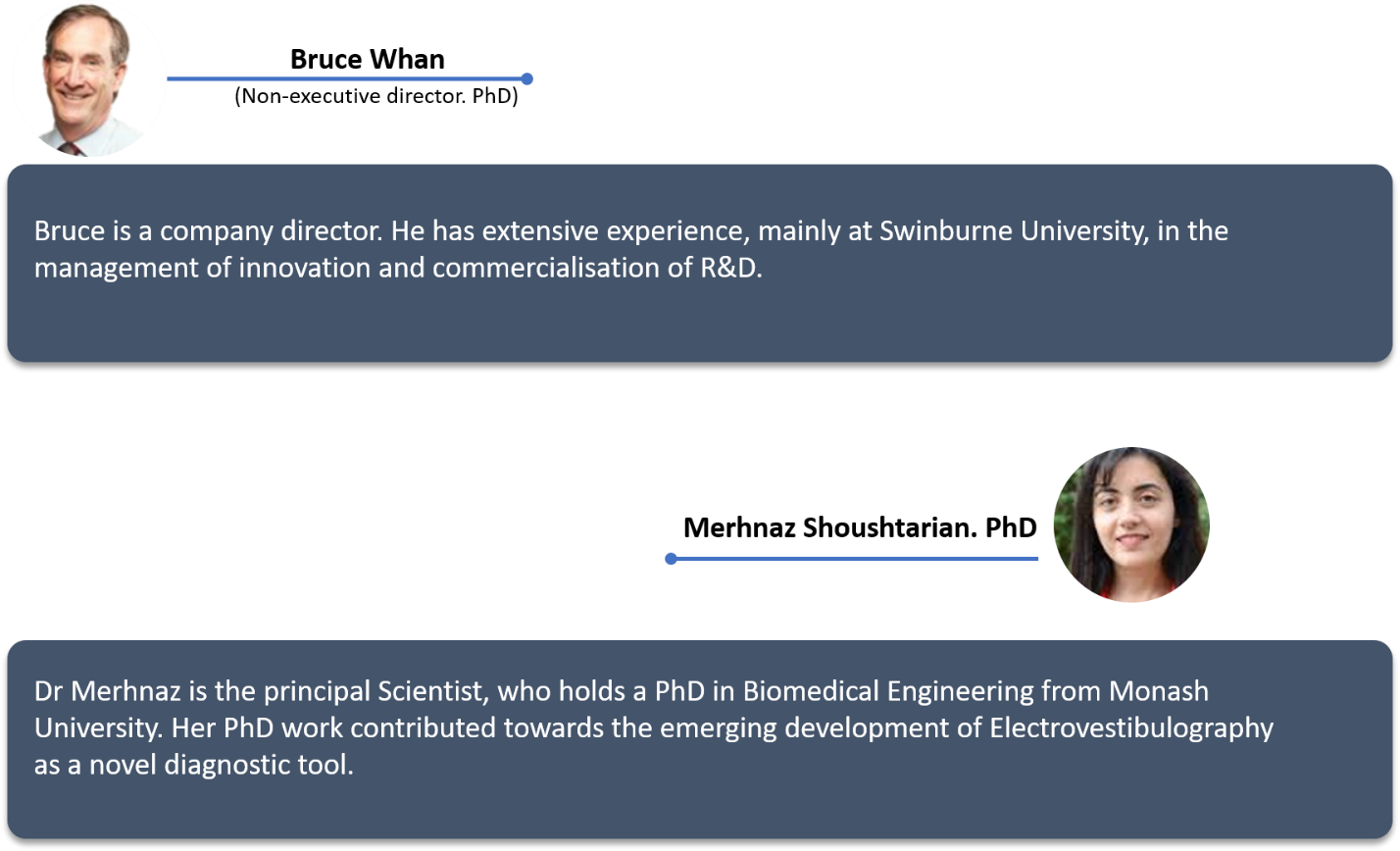
Cortical Dynamics is backed by a team with a proven track record both locally and internationally. The pedigree of the team would help the company deliver success and in turn, benefit its stakeholders.

The Advisory Panel
Coming to the Offer
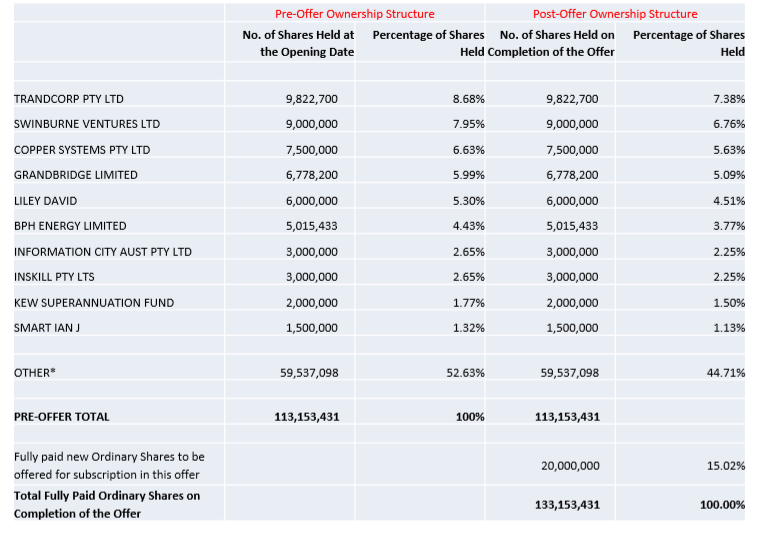
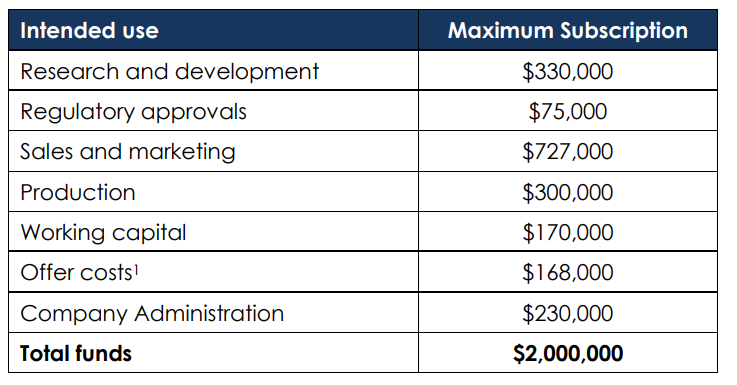
With the necessary approvals in place, registered patents across multiple geographies, 12 published clinical papers relating to BARM including the clinical trial results and backed by a team of able and expert management, Cortical Dynamics aims to pump-in more funds for the expansion efforts related to its core-product. The company is issuing a further 20 million shares at a consideration of $0.10 to raise $2 million.
There are ~1,700 shareholders on the Cortical share register. Post the completion of the offer, the total fully paid ordinary shares would stand at 133,153,431.
The post and pre-offer ownership structure of the company is as follows:
Use of Funds
The company intends to use the capital thus raised to scale its operations, focus more on research and development along with the production. The below figure depicts the details of the intended use of the capital:
Please click here for the offer document.
Cortical believes that the above offer represents an excellent platform for investor subscription, as the company anticipates that this ‘paradigm busting’ technology, the innovative BARM system, will achieve significant growth to disrupt the clinical brain function monitoring industry.
Sources:
- Bulletin of the World Health Organization 2016, Size and distribution of the global volume of surgery in 2012 #/ (World Health Organization Bulletin)
- stanfordhealthcare.org/medical-clinics/surgery-clinic/patient-resources/surgery-statistics.html.
- paion.com/remimazolam/sedation-anesthesia-market/general-anesthesia-europe/;
- www.grandviewresearch.com/industry-analysis/pain-management-devices-market - April 2016
- Global Brain Monitoring Devices Market Research Report”, accessed March 2017, #
Disclaimer
This website is a service of Kalkine Media Pty. Ltd. A.C.N. 629 651 672. The website has been prepared for informational purposes only and is not intended to be used as a complete source of information on any particular company. The above article is sponsored but NOT a solicitation or recommendation to buy, sell or hold the stock of the company (or companies) under discussion. We are neither licensed nor qualified to provide investment advice through this platform.
