
 AUS
AUS
 NZ
NZ
 UK
UK
 CA
CA
 USA
USA
 IND
IND






Highlights
Market fear reshapes capital flows across Australian equities
Institutions quietly increased exposure during volatility
Select ASX-listed companies drew renewed attention
Market fear often reveals conviction, as capital quietly shifts toward resilient Australian companies positioned for long-term relevance amid uncertainty.
The Australian equity landscape often reveals its clearest signals when confidence weakens. Periods of heightened uncertainty tend to expose which businesses retain institutional conviction and which fade from focus. During the latest bout of market anxiety, segments of the ASX 200 became a quiet stage for strategic repositioning, as capital rotated toward businesses perceived as resilient, adaptable, and structurally relevant to long-term market cycles. This behaviour highlights how fear-driven conditions can create opportunity-driven shifts beneath the surface of the broader ASX stock market.
Why does fear reshape market behaviour?
Market fear rarely emerges without cause. Concerns surrounding technological disruption, global economic recalibration, and earnings sustainability have collectively influenced sentiment across Australian equities. These forces tend to pressure valuations indiscriminately, even among companies with strong operational foundations.
During such phases, market participants reassess risk exposure, often retreating from momentum-driven positions. This creates an environment where quality-focused capital begins reallocating toward enterprises viewed as essential enablers of future growth, rather than short-term performers.
How does institutional capital respond during volatility?
Large-scale capital allocators typically operate with longer investment horizons. When volatility intensifies, their activity often shifts from momentum participation toward selective accumulation. This approach favours companies with durable balance sheets, entrenched market positions, and exposure to structural trends.
Rather than reacting to daily price movements, this cohort evaluates how fear has distorted valuations relative to long-term fundamentals. This pattern has historically shaped market recoveries and sector leadership cycles.
Which sectors drew renewed attention?
Technology infrastructure regains focus
Technology-linked businesses supporting digital transformation continued to attract attention despite broader concerns around artificial intelligence disruption. Companies providing essential platforms, enterprise software, and data-driven solutions were viewed as foundational rather than speculative.
One such business is Xero Limited, a cloud-based accounting software provider supporting small and medium enterprises across multiple regions. Xero Limited (ASX:XRO) remains closely associated with digital financial management infrastructure rather than discretionary innovation.
Resources maintain strategic relevance
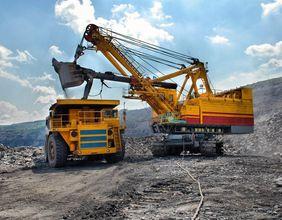
The resources sector maintained its role as a portfolio stabiliser during uncertain conditions. Exposure to commodities essential for infrastructure, energy transition, and industrial activity continued to appeal to institutions seeking tangible asset backing.
BHP Group Limited (ASX:BHP), a diversified resources company with global operations, represents this category through its involvement in metals supporting industrial and technological supply chains. Interest in this space also aligns with broader coverage of ASX mining stocks.
What signals emerged from market positioning?
Shifts in market positioning often reveal confidence before sentiment improves. Reduced pessimistic exposure toward select equities suggested expectations of stabilisation rather than prolonged weakness. This repositioning occurred quietly, without strong price momentum, reinforcing the long-term nature of the activity.
Such movements tend to precede broader market recognition, as capital gradually reallocates toward companies perceived as mispriced during fear-driven phases.
Which businesses stood out during the adjustment?
Healthcare defensives regain appeal
Healthcare-related companies offering essential services demonstrated resilience amid uncertainty. Their demand profiles tend to remain stable regardless of broader economic conditions.
CSL Limited (ASX:CSL), a global biotechnology company focused on plasma-derived therapies, continued to represent defensive exposure tied to long-term healthcare needs rather than cyclical trends.
Financial platforms show durability
Financial services infrastructure providers maintained relevance due to their role in transaction processing and capital flow facilitation.
ASX Limited (ASX:ASX), which operates Australia’s primary securities exchange and clearing infrastructure, reflects exposure to market functionality rather than directional trading outcomes.
How did capital rotation influence market structure?
Capital rotation during fearful conditions tends to reshape sector leadership. Momentum-driven segments often lose prominence, while companies with essential services, infrastructure relevance, or defensive earnings regain favour.
This rotation reinforces diversification principles across portfolios, aligning exposure with sustainability rather than speculative growth. Over time, these shifts influence index composition and performance leadership.
What role do dividends and stability play?
Income-generating equities often regain attention during volatile markets, particularly when uncertainty clouds growth outlooks. Stable cash flow generation becomes a key differentiator.
This renewed focus aligns with broader interest in ASX dividend stocks, where consistent distributions provide an additional layer of return resilience during periods of subdued price appreciation.
How does this compare across Australian indices?
While large-cap names dominate headlines, similar behaviour emerged across mid-cap and broader market segments. Businesses within the ASX 100 and ASX ordinaries stocks also experienced selective capital reallocation driven by balance sheet strength and sector positioning.
This suggests the response to fear was not isolated to flagship names but reflected a broader reassessment of quality across the Australian equity universe.
What lessons emerge for market observers?
Periods of elevated uncertainty often provide the clearest insight into institutional conviction. When sentiment weakens, capital flow patterns reveal which businesses are viewed as essential contributors to future economic structures.
Observing these shifts offers valuable context for understanding how markets recalibrate during stress and where confidence quietly rebuilds before broader optimism returns.
As global markets continue navigating technological change and economic realignment, fear-driven phases are likely to recur. Each episode reshapes capital allocation in ways that influence long-term market structure.
Understanding how institutions respond during these periods provides perspective beyond daily price action, highlighting the underlying mechanics that guide Australian equity markets through cycles of uncertainty and renewal.
