
 AUS
AUS
 NZ
NZ
 UK
UK
 CA
CA
 USA
USA
 IND
IND





Highlights
- Australia’s Q1 GDP growth slows to 0.2%
- Concerns rise over global economic stability
- Focus shifts to upcoming US and Canadian central bank move
Australia’s economic engine showed signs of fatigue in the March quarter, with the nation’s gross domestic product (GDP) rising just 0.2%, significantly below expectations of 0.4%. This marked a sharp slowdown from the 0.6% expansion recorded in the December quarter, signalling that growth momentum is continuing to taper off. On an annual basis, GDP remained muted at 1.3%, indicating persistent economic softness.
This weaker-than-expected growth has come at a time when the Reserve Bank has already made two cuts to the cash rate this year. The central bank’s easing stance was supported by inflation finally returning to its target range, offering some breathing room amid escalating global uncertainties. However, macroeconomic headwinds, especially those stemming from the United States' assertive trade policies, have added to investor caution.
The global economic landscape is increasingly fragile. With the US pushing aggressive tariff measures, fears of a broader economic derailment have become more prominent. These trade actions, particularly if retaliated against, could strain export-driven economies like Australia and further affect the performance of large-cap stocks within the S&P/ASX200 index.
Despite the broader economic slowdown, some market segments continue to capture attention—particularly ASX dividend stocks. With interest rates on the decline and bond yields remaining subdued, income-seeking investors are increasingly leaning toward companies offering stable dividend returns. Companies like Commonwealth Bank of Australia (ASX:CBA) and Wesfarmers Limited (ASX:WES) are among those frequently eyed for their dividend reliability amid uncertain macro conditions.
Meanwhile, upcoming global economic indicators could further sway market sentiment. The release of US employment data is expected to offer more clarity on labour market resilience, while the Bank of Canada is tipped to reduce its benchmark interest rate by 25 basis points to 2.5%, potentially influencing monetary policies elsewhere.
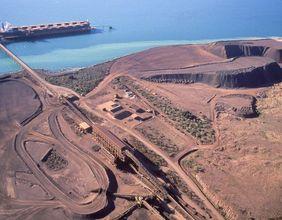
For companies tied closely to global trade, such as BHP Group Ltd (ASX:BHP) and Fortescue Metals Group Ltd (ASX:FMG), continued volatility in commodity demand could impact earnings outlooks. Similarly, tech and growth-oriented companies like Xero Limited (ASX:XRO) may experience valuation pressure if global sentiment deteriorates further.
As growth remains tepid and uncertainty looms, attention is likely to remain fixed on central bank strategies and high-yielding sectors on the ASX, especially those known for delivering consistent dividend performance. The road ahead for the Australian economy—and the ASX200—may depend largely on both domestic resilience and external geopolitical developments.
