
 AUS
AUS
 NZ
NZ
 UK
UK
 CA
CA
 USA
USA
 IND
IND


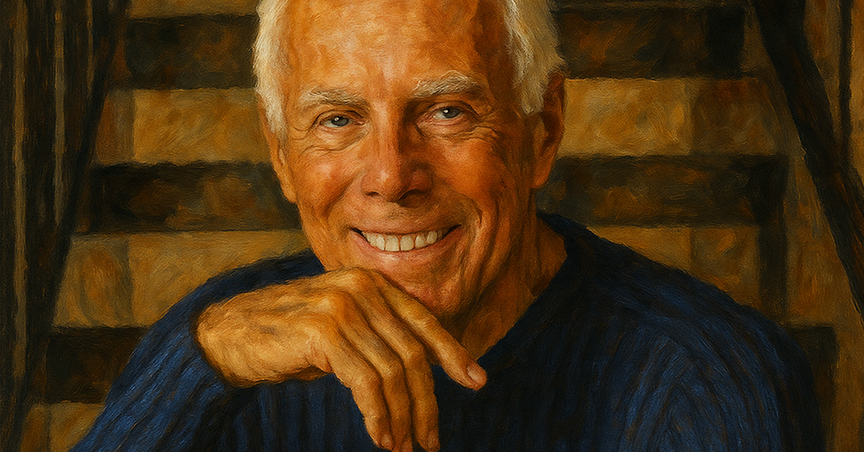





Giorgio Armani built one of the most recognisable—and unusually independent—luxury empires on earth. What makes it so big isn’t just the breadth of categories (from haute couture to hotels) or the celebrity aura that’s surrounded the brand for decades. It’s the scale and diversity of a private group that has stayed under family control while generating multibillion-euro sales, employing thousands of people, partnering with blue-chip giants in beauty and eyewear, and translating a minimalist aesthetic into restaurants, interiors and even real estate.
The numbers that define the Group
If you want a single snapshot, start here:
-
Revenue: In the most recent full year disclosed, 2023, the Armani Group reported €2.445 billion in consolidated revenues, €523 million in EBITDA and €163 million in net profit.
-
People: As of 31 December 2023, the Group employed 9,077 people worldwide.
-
Ownership: Giorgio Armani kept the company private and wholly under his control during his life; Forbes notes he “retains complete ownership” of the company (a rarity at this scale).
-
Retail footprint: The Group reported 623 self-owned stores (boutiques across all brands) in 2022—a useful baseline for the physical network even as individual doors open/close over time.
Those figures give you a sense of the core scale: a private house operating at multi-billion-euro size with a global retail and wholesale machine, yet still steered, creatively and strategically, by the founder’s values and governance structure.
A quick note on momentum: trade updates indicate a soft patch in 2024 for the luxury sector that also affected Armani, with reported revenue down ~5% and EBITDA down ~24% versus 2023, alongside a drawdown in cash as the Group invested in store renovations and e-commerce insourcing—important for context, but not a change to the underlying breadth of the empire. (These are trade-press summaries of company disclosures.)
The three fashion pillars (and why they matter)
A pivotal 2017 brand simplification left Armani with three primary fashion labels that cover distinct price points and audiences:
-
Giorgio Armani – the flagship ready-to-wear and haute couture (Privé) universe that codified the house style: relaxed, precise tailoring; restrained palettes; and materials that feel expensive without screaming for attention.
-
Emporio Armani – contemporary, urbane, the “gateway” into the Armani look for a broad clientele.
-
A|X Armani Exchange – youth-skewed, logo-driven, and the most accessible price positioning, with big standalone store presence and heavy accessories mix.
This three-brand system is by design: it concentrates investment and avoids the diffusion-line sprawl that dilutes many houses. The Group explains that the 2017 reorganisation was meant to “reinforc[e] the individual brands” and “expand the portfolio’s potential” by focusing on Giorgio Armani, Emporio Armani and A|X Armani Exchange.
Where the money comes from (and how it flows)
Think of the Armani income stack in three layers:
-
Owned fashion & lifestyle operations – design, production (largely through G.A. Operations S.p.A. in Italy), wholesale, and directly-operated retail/e-commerce for the three fashion pillars.
-
Licensing – capital-light but brand-critical categories like beauty, eyewear, and watches/jewelry run by giant partners that pay royalties and sometimes minimum guarantees.
-
Experiential & lifestyle – hotels, restaurants/cafés, Armani/Casa (furniture/interiors), and residential projects where the brand’s aesthetic becomes a lived environment.
Beauty (with L’Oréal). Armani Beauty—covering fragrances, makeup, and skincare—is operated globally by L’Oréal’s Luxe division under a very long-term license that was renewed through 2050. The brand sits alongside YSL Beauty, Valentino, Prada and others in L’Oréal’s luxury portfolio and has historically been a billion-euro-plus franchise on its own within L’Oréal.
Eyewear (with EssilorLuxottica). The Group renewed a 15-year global eyewear license with EssilorLuxottica (the world’s largest eyewear group) effective 1 January 2023. It covers Giorgio Armani, Giorgio Armani Privé, Emporio Armani, EA7, and A|X. Long-dated agreements like this show how deeply embedded Armani is in the category.
Watches & jewelry (with Fossil Group). Armani and Fossil Group—long-time partners since 1997—renewed global watch and jewelry licenses for Emporio Armani and A|X Armani Exchange through 2026 (after a prior extension to 2023). It’s a classic example of Armani’s capital-light scale: category leadership without over-building factories.
Owned retail & wholesale. The fashion side is a hybrid of direct retail, e-commerce and wholesale to top multi-brand stores and department stores. The network of self-owned stores (623 as of 2022) is the most visible piece; the wholesale layer reaches far beyond that, multiplying the brand’s footprint at third-party doors globally.
People and places: the global footprint
Armani’s empire is human-intensive and Italy-centric—deliberately so. The 2023 sustainability report lists the production sites across Italy (from Baggiovara to Trissino, Fossò, Mattarello, Settimo Torinese, Matelica, Carrè, Inzago, Vertemate), detailing how much of the Group’s production know-how sits in Italian facilities under G.A. Operations S.p.A. That vertical control is a big reason Armani clothes “feel” consistent, season after season.
The headcount rose to 9,077 in 2023, underscoring the size of the internal operation even before you count armies of external retail staff at wholesale partners or the thousands employed by licensees like L’Oréal and EssilorLuxottica who make Armani-branded goods.
On the store side, those 623 self-owned doors are spread across fashion capitals and premium shopping corridors worldwide, from Via Montenapoleone (Milan) to Madison Avenue (New York), Omotesandō (Tokyo) and beyond. That figure excludes licensed corners and third-party points-of-sale, so the “felt” presence of Armani around the world is much larger than the owned count suggests.
Beyond the wardrobe: beauty, interiors, restaurants, hotels, residences
Beauty with purpose. Working through L’Oréal, Armani Beauty has scale and cultural reach: Acqua di Giò, Sì, Armani Code, Luminous Silk Foundation—category icons with decades of runway and red-carpet associations. On the corporate-citizenship side, Armani’s “Acqua for Life” initiative (run under the beauty brand’s banner) has invested more than €12 million in clean water projects since 2010, helping over 450,000 people across 21 countries, with a goal to reach 1 million by 2030.
Armani/Casa and interior design. The Armani/Casa line and the Armani/Casa Interior Design Studio extend the brand into furniture and full-environment projects—think hotels, yachts and private residences designed with the same restraint as the fashion. One of the most high-profile real-estate collaborations, Residences by Armani/Casa in Sunny Isles Beach (Miami), is a 56–60-story oceanfront tower with 308 residences, confirming the scale of the brand’s addressable “home” market.
Restaurants & cafés. Armani operates a modest but global network of Armani/Ristorante, Emporio Armani Caffè, Armani/Bamboo Bar and Armani/Dolci concepts—extensions of the lifestyle that bring the aesthetic to food and hospitality. The flagship Armani/Ristorante in Dubai (at Armani Hotel Dubai, inside the Burj Khalifa) holds a Michelin star, a telling mark of standards and consistency.
Hotels. Armani has two branded hotels:
-
Armani Hotel Dubai (with Emaar) in the Burj Khalifa, featuring about 160 rooms/suites and an interior language that could only be Armani.
-
Armani Hotel Milano, a jewel-box property of about 95 rooms in the Quadrilatero della Moda, layered into the brand’s historic Milanese footprint.
While hotel operations don’t approach fashion or beauty in revenue, they do huge work for brand heat and customer experience, giving VIP clients and top spenders a full-lifestyle immersion.
Culture, sport, and the power of independence
One of the empire’s most unusual aspects is sport. Armani has been the driving force behind Olimpia Milano, the storied Italian basketball club now known as EA7 Emporio Armani Milano, since 2008. That ownership (and long-standing sponsorship) does two things: deepens ties to Italian civic life and embeds Armani in an aspirational performance sphere that resonates with EA7 and Emporio customers.
Equally distinctive is the company’s independence. Armani resisted the industry trend of selling to big luxury conglomerates. Instead, he built a perimeter of governance and values designed for continuity:
-
The Group is almost entirely controlled by the parent Giorgio Armani S.p.A., and Giorgio Armani served as Chairman & CEO, directly involved in strategic, stylistic and design decisions.
-
In 2016, he established the Giorgio Armani Foundation to help guide the company’s future management and safeguard the brand’s principles beyond the founder era.
That structure, coupled with the long-dated licenses in beauty and eyewear, means the empire has institutional ballast well beyond a single season or runway.
How Armani scales without losing its soul
The brand’s growth model can look deceptively simple; in reality, it’s a carefully engineered balance:
-
Vertical control where it counts. By running production through G.A. Operations in Italy and keeping the most sensitive categories close (tailoring, knitwear, core accessories), Armani preserves fit, drape and materials that create that unmistakable silhouette—looser, often unstructured, yet rigorous in proportion.
-
Licensing where partners are structurally advantaged. Beauty and eyewear are both highly capital-intensive and require unique R&D, industrial, and distribution scale. Partnering with L’Oréal and EssilorLuxottica lets Armani be truly global in those categories while staying focused on design and brand equity. The 2050 (beauty) and 15-year (eyewear) horizons literally hard-wire scale into the model.
-
A tiered brand architecture. From A|X up to Emporio up to Giorgio Armani/Privé, customers can enter at multiple points and climb as their taste (and budget) evolves. Post-2017, the simplified portfolio avoids cannibalising sub-labels and channels growth into three banners people actually understand.
-
Lifestyle extensions that earn their place. Hotels, restaurants and Armani/Casa aren’t vanity projects—they’re part of a coherent vision about how Armani style should be lived. A Michelin-starred ristorante and a 308-residence Miami tower are proof the lifestyle bet has real-world traction.
-
A strategic retail footprint. Hundreds of owned boutiques give the Group control over experience and merchandising; wholesale and concessions multiply visibility and access. The network evolves—closing underperformers, renovating flagships, and shifting square metres toward higher-productivity formats—exactly the levers you’d expect in a mature luxury business. (Management commentary around 2024 results pointed to flagship renovations and e-commerce insourcing as near-term priorities.)
The financial heartbeat: stability with room to invest
Looking back over the last few cycles:
-
The period spanning 2019 to 2021 saw a strong rebound from the pandemic, with indirect turnover (Group sales plus licensees’ sales of Armani-branded product) reaching €4.056 billion in 2021, and consolidated revenues surpassing €2 billion. That signalled that the “less-is-more” strategy (fewer, stronger brands; tighter distribution) was paying off.
-
Subsequent years consolidated those gains, culminating in the €2.445 billion 2023 revenue mark and solid profitability.
-
The following year cooled (as it did for many peers), but the Group continued investing in the brand platform (store refurbishments, digital). Trade coverage also noted a cash drawdown from 2023 levels as capex stepped up—common during renewal cycles.
Because Armani is private, it doesn’t chase quarter-to-quarter optics the way listed groups do. That gives it latitude to invest in fabric mills, pattern-making, fit consistency, and store experiences that reinforce lifetime value rather than quick comps.
Fame, film and the echo effect
Armani’s cultural carriage—decades of red carpets, countless films (think American Gigolo), and a very particular idea of modern elegance—creates a halo that’s priceless when it comes to conversion. Beauty shoppers do not need to own a Giorgio Armani suit to want Sì or Luminous Silk; an A|X customer can dream about the Milan catwalks and the Armani Hotel Dubai’s glassy calm. The empire’s size is multiplied by aspiration—something the brand has cultivated with rare consistency.
Governance after the founder era
With Giorgio Armani’s recent passing in September 2025, attention naturally turned to governance and continuity. The Group’s 2016 foundation and governance framework, the presence of family members and long-time executives on the Board of Directors, and a philosophy of independence are all designed to preserve the house’s autonomy and values. The 2023 report lists the board composition and explains the foundation’s role in guiding future management—a structure meant to outlast any single creative director.
It’s worth emphasising that this is not an empire held together by conglomerate machinery. It’s an empire held together by architecture—brand architecture, supply-chain architecture, and governance architecture.
So, how big is it—really?
Putting it all together, here’s a compact answer:
-
A private luxury group with roughly €2.4–€2.5 billion in annual sales (2023), solid profitability and the flexibility to invest counter-cyclically.
-
More than nine thousand employees worldwide and a global store network counted in the hundreds of owned doors, amplified by wholesale and concessions.
-
Category reach far beyond fashion—beauty (license to 2050 with L’Oréal), eyewear (15-year renewal with EssilorLuxottica), and watches/jewelry (licenses with Fossil currently extended through 2026). Those three licensed pillars alone touch millions of customers every year and add billions of euro of Armani-branded sell-out on top of Group revenues.
-
A lifestyle universe that includes two luxury hotels, a Michelin-starred flagship ristorante, a network of caffès, a full furniture/interiors line, and even residential towers with hundreds of homes—all coherent expressions of one aesthetic language.
-
A values platform—from Italian manufacturing to water access (Acqua for Life)—that makes the brand mean something beyond product.
-
And, historically, a founder whose personal net worth (roughly $12 billion, per Forbes’ real-time estimate in late August 2025) reflected the underlying value of a company he fully owned.
That’s how big it is: big enough to be a pillar of global luxury; focused enough to feel like one vision; diversified enough to be resilient; and structured enough to endure the handover to the next generation of stewards.
Why that scale is hard to replicate
Three final observations about the Armani model:
-
Longevity of taste. Most brands chase trend cycles. Armani taught entire generations to trust restraint. When your style vocabulary is about proportion and material rather than surface novelty, you can keep clients for decades. That compounding loyalty is a big reason the empire can be both vast and low-drama.
-
Category excellence via partners. Owning everything sounds heroic until you compare balance sheets. Armani has world-class partners in L’Oréal and EssilorLuxottica; it doesn’t need to reinvent laboratories and lens foundries to sell a lot of lipstick or sunglasses. It just needs to hold the line on design and positioning.
-
Institutional independence. By staying private and building the Giorgio Armani Foundation into the governance framework, the Group can protect the brand perimeter—deciding when to grow, where to open, and how to evolve without the pressure of quarterly markets or the temptation of roll-ups.
In other words: Armani’s empire is big because it’s disciplined. The numbers (revenues, employees, stores) are impressive; the category reach (beauty, eyewear, hotels, interiors) is broad. But what really makes it formidable is the operating system beneath: a minimalist philosophy applied not just to jackets and gowns, but to how a global luxury business is built and governed.
