
 AUS
AUS
 NZ
NZ
 UK
UK
 CA
CA
 USA
USA
 IND
IND





Highlights
Australian equities reflect diversified sector participation.
Major ASX indices provide structural market reference points.
Financial, mining and industrial sectors contribute to session activity.
Australian equities operate within ASX benchmark frameworks, reflecting diversified sector participation across financial, mining and industrial industries.
The Australian equity market operates within a diversified structure that includes financial services, mining, healthcare, industrial manufacturing, consumer goods and technology companies. Trading activity across the ASX stock market is organised through established benchmark classifications such as the Asx 20, Asx 50, Asx 100, Asx 200, Asx 300 and the All Ordinaries. These benchmarks group companies according to market capitalisation and liquidity rather than corporate direction.
The finance, resources and industrial sectors collectively represent a substantial portion of benchmark weightings. Companies such as Commonwealth Bank of Australia (ASX:CBA), BHP Group Limited (ASX:BHP) and CSL Limited (ASX:CSL) frequently feature within market commentary due to their inclusion in major indices including the ASX 100 and ASX 200. Their classification reflects established participation within the national equity framework.
Sector representation across indices enables structured observation of how different industries interact within a single trading environment. Mining companies within ASX mining stocks operate alongside banks and healthcare providers, reinforcing the interconnected nature of Australian markets.
Benchmark Indices and Market Session Context
Australian benchmark indices function as reference points for tracking collective market activity. The ASX 200 provides broad coverage of large and mid-capitalisation companies, while the ASX 100 reflects a narrower concentration of leading entities. The All Ordinaries offers an extended representation of listed companies across the exchange.
Trading sessions often reflect combined sector contributions rather than isolated corporate developments. Financial institutions, mining groups and industrial operators can collectively influence overall index positioning during a session. This interdependence underscores the importance of benchmark structures in understanding market-wide participation.
The presence of diversified sectors within these benchmarks allows observers to contextualise market movements without focusing solely on individual companies. Structural inclusion within indices does not imply performance commentary; it represents compliance with listing standards and liquidity requirements.
Sector Participation Across Financials, Resources and Industrials
The financial services sector, including major banks and insurers, forms a core component of Australian benchmarks. These institutions provide capital allocation, transaction processing and lending services that support economic activity across industries. Their inclusion within the ASX ordinaries stocks framework reflects long-standing participation in national equity markets.
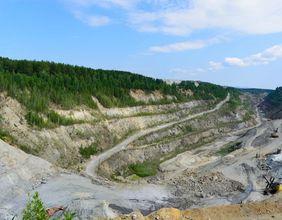
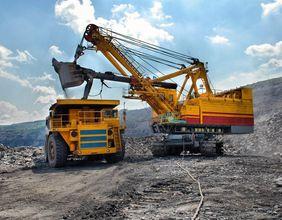
Mining and resources companies represent another foundational segment of the Australian market. Entities classified within ASX mining stocks engage in extraction, processing and export of commodities such as iron ore, copper, lithium and energy minerals. These operations contribute to domestic employment and international trade flows.
Industrial and consumer-facing businesses complement these sectors by supporting infrastructure development, retail distribution and service delivery. The combined activity of these industries illustrates the breadth of participation within the ASX stock market.
Some companies may also be associated with thematic classifications such as ASX dividend stocks, reflecting historical distribution practices. These classifications operate independently of benchmark inclusion.
Global Influences and Domestic Market Interaction
Australian equity markets operate within a globally connected financial system. Developments in international markets, commodity pricing environments and currency conditions frequently interact with domestic trading sessions. This interconnected structure influences benchmark composition and sector representation.
Companies with international operations may respond to offshore developments, while domestically focused businesses reflect local economic activity. The structure of indices such as the ASX 200 and the All Ordinaries enables observation of how global and local factors coexist within a single market framework.
Cross-sector interactions reinforce the integrated nature of the Australian economy. Mining companies depend on global demand conditions, financial institutions operate within international capital markets and industrial firms engage in export and import activities. These linkages collectively shape daily trading participation.
Governance Framework and Market Transparency
Australian-listed companies operate under governance and disclosure standards designed to support transparency and orderly market functioning. Continuous disclosure obligations ensure that material corporate information is communicated through regulated channels. This framework applies to companies across all indices, including the ASX 100 and the ASX 200.
Benchmark inclusion reflects adherence to listing requirements rather than corporate outlook. Governance standards provide oversight structures that include board accountability, reporting practices and compliance systems aligned with Australian regulatory expectations.
The organised classification of companies within benchmarks enables structured understanding of market composition. Financial institutions, mining operators, healthcare firms and consumer businesses collectively contribute to the resilience and depth of the Australian equity environment.
