
 AUS
AUS
 NZ
NZ
 UK
UK
 CA
CA
 USA
USA
 IND
IND






Highlights
Copper momentum lifted heavyweight miners and key index leaders.
Major banks supported broad sentiment despite mixed participation.
Several defensive and rate-sensitive sectors faced softer conditions.
Copper momentum boosted heavyweight miners and supported the benchmark alongside major banks, while participation stayed mixed. The session highlighted selective confidence, sector divergence, and leadership concentration in large caps.
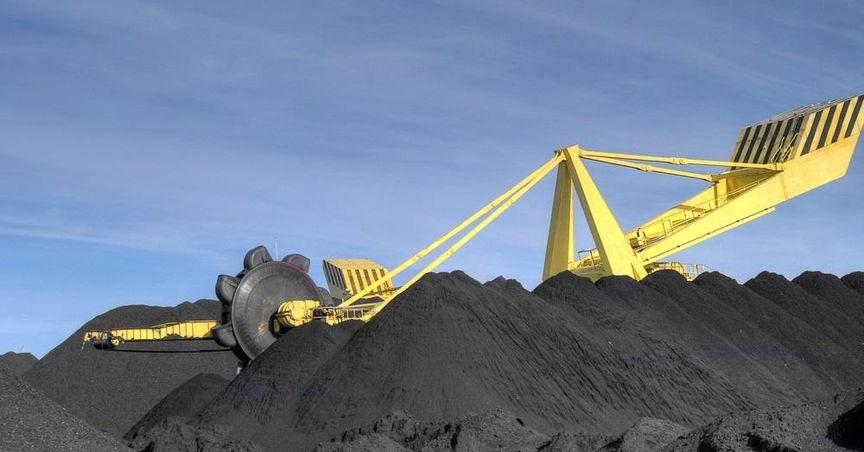
Copper-linked momentum set the tone for Australian equities, with the ASX 200 reflecting a session where leadership mattered more than broad participation. Today’s narrative leaned on familiar heavyweights, as BHP Group (ASX:BHP) and Rio Tinto (ASX:RIO) helped pull materials sentiment higher, while ANZ Group (ASX:ANZ) contributed to confidence in financials.
This was not a market where “everything rose together”. Instead, it was a session defined by where the demand concentrated—mostly in large, widely held names—while a wider set of stocks moved with less conviction. In plain terms: the headline finish looked steadier than the underlying mix.
To place this in context, the broader ASX stock market often has days where index direction is shaped by a handful of giants, even if many smaller names drift in the opposite direction. That dynamic was visible again today.
What set the tone across materials and resources?
Materials strength was largely carried by the market’s best-known miners rather than a uniform lift across the resources spectrum.
-
BHP Group (ASX:BHP) is a diversified resources company with major exposure to commodities used in industrial supply chains, including metals essential to construction and electrification.
-
Rio Tinto (ASX:RIO) is a global mining group spanning bulk commodities and industrial metals, widely watched as a gauge for large-cap resources sentiment.
Copper’s role matters because it often acts like a “real economy” bellwether: when copper prices are strong, it can reinforce expectations around industrial demand, supply tightness, and capital spending cycles. That backdrop tends to shine a spotlight on ASX mining stocks, especially those with scale, liquidity, and strong index presence.
Still, resources trading can be selective. Even on upbeat commodities days, sub-sectors can behave very differently depending on what’s moving globally, which exposures investors are prioritising, and how positioning sits going into the session.
Which large caps did the heavy lifting?
A few index leaders did most of the visible work, creating a session where the benchmark mood was supported even if the broader list did not fully join in.
Alongside the miners, financial stocks contributed to the day’s “index strength” effect:
-
Commonwealth Bank of Australia (ASX:CBA) is a major Australian banking group with a large retail footprint and significant index weight, often influencing day-to-day benchmark moves.
-
National Australia Bank (ASX:NAB) is a large domestic bank with business and retail operations, frequently tracked as a proxy for credit sentiment and funding conditions.
-
Westpac Banking Corporation (ASX:WBC) is one of Australia’s largest banks, with exposure to mortgages and consumer banking trends.
-
Bank of Queensland (ASX:BOQ) is a regional bank focused on Australian retail and business banking, sometimes moving differently from the major banks due to its narrower footprint.
When major banks rise together, it can lift overall mood, even if other sections of the market remain cautious. This is one reason market watchers also look beyond the benchmark to understand whether the day was genuinely broad-based.
What did market participation suggest beneath the surface?
Even on sessions that finish positively, market watchers often check participation—how many stocks rose versus fell—to gauge the “texture” of demand.
When the benchmark is pulled higher mainly by heavyweights, it can indicate a more defensive kind of confidence: money prefers scale and liquidity rather than spreading across the list. That doesn’t automatically mean the rally is fragile, but it can suggest investors are still selective.
This matters for anyone tracking the difference between headline strength and market depth. It also helps explain why some indices or style baskets can lag even when the flagship benchmark looks steady.
For readers who follow broader market groupings like ASX ordinaries stocks, these sessions can appear more mixed than the headline index implies, because the wider universe contains many names outside the largest cohort.
Which sectors looked softer despite a firmer benchmark?
While large-cap resources and banks supported sentiment, several areas appeared to face a softer tone. These are often the parts of the market that react more to shifts in rates expectations, consumer caution, or valuation sensitivity.
A session like this can show a split personality:
-
“Big stocks” carry the benchmark
-
Certain defensives or rate-sensitive groups fail to keep pace
That kind of divergence is common in modern index trading. It can also reflect rotation rather than outright risk-on or risk-off conditions.
What happened in energy and other cyclicals?
Energy names were also monitored as part of the broader risk tone and commodity-linked sentiment:
-
Santos (ASX:STO) is an Australian energy producer with exposure to domestic and regional energy markets, often moving with oil and gas sentiment.
-
Woodside Energy (ASX:WDS) is a large energy company with global operations, closely watched for broader energy-sector positioning.
Cyclical sectors can move in sympathy with both commodity prices and global risk appetite. On days when industrial metals catch attention, it’s not unusual to see investors also review energy exposure as part of a “real assets” view of the market.
Which healthcare leaders reinforced stability?
Healthcare added a steadier tone with one of the market’s most influential names in the mix:
-
CSL (ASX:CSL) is a global biotechnology and healthcare company known for plasma-derived therapies and vaccines, often viewed as a high-quality defensive growth name within Australian equities.
When healthcare leaders are firm at the same time as banks and miners, it can signal that investors are not choosing just one narrative. Instead, positioning can reflect a blend of defensiveness and selective cyclicals—another sign of a market still balancing conviction with caution.
What did today’s moves imply for major index groupings?
If leadership stays concentrated in the top end, attention often shifts to how different index groupings behave—especially the cohorts dominated by mega caps.
Many investors compare performance across:
-
large, liquid leaders in the “top tier” universe such as the ASX 100
-
broader lists that include more cyclicals and smaller businesses
This is useful because a benchmark can look upbeat while a broader set remains choppy. The distinction can influence how market sentiment is interpreted in the days that follow.
What role did gold and other miners play in the background?
Even when copper is the headline, other mining exposures still matter in shaping overall resources tone. Investors often distinguish between:
-
industrial metals linked to manufacturing and electrification
-
precious metals linked more to risk hedging and currency mood
-
battery materials linked to longer-cycle themes and policy signals
That is why a “resources up” headline can be misleading. The real story is frequently about which commodity exposures the market rewarded within the resources complex.
How did market themes interact with income-focused strategies?
When the market is selective, income themes can re-enter conversations—particularly when investors want steadier cash-flow profiles during uncertain participation.
That can bring attention to ASX dividend stocks, not as a promise of returns, but as a way some investors frame quality and resilience. In mixed sessions, dividend profiles and balance-sheet narratives can sometimes matter as much as the day’s commodity headlines.
Where did smaller and growth segments fit into the picture?
On heavyweight-driven days, smaller names and growth segments can move with less consistency. Some may follow the upbeat tone, while others respond to sector-specific cues.
This does not automatically indicate a market turning point, but it does highlight a key pattern: when leadership is narrow, the experience of “the market” can differ depending on which part of the list is being watched.
Company mentions and quick definitions recap
-
ANZ Group (ASX:ANZ): major Australian bank with regional presence.
-
BHP Group (ASX:BHP): diversified resources company with global operations.
-
Bank of Queensland (ASX:BOQ): regional Australian bank focused on domestic banking.
-
Commonwealth Bank of Australia (ASX:CBA): large retail and business bank; major index weight.
-
CSL (ASX:CSL): global biotech and healthcare company.
-
National Australia Bank (ASX:NAB): major bank with retail and business exposure.
-
Rio Tinto (ASX:RIO): global mining company spanning bulk and industrial metals.
-
Santos (ASX:STO): Australian energy producer with regional exposure.
-
Woodside Energy (ASX:WDS): large energy company with global operations.
-
Sandfire Resources (ASX:SFR): Australian copper-focused miner with operating and development assets.
-
BlueScope Steel (ASX:BSL): steel products manufacturer linked to construction and industrial demand.
-
Washington H. Soul Pattinson (ASX:SOL): diversified investment company with long-standing Australian market exposure.
-
Wesfarmers (ASX:WES): diversified Australian group with retail and industrial exposures.
-
WiseTech Global (ASX:WTC): logistics software company providing platforms for freight and supply-chain operations.
-
Perenti (ASX:PRN): mining services contractor supporting operations across commodities.
-
Perseus Mining (ASX:PRU): gold miner with producing assets and development pipeline.
-
Lindian Resources (ASX:LIN): resources explorer with interests in critical mineral projects.
-
FireFly Metals (ASX:FFM): explorer/developer with base metals focus.
-
Vulcan Energy Resources (ASX:VUL): developer focused on integrated energy and battery-material related projects.
