
 AUS
AUS
 NZ
NZ
 UK
UK
 CA
CA
 USA
USA
 IND
IND





Highlights
- Latest sampling at the Johnson Creek Mill returned a tungsten grade of 1.85% WO₃ and gold content of 0.11 g/t from a 93.6 kg mini-bulk composite sample.
- Scheelite (calcium tungstate) was identified as the primary tungsten-bearing mineral.
- Low levels of impurities including arsenic, molybdenum, and phosphorus have been reported.
- Quartz (>90%) was confirmed as the dominant non-ore mineral, with minor traces of calcite and potassic mica.
- Next steps include detailed sampling of sub-surface stockpile material, volumetric surveys, and specific gravity analysis to support a potential upgrade to JORC-compliant status.
Resolution Minerals Ltd (ASX:RML) has reported assay and mineralogical results from late-2025 mapping and sampling program of stockpiles at the Johnson Creek Tungsten and Antimony Mill. The acquisition of the mill was finalised earlier this month. This fieldwork is part of an ongoing effort to advance the stockpiles into JORC-compliant classification and fast—track tungsten production from the stockpiles.
High-Grade Tungsten Identified in Stockpiles
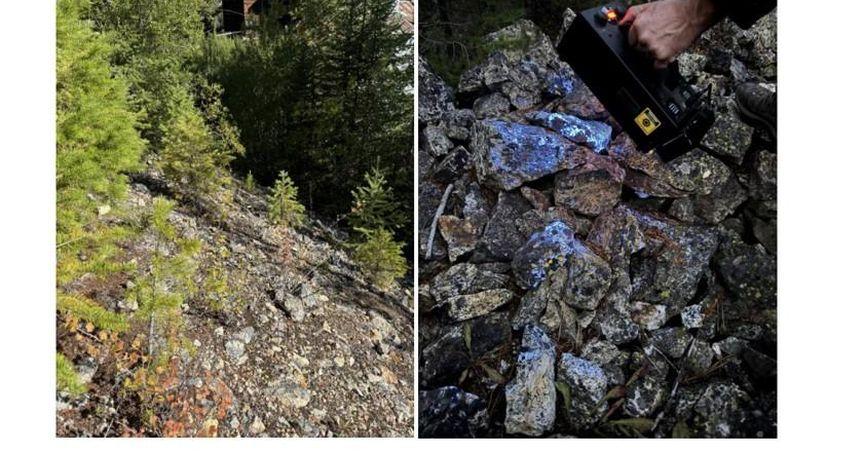
The sampling program focused on the stockpile material derived from the historic Golden Gate Tungsten Mine. These stockpiles have remained undisturbed since the 1980s and are located at the Johnson Creek Tungsten and Antimony Mill.
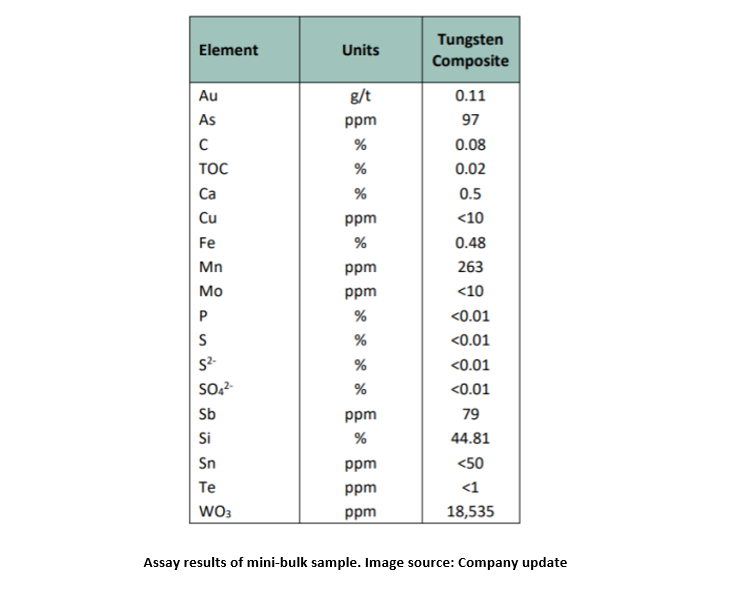
A mini-bulk composite sample weighing 93.6 kilograms was developed from six individual samples of stockpile material. Assay results from this composite returned a tungsten grade of 1.85% WO₃, alongside gold content of 0.11 grams per tonne.
Mineralogical Analysis Indicates Low Impurities
Independent mineralogical studies confirmed scheelite (calcium tungstate) as the dominant tungsten mineral present. The analysis also indicated low level of impurity elements (but not limited to) such as arsenic, molybdenum, and phosphorus.
The same independent mineralogical study identified quartz (over 90%) as the dominant gauge (non-ore) mineral, with minor traces of calcite and potassic mica.
Mapping and Sampling Program Overview
The company undertook two field programs during 2025 to map and sample the stockpiles. The exposed coarse component of the stockpiles was mapped as predominantly granodiorite, with scheelite occurring as veins and disseminations.
Samples were collected using a combination of random and targeted selection methods. These were later combined into a single composite sample for laboratory analysis, forming the basis for initial evaluation.
Historical Context and Stockpile Background
The stockpiles are estimated to contain approximately 2,000 tonnes of previously mined tungsten ore. Historical production data from the Golden Gate mine indicates grades ranging between 1.5% and just over 2.0% WO₃ across different periods of operation.
Next Steps Toward Resource Definition
The company is planning a detailed sampling program to sample older parts of the stockpile, and a volumetric survey. Specific gravity analysis will assist in tonnage conversations for the volumetric data.
Results will allow the company to potentially upgrade the stockpiles to JORC-code compliancy.
Current economic Conditions
The U.S. government is actively working to restore its domestic tungsten supply chain as part of a broader USD 12 billion initiative aimed at stockpiling critical minerals and reducing dependence on overseas sources.
Tight global supply, combined with ongoing geopolitical conflicts, has driven tungsten prices sharply higher, climbing from below USD 400 per metric ton to approximately USD 2,200 per metric ton.
The initial sampling results from the Johnson Creek stockpiles provide a foundation for ongoing evaluation and development activities. Through further testing and resource definition work, Resolution Minerals is progressing efforts to assess the stockpiles’ role within its broader critical minerals strategy, including tungsten, antimony, and gold.
RML shares were trading 2.08% higher at AUD 0.049 per share at the time of writing on 26 March 2026.
