
 AUS
AUS
 NZ
NZ
 UK
UK
 CA
CA
 USA
USA
 IND
IND







Highlights
- Radiopharm Theranostics has completed final patient dosing in the U.S. Phase 2b trial of 18F-RAD101.
- The study enrolled 30 patients with recurrent brain metastases from various solid tumors.
- The trial evaluates diagnostic accuracy against MRI with gadolinium.
- Interim results show 90% concordance with conventional imaging.
- Clinical trial readout is expected in June 2026.
- The company plans to transition to a Phase 3 pivotal trial.
Radiopharm Theranostics (ASX:RAD) has reached a key milestone by completing patient dosing in its U.S.-based Phase 2b imaging trial evaluating the performance of 18F-RAD101. RAD 101 is an imaging agent designed for patients with recurrent brain metastases originating from various solid tumours. Following this development, the company intends to advance RAD 101 into a US Phase 3 pivotal trial.
Trial Milestone Achieved
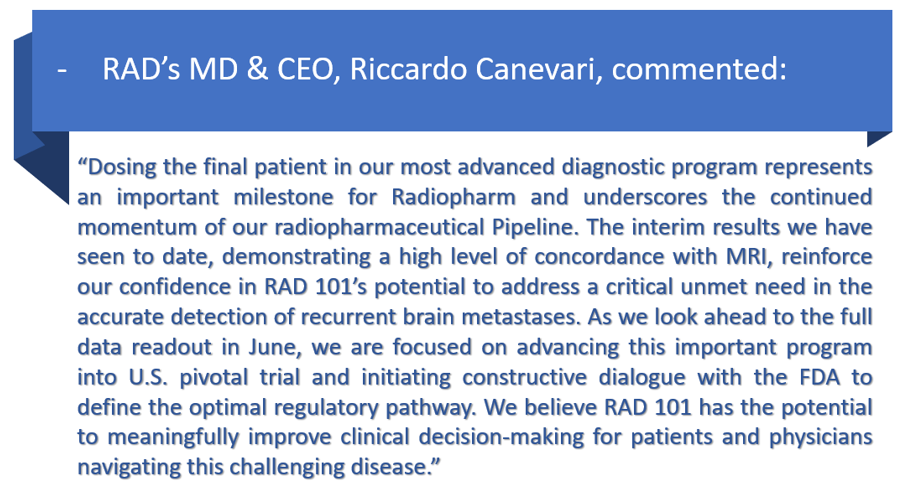
The company confirmed that the final participant has been dosed in the multicenter, open-label Phase 2b trial. The study includes 30 individuals with confirmed recurrent brain metastases. The trial is designed to assess the diagnostic performance of 18F-RAD101.
Targeting Tumour Biology
RAD101 is a small-molecule imaging agent developed to target fatty acid synthase (FASN), a protein involved in catalysing fatty acid synthesis and is overexpressed in many solid tumours. By focusing on FASN activity, the approach aims to improve the detection of cancer cells, offering a clinically relevant method for identifying metastatic disease.
Study Objectives and Design
The primary goal of the trial is to measure concordance between 18F-RAD101 positive lesions and those observed through conventional imaging techniques such as MRI with gadolinium. The company highlighted that the interim data to date reported 90% concordance with MRI, further validating confidence in RAD 101’s potential. In June 2026, clinical trial readout is expected.
RAD101 has received Fast Track designation from the U.S. Food and Drug Administration for its ability to differentiate between recurrent tumors and treatment-related changes., including applications in leptomeningeal disease.
The completion of dosing marks a significant step in the ongoing evaluation of RAD101 as a diagnostic imaging agent. As the trial progresses toward data analysis, the findings are expected to contribute to the understanding of new imaging approaches for recurrent brain metastases and their potential role in clinical practice.
RAD shares were trading at AUD 0.021 per share at the time of writing on 16 April 2026.
