
 AUS
AUS
 NZ
NZ
 UK
UK
 CA
CA
 USA
USA
 IND
IND







Highlights
- Field data from South Africa confirms a failure rate of just 0.6% to 1.5% for Sodium-Nickel-Chloride (SNC) batteries.
- SNC technology outperforms lithium-ion, lead-acid, and nickel-cadmium batteries, which typically record failure rates between 3% and 12%.
- Over 15 years of continuous performance in South Africa’s telecom and UPS sectors demonstrates SNC’s proven reliability.
- SNC batteries operate effectively in high-temperature and remote environments, requiring no active cooling or frequent maintenance.
- Their solid-state ceramic design ensures durability, chemical stability, and service life of 15–20 years.
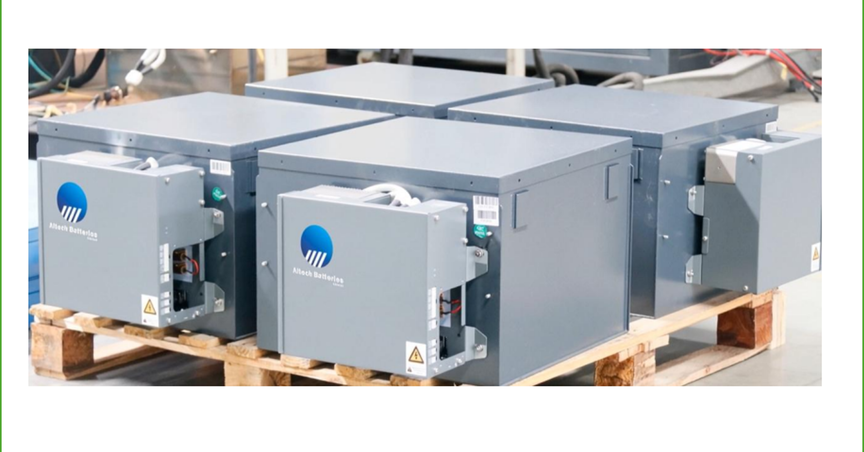
Altech Batteries Limited (ASX:ATC) (FRA:A3Y) has released excellent long-term service life data confirming the superior reliability and durability of its partner AMPower’s Sodium-Nickel-Chloride (SNC) battery technology.
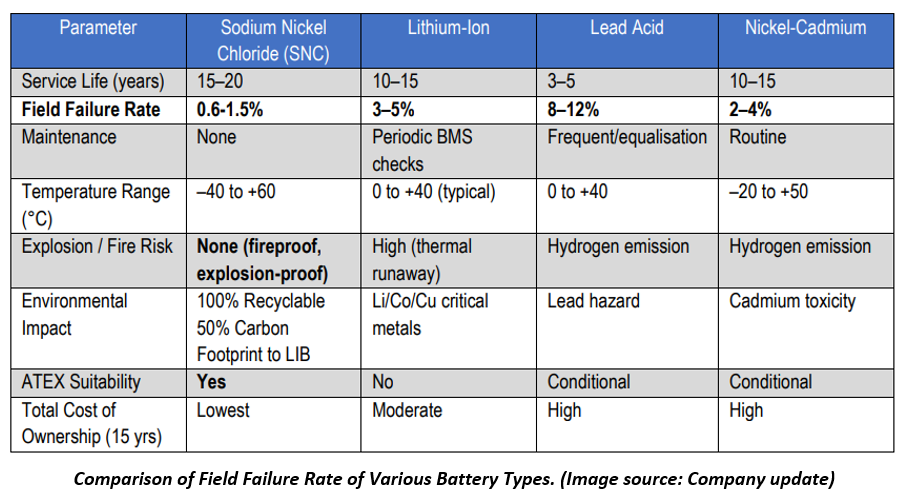
Comprehensive field results from South Africa indicate an exceptionally low failure rate between 0.6% and 1.5% across deployed AMPower or equivalent SNC batteries, outperforming traditional lithium-ion, lead-acid, and nickel-cadmium (NiCd) batteries.
SNC batteries have been used in South Africa's industrial UPS and telecommunications sectors for over 15 years, proving their effectiveness in areas with extreme heat, remote conditions, and unstable grids. Their consistent performance reinforces SNC technology’s role in Altech’s expansion strategy for European pipeline and hydrogen control infrastructure.
Proven Performance in Harsh Field Conditions
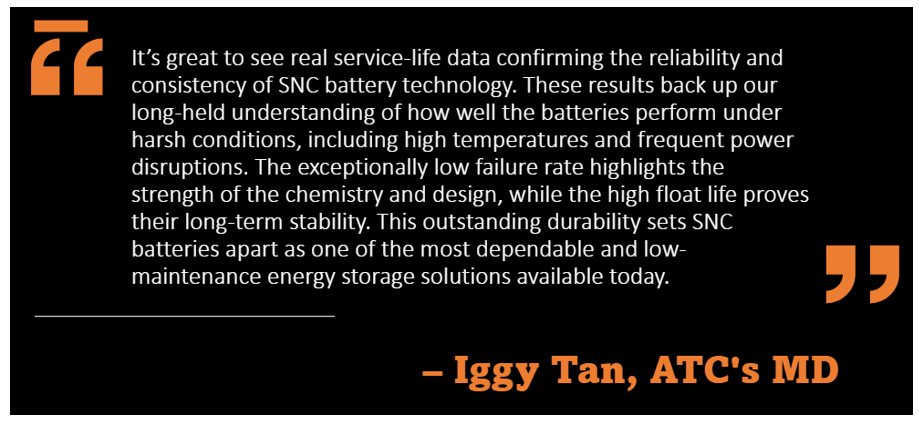
SNC batteries have been operational throughout South Africa since the early 2010s, supporting telecom towers, substations, and industrial systems in extreme conditions, including temperatures often exceeding 50°C and frequent grid instability. Field evidence indicates that some units installed as far back as the mid-2000s remain operational without requiring maintenance or electrolyte replacement.
Data compiled by AMPower confirms the failure rate remains between 0.6% and 1.5%, a benchmark well below lithium’s 3–5% and lead-acid’s 8–12% averages. With no requirement for active cooling or frequent servicing, SNC batteries have proven suitable for high-temperature environments and reduce total cost of ownership.
Design and Longevity Advantages
SNC batteries achieve extended lifespans due to their fully sealed architecture and solid-state ceramic design. Unlike lithium or lead-acid chemistries, SNC batteries contain no flammable liquids, no venting gases, and no corrosion pathways. The stability of the battery over thousands of discharge cycles is ensured by the internal nickel chloride and molten sodium housed within a β-alumina ceramic electrolyte.
The batteries are also immune to dendrite formation, electrolyte degradation, and over-discharge damage, allowing them to maintain performance even after extended idle periods. These factors contribute to service lives of more than 15–20 years under both float and cycling conditions.
Comparison with Conventional Chemistries
Independent Cell Functionality Ensures Continuity
Each SNC cell is contained within a β-alumina solid electrolyte (BASE) tube, which allows sodium ions to move while blocking electrons. If a micro-crack develops in the ceramic, the molten sodium remains fluid at around 270°C, forming a thin ionic bridge that maintains conductivity.
Furthermore, modules are designed with cells connected in series and parallel, allowing others to compensate if one cell’s resistance changes. This configuration ensures continuous operation and steady voltage output.
These results confirm SNC as the most dependable, maintenance-free UPS solution for ATEX-rated hazardous environments, remote operations, and critical industrial infrastructure.
ATC shares were trading 2.86% higher at AUD 0.036 per share at the time of writing on 6 November 2025.
